Circuit Maze: How lighting a bulb became a logic puzzle kids love
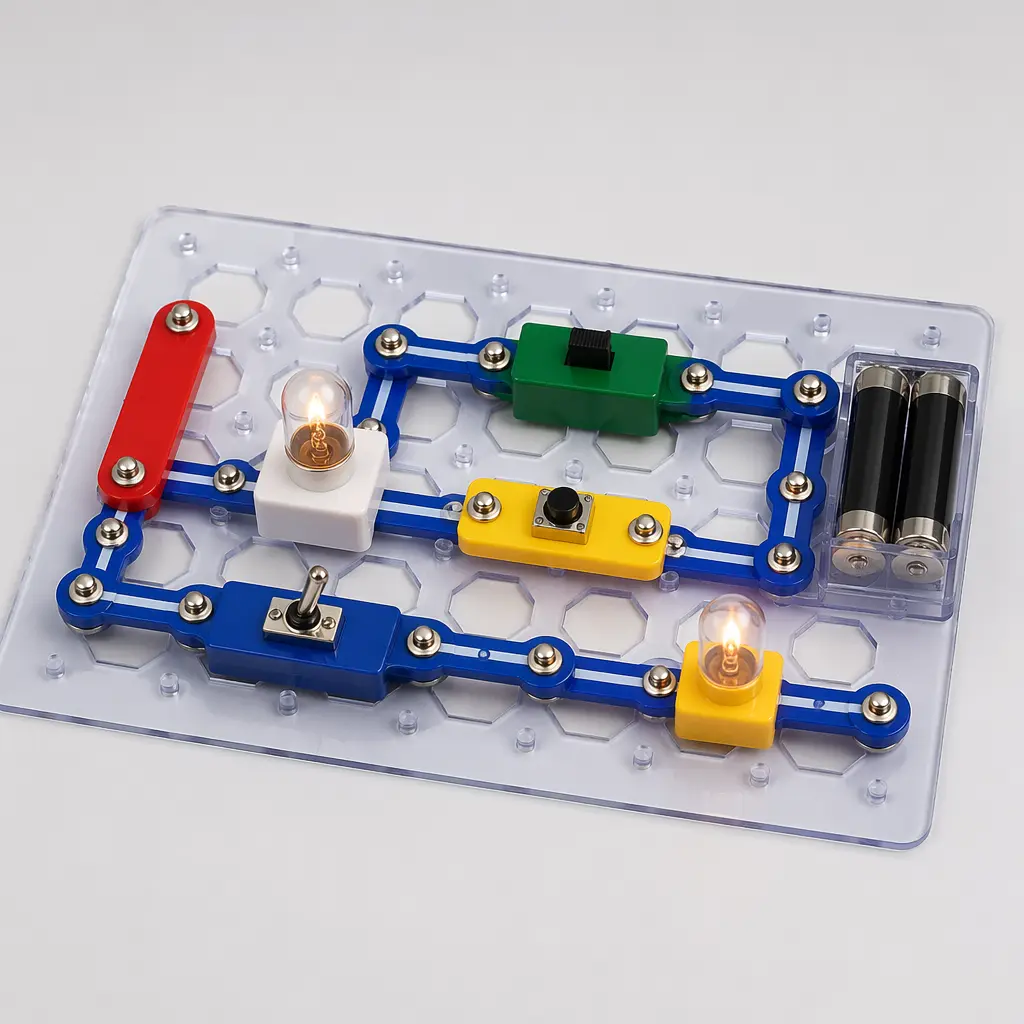
Circuit Maze turns real electrical circuits into a hands-on logic game. Since the late 1990s, it’s helped kids learn problem‑solving by snapping components together and lighting a bulb—no screens required.
Compare prices and availability
Check current prices and availability for this guide on eBay.
As an eBay Partner, we may be compensated if you make a purchase.
At first glance, Circuit Maze looks like a science kit. There are wires, switches, batteries, and a tiny light bulb waiting to be powered. But the hook is that nothing lights up unless you solve a puzzle first. Each challenge asks players to build a working circuit under specific rules, turning the simple act of lighting a bulb into a satisfying logic problem kids actually want to finish.
Where it came from
Circuit Maze was introduced in 1998 by the puzzle company ThinkFun, at a time when educational toys were increasingly being asked to prove they could be both instructive and fun. The idea was straightforward but ambitious: teach the basics of electrical circuits without lectures, worksheets, or screens.
Instead of pretending to be a science class, Circuit Maze framed electronics as a series of challenges. Each card shows a starting setup and an objective—usually to light a bulb—while limiting which pieces can be used. The original purpose wasn’t to drill terminology, but to build intuition. If the light didn’t turn on, players could see and fix the problem themselves.
Why it works
Circuit Maze works because it makes an invisible concept visible. Electricity is abstract until something happens, and here the payoff is immediate: the bulb lights up, or it doesn’t. Kids quickly learn that every piece matters, and that changing one connection can break or complete the whole system.
The game also respects kids’ intelligence. Challenges increase gradually in difficulty, encouraging trial, error, and persistence rather than guesswork. There’s no timer and no penalty for mistakes—just a clear goal and the tools to reach it.
- Snap-together circuit pieces that are sturdy and reusable
- Real electrical components that behave like actual circuits
- Progressive challenge cards that scale from simple to complex
- Clear cause-and-effect feedback when a solution works or fails
Who it’s for
Circuit Maze is typically aimed at primary and early secondary school ages, but its appeal stretches wider. Younger kids enjoy the physical building and the thrill of lighting the bulb, while older children and adults appreciate the logic constraints and tougher challenges. It’s a common choice for parents who want a STEM toy that doesn’t feel like homework, and for adults who enjoy solo puzzles with a tangible payoff.
Variants and what to look for today
Over the years, Circuit Maze has appeared in several versions, often themed around increasing complexity or different learning goals. Some editions introduce more components, such as multiple bulbs or additional switches, while others focus on beginner-friendly setups. The core idea remains the same: solve a logic puzzle by building a working circuit.
If you’re shopping today, look for a set with a wide range of challenges and durable snap connectors. The best versions balance guidance with freedom, offering enough puzzles to grow with the player. Be cautious of generic electronic puzzles that look similar but lack structured challenges or clear instructions, as these can feel more like loose parts than a coherent game.
Frequently asked questions
Does Circuit Maze really teach electronics?
Yes, at a conceptual level. It doesn’t replace a textbook, but it builds an intuitive understanding of how circuits are completed, how switches control flow, and why connections matter.
Is it better as a solo or group activity?
It works well both ways. Many kids enjoy solving challenges alone, while siblings or classmates can collaborate by discussing possible solutions and testing ideas together.
Do players need prior STEM knowledge?
No prior knowledge is required. The early challenges introduce concepts gently, and understanding builds naturally through play.
How long does a typical session last?
That depends on the challenge level. Some puzzles take just a few minutes, while harder ones can keep players engaged for much longer.
Nearly three decades after its debut, Circuit Maze still stands out by keeping things simple. It doesn’t rely on apps, animations, or buzzwords. It just asks a clear question—can you light the bulb?—and trusts that curiosity and logic will do the rest.