Fischertechnik: The quiet toy that taught real engineering
Born in 1960s Germany, Fischertechnik is a precision building system that grew from a promotional toy into a serious tool for teaching mechanics, logic and engineering thinking across generations.
Compare prices and availability
Check current prices and availability for this guide on eBay.
As an eBay Partner, we may be compensated if you make a purchase.
Fischertechnik doesn’t shout for attention. There are no bright mascots, no movie tie-ins, and no flashing lights. Yet for decades, this understated German building system has quietly shaped how children — and plenty of adults — learn to think like engineers. More than a toy, Fischertechnik sits at the crossroads of play, education and real-world mechanical thinking.
Where it came from
Fischertechnik was introduced in 1965 by German inventor Artur Fischer, already well known for creating the Fischer wall plug. Initially, the construction sets were designed as a promotional gift for customers, but the response was unexpectedly enthusiastic. Children and educators quickly recognised that this was something different from typical building toys.
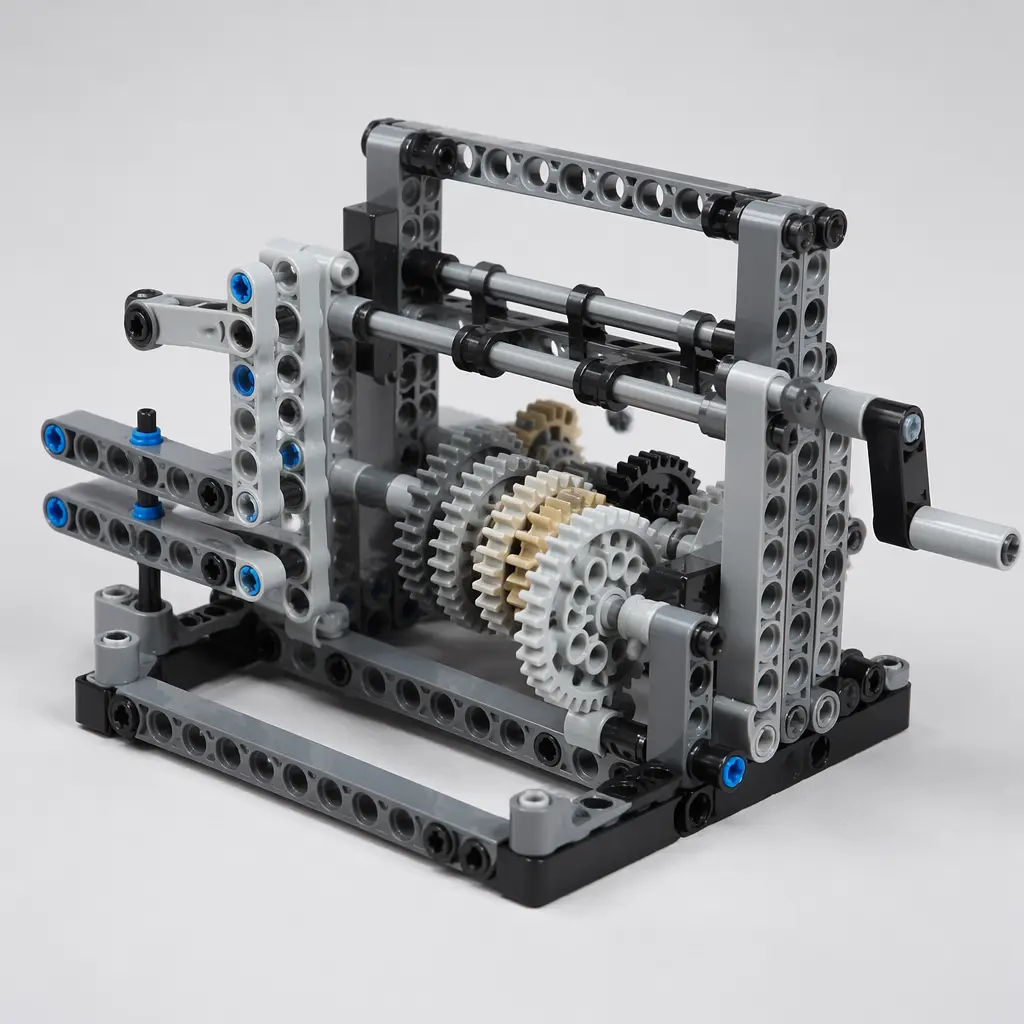
Developed in post-war Germany, Fischertechnik reflected a cultural emphasis on precision, mechanics and problem-solving. From the beginning, the system was designed to mirror real engineering principles — levers, gears, statics and later electronics — scaled down into durable plastic components that could be endlessly reconfigured.
Why it works
At the heart of Fischertechnik is a deceptively simple idea: one core building block that connects securely, accurately and repeatably. Unlike free-form brick systems, Fischertechnik parts lock together in ways that preserve alignment and structural integrity, making it possible to build mechanisms that actually behave as expected.
This precision changes the play pattern. Builds are less about decoration and more about function. Children aren’t just stacking — they’re testing, adjusting and troubleshooting. When something doesn’t work, the cause is mechanical, not magical.
- High-precision connectors that hold alignment
- Gears, axles and cams that demonstrate real mechanics
- Modular parts that encourage redesign and iteration
- Compatibility across decades of sets
- Gradual introduction of motors, sensors and control elements
Who it's for
Fischertechnik is typically aimed at older children, often from around 8 years and up, though simpler sets can work for younger builders with help. Its structured, technical nature appeals strongly to children who like to understand how things work. Adults often rediscover it as a serious hobby tool, and it remains widely used in schools, universities and engineering training programmes.
Variants and what to look for today
Over the years, Fischertechnik has expanded from purely mechanical sets into electronics, robotics and programmable systems. Despite this evolution, the core building standard has remained consistent, allowing older parts to work with newer components.
When looking at sets today, it helps to think about goals rather than size. Mechanical-focused sets emphasise gears and structures, while STEM-focused boxes introduce motors, sensors and coding concepts. Quality is generally consistent, but very cheap imitation systems often lack the precision that makes Fischertechnik effective.
Frequently asked questions
Is Fischertechnik compatible with other building toys?
Not directly. Fischertechnik uses its own connection system designed for precision and alignment, which is part of what sets it apart from more general construction toys.
Is it too difficult for beginners?
Some sets are complex, but entry-level kits are carefully structured. Clear instructions and incremental challenges help new builders gain confidence quickly.
Does it still feel relevant today?
Yes. While the look is understated, the principles it teaches — systems thinking, mechanical logic and problem-solving — are more relevant than ever.
Fischertechnik has never tried to be flashy, and that may be why it has endured. By focusing on how things truly work, it offers a kind of play that rewards patience, curiosity and persistence — qualities that don’t go out of style.