The Toy Periscope: A simple optical lesson that still delights
From cardboard tubes to plastic spy kits, the toy periscope has quietly taught generations how mirrors bend light—proof that simple STEM toys can have lasting appeal.
Compare prices and availability
Check current prices and availability for this guide on eBay.
As an eBay Partner, we may be compensated if you make a purchase.
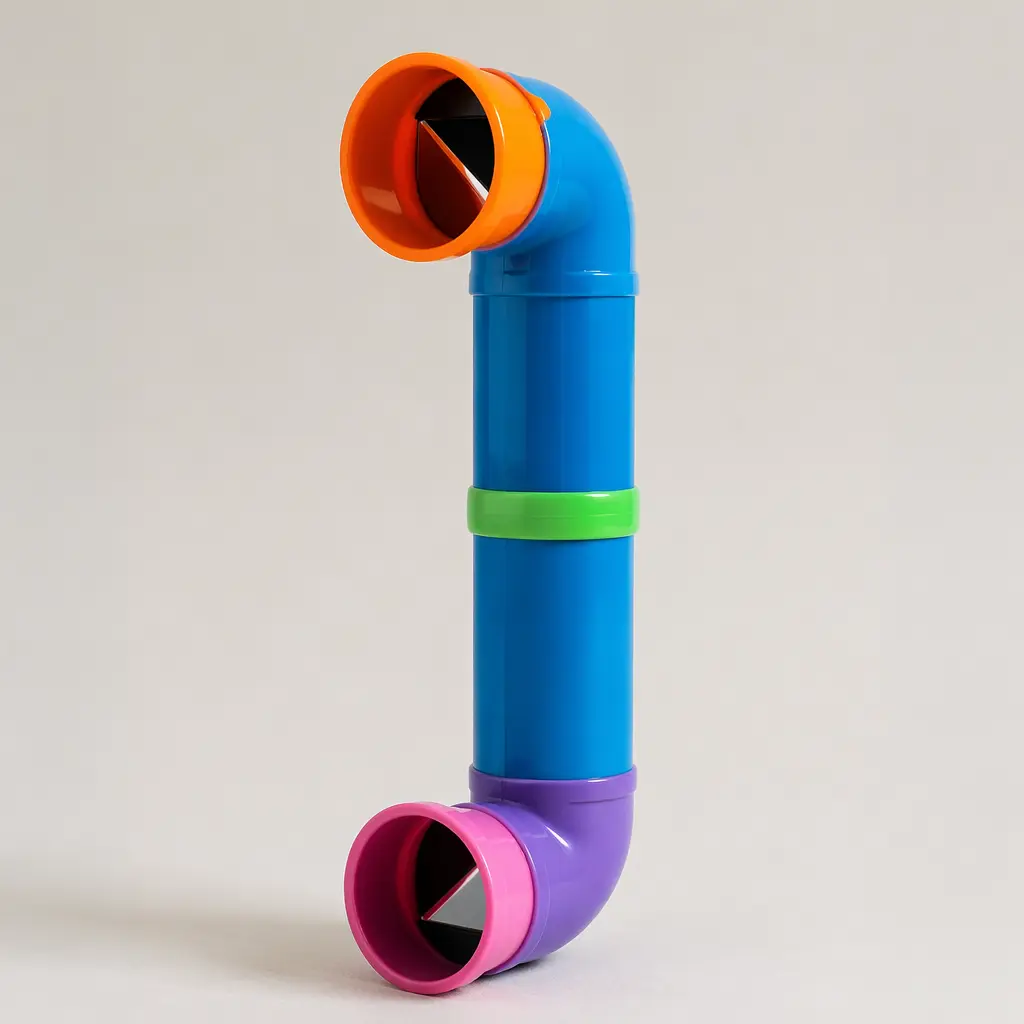
The toy periscope is one of those quietly brilliant playthings that many people remember using long before they understood the science behind it. Hold it up, peek through the eyepiece, and suddenly you can see over a wall or around a corner. For children, it feels a bit like magic. For parents and teachers, it is a gentle introduction to optics hiding in plain sight.
Where it came from
The periscope itself is much older than the toy. Full-sized periscopes were developed in the 19th century for military and naval use, allowing observers to see without being directly exposed. As the basic principle became widely understood, educators quickly realised it could be scaled down into a simple teaching tool.
Toy versions began appearing in the early 20th century, often as part of science kits or wartime “spy” toys. Early examples were commonly made from cardboard tubes and small mirrors, sometimes assembled by the child. The goal was not polish or realism, but demonstration: show how light reflects and travels, and let curiosity do the rest.
Why it works
At its core, the toy periscope works because it is honest about what it is doing. There are no electronics, no batteries, and no hidden tricks. Two mirrors set at angles inside a tube reflect light from the top opening down to the viewer’s eye. Children can often open it up, look inside, and see exactly how it functions.
This transparency is part of its lasting appeal. It invites questions and experimentation rather than passive use. Turn it sideways, block one opening, or change the angle of the mirrors, and the image changes immediately. That cause-and-effect loop is powerful for learning.
- Simple mirror-based optics that are easy to understand
- Hands-on interaction with immediate visual feedback
- Durable, low-tech design that encourages exploration
- Often easy to disassemble or build as a kit
Who it's for
Toy periscopes are typically aimed at children aged around five and up, once they can comfortably hold the tube and align it with their eye. That said, they also appeal to older children and adults who enjoy simple science demonstrations or nostalgic toys. In classrooms, they are often used as part of basic physics or STEM lessons, while at home they serve as open-ended toys that reward curiosity rather than competition.
Variants and what to look for today
Modern toy periscopes range from simple fixed tubes to extendable designs that telescope upward. Some are sold as standalone toys, while others are bundled into larger spy or explorer kits. Materials have shifted over time, with plastic now far more common than cardboard, though educational kits still sometimes include build-it-yourself versions.
When choosing one today, clarity matters more than gimmicks. Flat, well-aligned mirrors produce a brighter, more accurate image. Cheaper versions may use reflective film instead of proper mirrors, which can dull the view. It is also worth checking that the interior is securely assembled, as loose mirrors quickly frustrate young users.
Frequently asked questions
How does a toy periscope actually work?
It uses two mirrors placed at angles inside a tube. Light enters the top opening, reflects off the first mirror, then the second, and finally reaches the viewer’s eye. This allows you to see from a higher or offset position.
Is a toy periscope educational or just for fun?
It is both. While children enjoy the playful “spy” aspect, the toy also demonstrates basic principles of light and reflection, making it a useful educational tool.
Are toy periscopes safe for young children?
Most are safe when age recommendations are followed. Parents should watch for sharp edges around mirrors and avoid giving very young children models with small, removable parts.
Can you build a working periscope at home?
Yes. With cardboard, tape, and two small mirrors, it is possible to make a simple periscope. Many educators use this as a hands-on lesson to reinforce the concept.
In an age of screens and digital toys, the toy periscope stands out by doing very little—and doing it well. Its endurance comes from clarity, both optical and educational. By showing children how sight can be bent and redirected, it turns a simple tube and a pair of mirrors into a lasting lesson in how the world works.