The Articulated Fidget Slug: A 3D‑Printed Calm You Can Hear
Born from the 3D‑printing boom, the articulated fidget slug turned clicky motion and gentle sound into a modern desk toy for focus, stress relief, and tactile fun.
Compare prices and availability
Check current prices and availability for this guide on eBay.
As an eBay Partner, we may be compensated if you make a purchase.
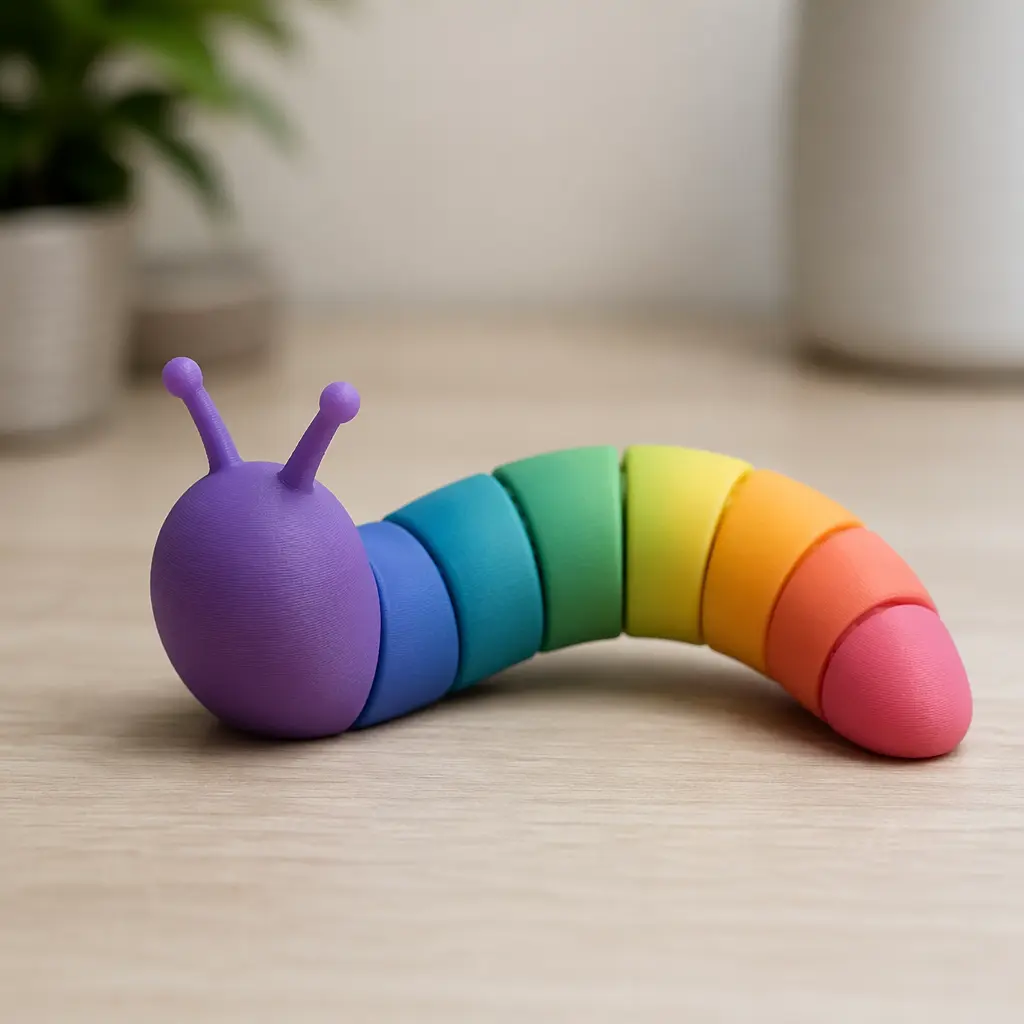
At first glance, the articulated fidget slug looks almost too simple to matter: a small, segmented creature that bends, wiggles, and clicks when you move it. But in offices, classrooms, and home desks around the world, this humble 3D‑printed toy has become a go‑to for calm focus. Its rise says a lot about how modern toys are made, shared, and adopted—and why motion and sound can be surprisingly soothing.
Where it came from
The articulated fidget slug didn’t start life in a toy factory. It emerged from the maker and 3D‑printing community in the late 2010s and early 2020s, a period when desktop printers became affordable and design files were shared freely online. Designers experimented with articulated forms—objects printed in one piece that could move straight off the print bed.
The slug shape was a happy accident of function and charm. Its long, segmented body showed off articulation beautifully, while the friendly, non-threatening animal form appealed to all ages. As fidget toys gained mainstream attention for helping with focus and stress, small print shops and online sellers began producing slugs in bright plastics, gradients, and flexible materials, turning a niche maker design into a recognizable desk toy.
Why it works
The appeal of the articulated fidget slug lies in its simple, repeatable motion. Each segment pivots against the next, creating a smooth wave when you bend it and a soft clicking or rattling sound as it moves. That combination of tactile feedback and gentle noise gives your hands something to do while your mind stays on task.
Unlike buttons or spinners, the slug doesn’t demand speed or skill. You can flex it slowly, twist it into a curve, or let it drape over your fingers. The design invites absent‑minded play, which is often exactly what people want from a fidget.
- One‑piece articulated design that moves smoothly without assembly
- Repeating segments that create a satisfying tactile rhythm
- Soft clicking sound that’s noticeable but not sharp
- Durable plastic suitable for frequent handling
Who it’s for
Articulated fidget slugs are most commonly used by teens and adults as desk toys, especially in work‑from‑home or study settings. They’re popular with people who like to fidget during meetings, reading, or thinking. Older children often enjoy them too, though they’re best treated as stress or sensory toys rather than traditional playthings. For many adults, the slug’s appeal is partly aesthetic—a small, playful object that personalizes a workspace without feeling childish.
Variants and what to look for today
Because the articulated fidget slug grew out of 3D printing, variety is the norm. You’ll find short and long versions, chunkier or slimmer segments, and a wide range of colors—from solid brights to rainbow gradients. Some are printed in stiffer plastics for a louder click, while others use more flexible materials for a softer feel.
When shopping today, look for smooth joints and consistent segment spacing; rough edges or uneven movement can distract rather than calm. Many sellers are small makers, which is part of the charm, but it also means quality can vary. Avoid versions with glued-on decorations that can pop off, and be cautious of ultra-cheap copies that use brittle plastic.
Frequently asked questions
Is the articulated fidget slug a toy or a tool?
It sits somewhere in between. While it’s playful and fun, most people use it as a focus or stress‑relief aid rather than for imaginative play.
Does it actually help with focus?
For many users, yes. The repetitive motion can help occupy restless hands, which may make it easier to concentrate on mental tasks.
Are articulated slugs suitable for young children?
They’re generally better for older children and up. Small segments and hard plastic mean they’re not ideal for toddlers or heavy chewing.
Why are so many sold by small sellers?
The design fits perfectly with 3D printing, allowing independent makers to produce and customize them without large factories.
The articulated fidget slug is a modern example of how toys evolve alongside technology. It didn’t need a big brand or a TV show—just a clever design, a shared file, and a real human need for something to fidget with. In a world full of screens, its quiet, physical motion feels refreshingly simple.