Squigz: How suction-cup building toys became a sensory hit
Squigz turned simple silicone suction cups into a modern construction toy with strong sensory appeal. Their tactile design, flexible play patterns, and satisfying pop made them a standout family toy.
Compare prices and availability
Check current prices and availability for this guide on eBay.
As an eBay Partner, we may be compensated if you make a purchase.
Some toys succeed because they promise endless complexity. Squigz became popular for almost the opposite reason. The flexible silicone pieces snap together with suction, stick to smooth surfaces, and separate with a loud, satisfying pop. That simple interaction turned them into a favorite among children, therapists, teachers, and adults who enjoy tactile desk toys. Introduced during a period when many construction toys were becoming more digital or screen-connected, Squigz stood out by focusing entirely on hands-on play and sensory feedback.
Where it came from
Squigz arrived in 2013 from Fat Brain Toys, a company known for tactile learning products and open-ended play ideas. The concept was straightforward: create lightweight silicone connectors that could stick to each other and to smooth surfaces without magnets, adhesives, or complicated mechanisms. The pieces borrowed the familiar suction-cup idea used in household products and transformed it into a construction system.
The timing helped. Parents and educators were increasingly interested in toys that encouraged creativity without requiring screens or instructions. Occupational therapists and sensory specialists were also paying closer attention to toys that supported fine motor development and sensory exploration. Squigz fit naturally into that space because the toy rewarded touch, pressure, experimentation, and repetition. Children could build sculptures, chains, vehicles, or simply stick pieces to a bathtub wall and pull them apart repeatedly for the popping sound alone.
Why it works
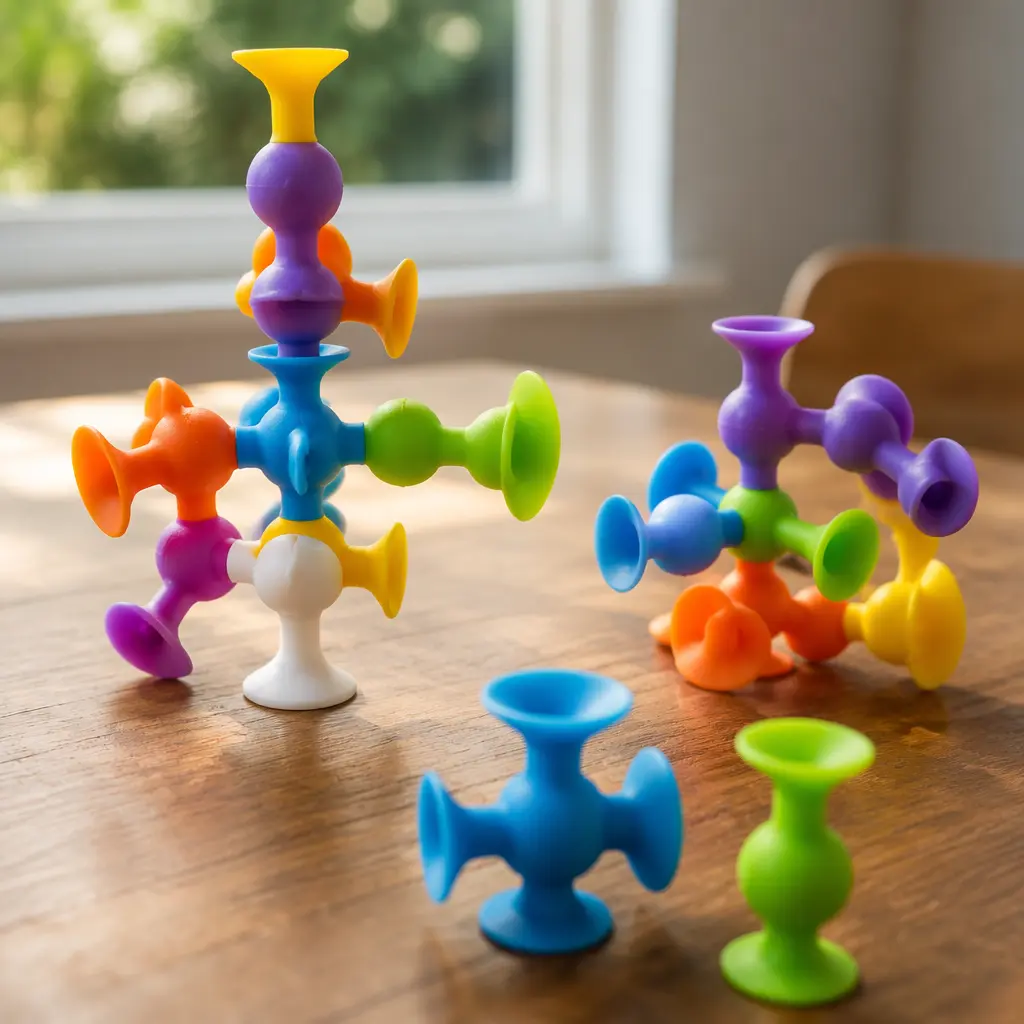
At the center of Squigz is a very physical kind of play. The silicone material is soft and slightly flexible, making the pieces comfortable to squeeze and twist. Connecting two parts creates resistance and tension that children can feel immediately. Pulling them apart creates both sound and motion, giving instant sensory feedback. That combination makes the toy unusually engaging even before any structured building begins.
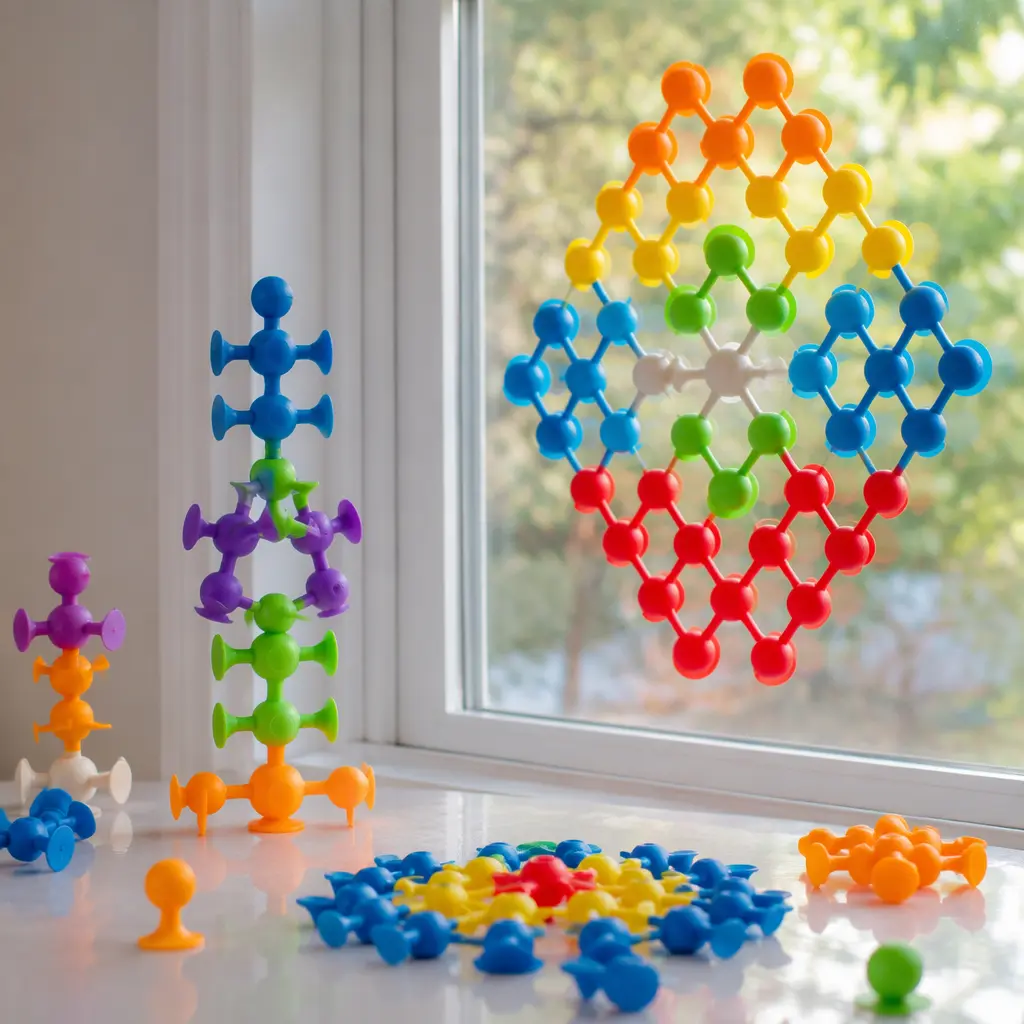
Unlike brick-based construction systems that depend on exact alignment, Squigz encourages experimentation. Pieces can connect at unusual angles, attach to windows or tiles, and bend into asymmetrical forms. Younger children often approach the toy as sensory exploration, while older children may use it for engineering-style building challenges. Adults frequently describe the pieces as fidget-friendly because handling them can be calming and repetitive without requiring intense concentration.
- Soft silicone texture that is easy to grip and squeeze
- Strong suction connections that work on smooth surfaces
- Open-ended building with no single correct outcome
- Audible popping feedback during play
- Portable pieces that work in bathtubs, classrooms, and travel settings
- Construction play that supports fine motor coordination and spatial thinking
Who it's for
Squigz is generally aimed at preschool and elementary-age children, though the broad age appeal is part of its success. Younger children often enjoy the sensory experience and simple stacking possibilities, while older kids experiment with balancing structures and more ambitious builds. Because the toy does not require reading, batteries, or complicated rules, it works well in mixed-age households and classrooms. Adults also tend to keep a few pieces on desks as tactile fidgets or conversation starters. The soft silicone design and forgiving construction style make the toy approachable for children who may find more rigid building systems frustrating.
Variants and what to look for today
Over time, the Squigz line expanded into larger starter collections, travel-friendly sets, wheel-based pieces, and simplified versions designed for toddlers. Some versions focus on oversized parts for younger children, while others introduce more specialized connectors that allow for elaborate structures. The core idea has remained consistent: soft suction pieces that connect through touch and pressure rather than clips or magnets.
When shopping today, material quality matters more than sheer piece count. Better-made suction toys hold their grip consistently and maintain flexibility over time. Lower-quality imitations may harden, attract lint quickly, or lose suction strength after repeated use. It is also worth checking the intended age range carefully, since smaller construction pieces may not suit very young children. Families who plan to use the toy in bathtubs or classrooms often prefer sets with storage bins because silicone pieces tend to scatter easily.
- Starter sets are usually best for first-time buyers
- Larger mixed-piece collections support more ambitious building
- Toddler-focused versions use oversized parts for easier handling
- Travel sets often include compact storage options
- Smooth surfaces like glass, tile, and sealed tables produce the strongest suction
Frequently asked questions
Are Squigz considered STEM toys?
They are often grouped into the STEM category because they encourage spatial reasoning, experimentation, balance, and engineering-style problem solving. Their appeal, however, is broader than structured educational play. Many children simply enjoy the sensory and creative aspects.
Do they only stick to walls and windows?
No. The pieces connect strongly to each other as well as to many smooth surfaces. Children often build free-standing sculptures, chains, pretend creatures, and rolling creations depending on the set they have.
Why do therapists and classrooms use them?
The tactile texture, resistance during pulling, and repetitive popping sensation can support sensory exploration and fine motor practice. Teachers also value the open-ended nature of the toy because multiple children can build collaboratively without needing instructions.
Are they durable enough for long-term use?
Generally, yes. Silicone construction toys are known for flexibility and resistance to cracking compared with hard plastic connectors. Keeping them clean and stored away from dust helps maintain consistent suction performance.
More than a decade after their introduction, Squigz still occupy an unusual place in the toy world. They are construction toys, sensory toys, bath toys, and fidget toys at the same time. That flexibility explains why they continue to appear in homes, therapy spaces, and classrooms long after many trend-driven toys disappear. Their success came from turning a familiar household mechanism into something playful, creative, and unexpectedly hard to put down.