B. Toys Parum Pum Pum Drum and the Rise of Open-Ended Music Play
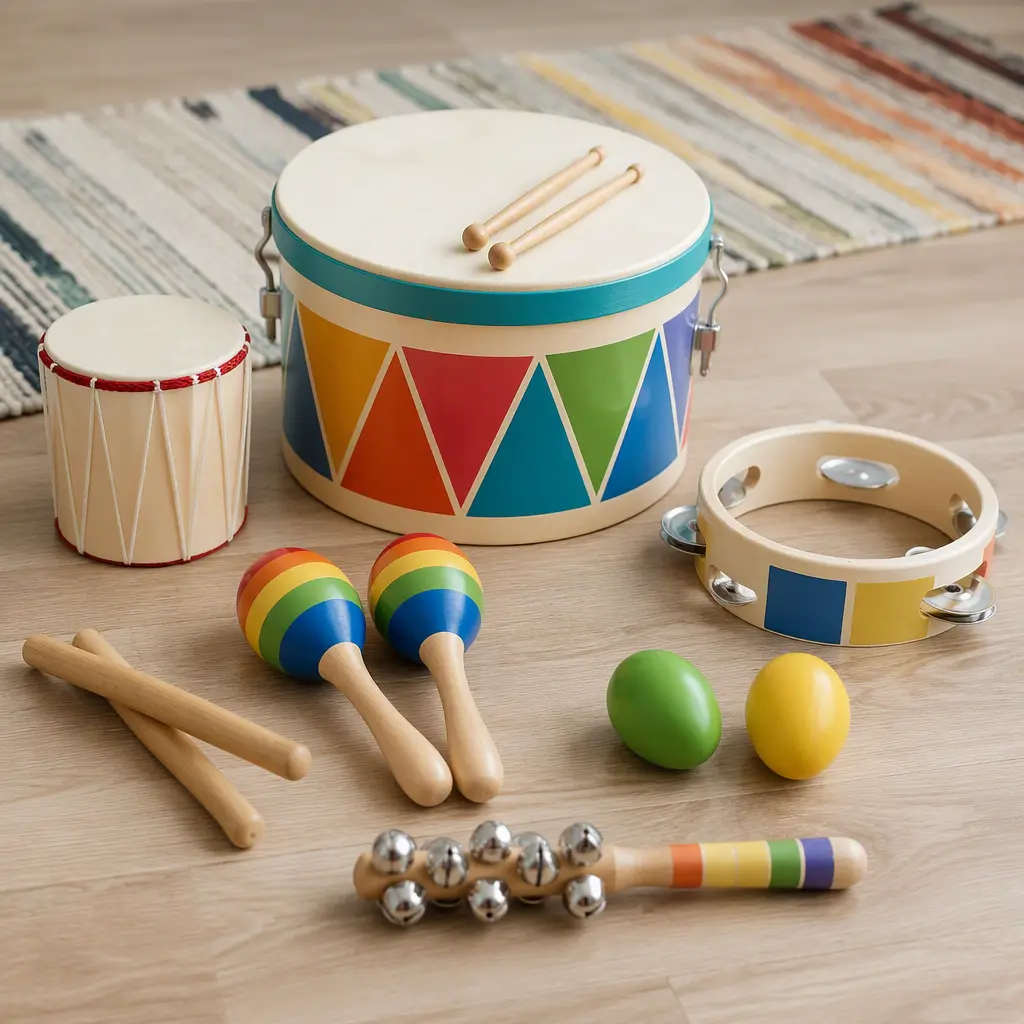
B. Toys' Parum Pum Pum Drum set turned simple beginner instruments into a colorful, low-pressure way for toddlers and preschoolers to explore rhythm, movement, and imaginative play at home.
Compare prices and availability
Check current prices and availability for this guide on eBay.
As an eBay Partner, we may be compensated if you make a purchase.
Few toy categories bridge the gap between sensory play, movement, and creativity as naturally as beginner musical instruments. B. Toys' Parum Pum Pum Drum set became especially noticeable in the 2010s because it treated children's music play less like a formal lesson and more like an invitation to experiment. The set combines several easy-to-hold percussion instruments in bright colors and rounded shapes, encouraging toddlers and preschoolers to make noise, copy rhythms, move around the room, and invent their own games. For many families, it became a familiar sight in playrooms because it offered something surprisingly durable in toy terms: open-ended play that still feels fresh after the novelty wears off.
Where it came from
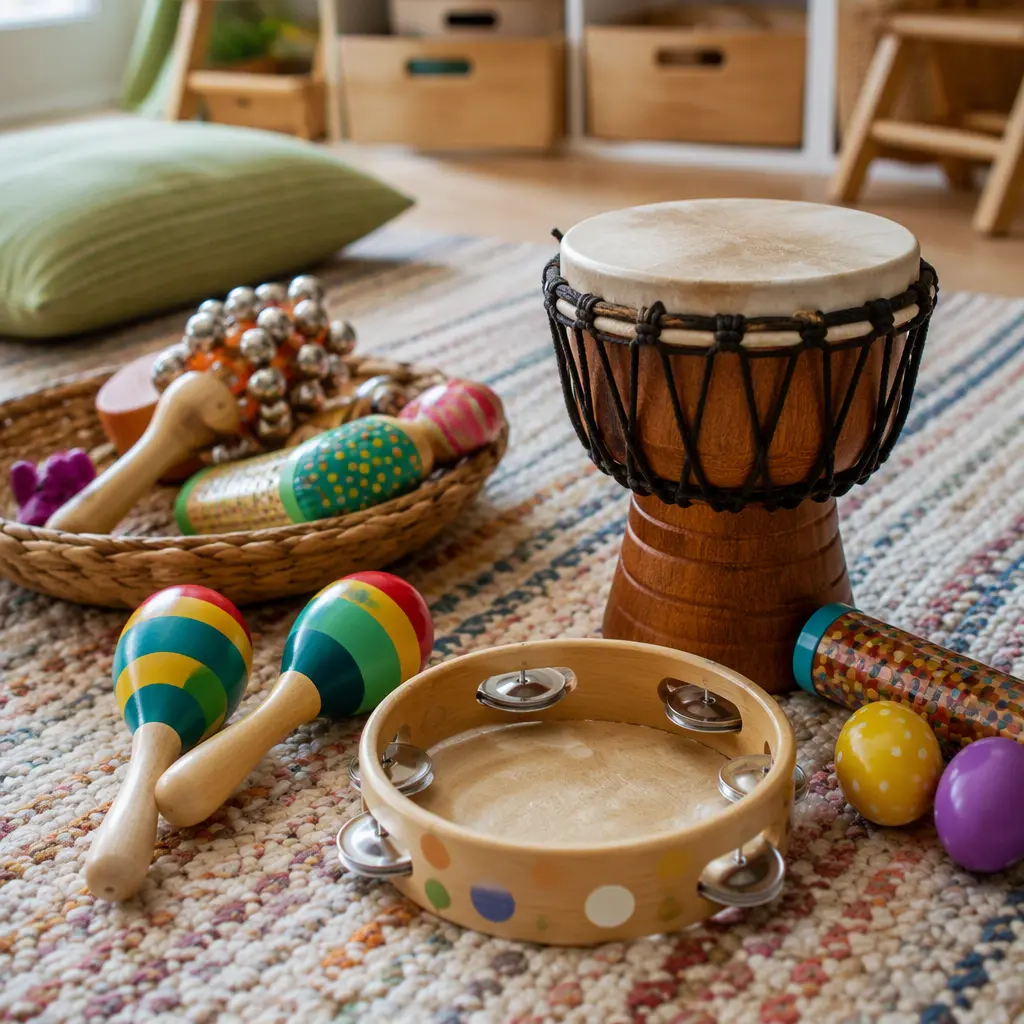
The Parum Pum Pum Drum set comes from B. Toys, a children's toy line developed under the long-running Battat company. Battat has roots dating back to the late nineteenth century, but B. Toys emerged as a more modern branch focused on contemporary design, sensory-friendly materials, and colorful educational play. The line gained attention for creating toys that looked playful without feeling overly electronic or complicated.
The instrument set arrived during a period when many parents were looking for alternatives to screen-heavy entertainment and button-driven toys. Instead of relying on flashing lights or recorded songs, the Parum Pum Pum Drum collection leaned into physical interaction. Children could shake, tap, strike, or roll the instruments however they liked. The idea was simple but effective: give young children approachable tools for rhythm and let them discover patterns naturally through repetition and imitation.
Why it works
One reason the set endured is that percussion instruments are naturally forgiving for beginners. A toddler does not need formal instruction to participate. Even very young children can create cause-and-effect experiences by tapping a drum or shaking a rattle. That immediate response is rewarding, and it supports motor coordination, timing, and listening skills without turning play into a lesson.
The design language also mattered. B. Toys became known for rounded edges, oversized handles, and high-contrast colors that were visually engaging without appearing harsh. The instruments are lightweight enough for small hands, and the variety within a single package encourages different styles of interaction. Some children focus on rhythm, while others use the pieces for pretend concerts, marching games, or cooperative play with siblings.
- Multiple percussion styles in one set encourage experimentation
- Rounded, easy-grip shapes suit toddlers and preschoolers
- Bright colors make instruments visually distinct and easy to identify
- Open-ended play supports movement, rhythm, and imaginative games
- Simple acoustic sound avoids batteries and complicated controls
Who it's for
The Parum Pum Pum Drum set is mainly aimed at toddlers and preschool-age children, especially those exploring sensory and movement-based play. The instruments are generally sized for younger users, making them approachable for early coordination practice. At the same time, the appeal often extends beyond the stated age range because rhythm play naturally becomes social. Older siblings may join in, and adults frequently end up participating in call-and-response games or simple family jam sessions. The toy also works well in daycare settings, music circles, and playgroups because several children can interact with different instruments at once.
Variants and what to look for today
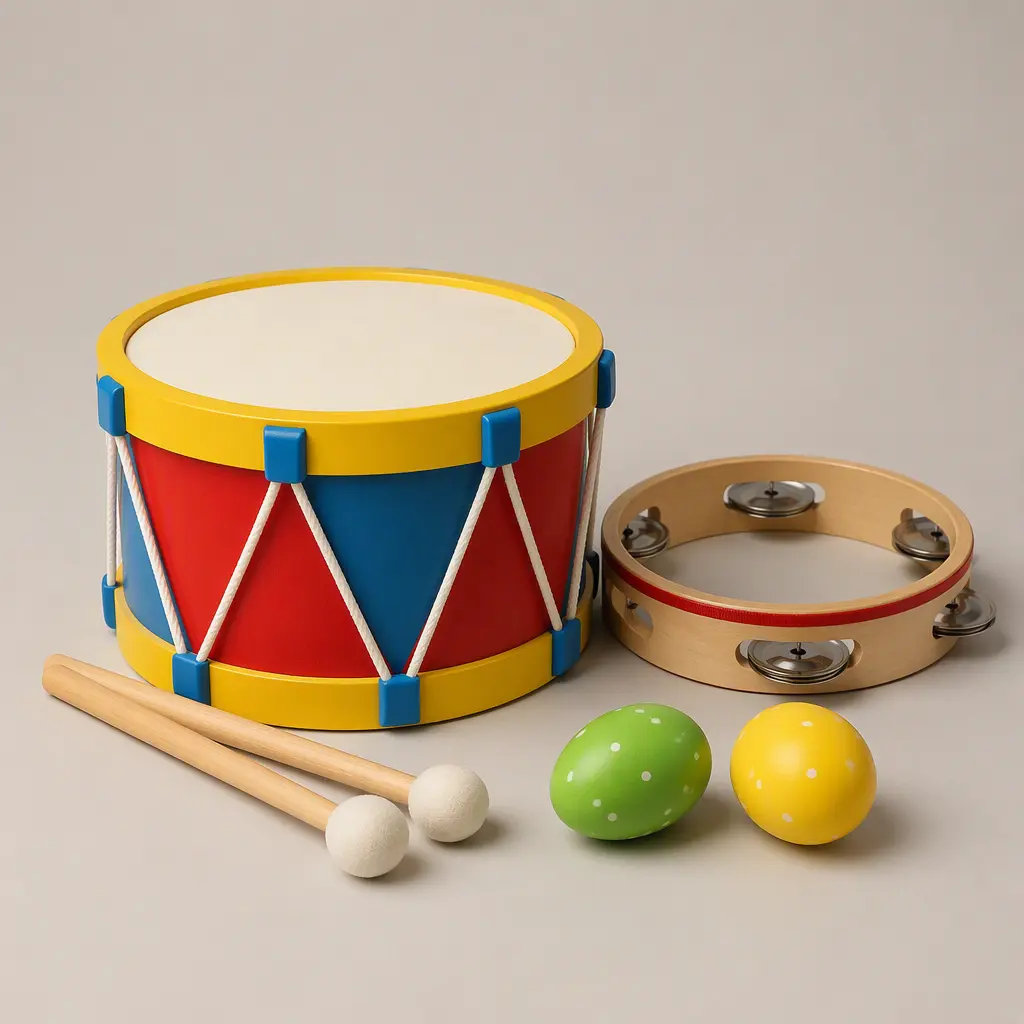
The broader beginner-instrument category has expanded significantly since sets like the Parum Pum Pum Drum became popular. Today, parents can find compact travel sets, wooden Montessori-style percussion kits, soft fabric instruments for babies, and larger classroom-oriented collections. B. Toys remains recognizable for its playful color palette and approachable design, but many brands now follow similar ideas centered on open-ended rhythm play.
When shopping for a beginner instrument set today, material quality matters more than complexity. Durable plastic or sealed wood components tend to hold up best under repeated dropping and enthusiastic drumming. Families may also want to check whether instruments store neatly inside a drum or carrying case, since loose percussion pieces can spread quickly through a playroom. Extremely cheap sets sometimes produce sharp or unpleasant sounds, while better-designed versions aim for softer tones that are easier to tolerate indoors.
- Look for smooth edges and securely attached components
- Choose instruments sized appropriately for toddler hands
- Storage-friendly sets are easier to keep organized
- Acoustic instruments generally encourage freer play than heavily electronic versions
- Avoid poorly finished knock-offs with loose hardware or brittle plastic
Frequently asked questions
Are beginner instrument toys educational?
They can support several early developmental skills, including coordination, timing, listening, and turn-taking. Most importantly, they encourage active participation rather than passive entertainment.
Do children need music lessons to enjoy them?
No. Toys like the Parum Pum Pum Drum are designed around exploration rather than formal training. Children usually begin by copying rhythms, making sounds, and experimenting with movement.
Are noisy musical toys difficult for parents to live with?
Percussion toys can certainly become loud, but simpler acoustic instruments are often easier to manage than electronic toys with amplified sounds and looping songs. Many families set informal quiet-time rules or move music play outdoors when possible.
Why do open-ended music toys stay interesting longer?
Because there is no single correct outcome. Children can use the same instruments differently as they grow, shifting from random sound-making to rhythm games, pretend performances, and cooperative play with others.
The Parum Pum Pum Drum set reflects a broader shift in modern toy design toward creativity over instruction. Its success came from understanding that young children often do not need complicated features to stay engaged. A handful of approachable instruments, bright colors, and freedom to experiment turned a simple percussion set into a lasting favorite for families looking for playful, screen-free activity.