Balance Stepping Stones and the Return of Indoor Active Play
Balance stepping stones turn floors into obstacle courses, helping children build coordination, balance, and confidence through simple movement-based play that works well indoors.
Compare prices and availability
Check current prices and availability for this guide on eBay.
As an eBay Partner, we may be compensated if you make a purchase.
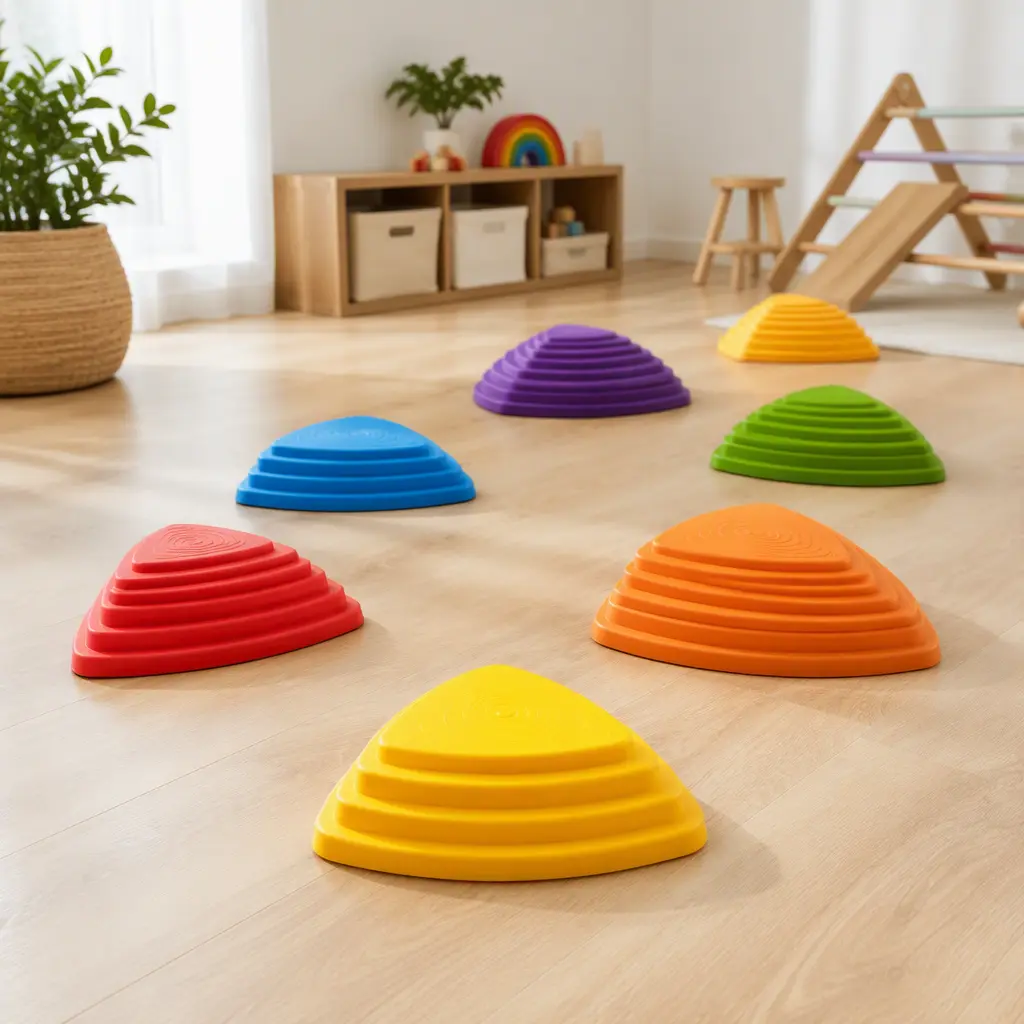
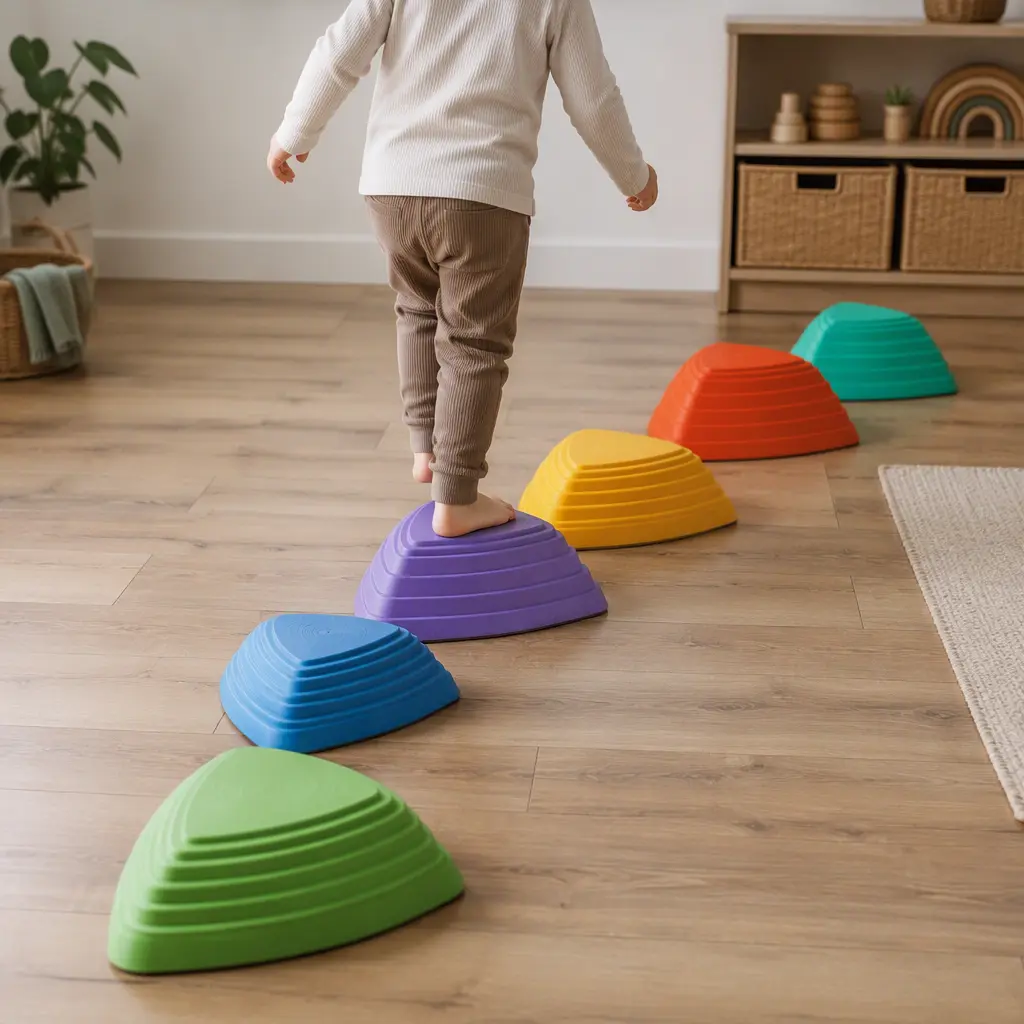
Balance stepping stones are one of the clearest examples of how a very simple toy idea can answer a modern parenting problem. At a time when many children spend long stretches sitting indoors with screens, these lightweight platforms encourage jumping, balancing, climbing, and imaginative movement without requiring a backyard or large gym setup. The appeal is immediate: spread the stones across the floor and almost any room becomes a safe obstacle course. Children naturally turn them into rivers to cross, lava to avoid, or paths through imaginary worlds, while adults appreciate that the activity quietly builds coordination and body awareness through play.
Where it came from
Balance stepping stones belong to a broader category of movement toys inspired by physical education equipment and occupational therapy tools. The idea itself is not tied to one famous inventor or brand. Instead, it emerged from the growing interest in gross motor development products during the late 20th and early 21st centuries, especially in preschools, therapy clinics, and Montessori-style learning environments. Designers borrowed from classic playground activities such as hopping across rocks, balancing on logs, and navigating simple agility courses.
As indoor play spaces became smaller and families looked for more flexible activity toys, stepping stones evolved into stackable plastic sets with textured tops and rubberized bottoms. That shift made them practical for homes as well as classrooms. Their popularity increased further during periods when families spent more time indoors and searched for screen-free physical activities that did not require complicated assembly or large outdoor equipment.
Why it works
The effectiveness of balance stepping stones comes from how open-ended they are. There are no rules, no scores, and usually no batteries. Children can arrange them in endless patterns and immediately test their own balance and movement decisions. Unlike many toys that direct play toward one narrow outcome, stepping stones reward experimentation. A child may first walk cautiously from one to another, then begin jumping, crawling, spinning, or creating imaginative games around the layout.
The physical design also matters. Most sets vary in height, width, or angle, encouraging children to shift weight and adjust posture while moving. Textured surfaces provide grip, while lightweight construction allows kids to rearrange the course independently. This combination supports gross motor development in a way that feels playful rather than instructional.
- Encourages balance, coordination, and body awareness
- Works in small indoor spaces such as living rooms or classrooms
- Supports imaginative and open-ended play
- Usually lightweight and stackable for storage
- Can be used solo or as part of group movement games
Who it's for
Most balance stepping stone sets are designed for preschool and early elementary ages, though the exact challenge level depends on spacing and height. Younger children often use them for basic stepping and balance practice, while older kids create timed obstacle courses or more difficult jumping patterns. They also appeal to therapists and educators because they encourage movement without feeling like structured exercise. Adults sometimes use them alongside other activity toys in sensory-friendly playrooms or indoor movement corners, especially during bad weather when outdoor play is limited.
Variants and what to look for today
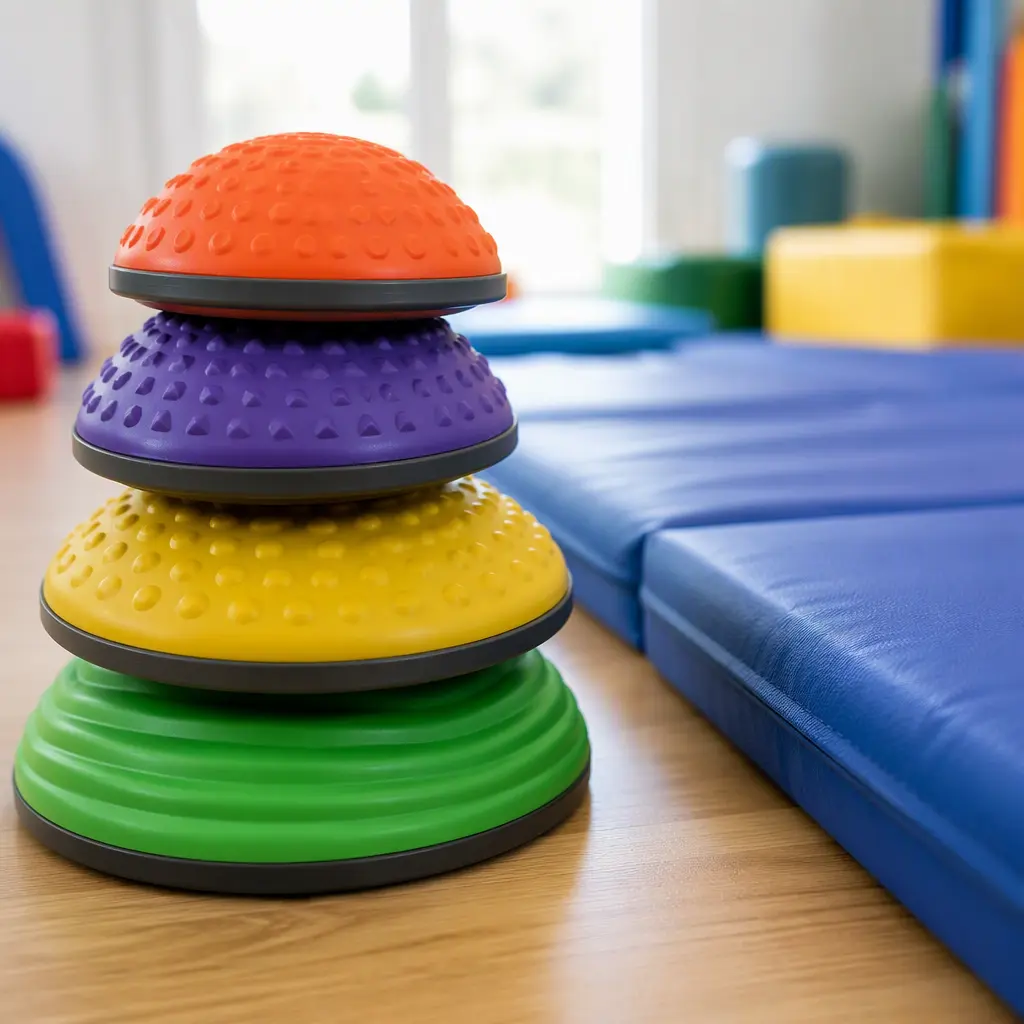
Modern balance stepping stones come in several styles. Some are low, wide platforms intended for toddlers, while others are taller or intentionally uneven to increase difficulty. A few sets include reversible surfaces, sensory textures, or soft foam construction for quieter indoor use. There are also modular obstacle systems that combine stepping stones with balance beams, arches, or connector pieces.
When shopping today, the biggest differences are usually stability, grip, and durability rather than appearance. Heavier-duty sets tend to stay in place more reliably on smooth floors. Textured tops and non-slip bottoms are especially useful for active play indoors. Very lightweight budget versions may slide more easily or flex under pressure, so checking weight recommendations and construction quality is worthwhile.
- Look for non-slip bases if using them on hardwood or tile
- Stackable designs are easier to store in smaller homes
- Textured surfaces can improve grip and sensory feedback
- Foam versions are quieter but may wear faster over time
- Avoid poorly balanced designs that tip too easily during normal play
Frequently asked questions
Are balance stepping stones only for toddlers?
No. While many sets are marketed toward younger children, older kids often enjoy creating more advanced obstacle courses or combining the stones with other movement games. The challenge level can be adjusted simply by changing the spacing and layout.
Do they actually help coordination?
They can support coordination and balance because children repeatedly practice weight shifting, controlled stepping, and spatial awareness while moving between surfaces. The play pattern naturally encourages repetition without feeling repetitive.
Can they be used outdoors?
Many plastic stepping stones can be used outdoors on dry, flat surfaces, though they are most commonly designed for indoor playrooms, classrooms, and therapy spaces. Prolonged exposure to sun and moisture may shorten the lifespan of some materials.
How much space do you need?
One reason the toy has become popular is that it works in relatively compact spaces. A short path can fit inside a living room or hallway, while larger rooms allow for more elaborate obstacle layouts.
Balance stepping stones succeed because they strip active play down to its basics. There is no complicated setup, no digital system to learn, and no single correct way to use them. Children move, experiment, and invent games almost immediately. In an era crowded with highly programmed entertainment, that simplicity has become part of the toy's lasting appeal. For many families, the stones offer something increasingly valuable indoors: a reason to get up, move around, and play physically together.