Battleship: How a peg-and-grid game made logic dramatic
First sold in 1967, Battleship turned deduction into a tense head‑to‑head duel. Its simple peg‑and‑grid design made guessing feel cinematic—and it still works today.
Compare prices and availability
Check current prices and availability for this guide on eBay.
As an eBay Partner, we may be compensated if you make a purchase.
Battleship looks almost too simple to be gripping: two players, a pair of plastic grids, and a handful of pegs. Yet for decades it has delivered one of the most satisfying feelings in tabletop play—the moment a guess lands, a peg clicks into place, and your opponent quietly confirms a hit. What makes Battleship interesting isn’t theme or storytelling, but how it transforms pure logic and memory into head‑to‑head drama.
Where it came from
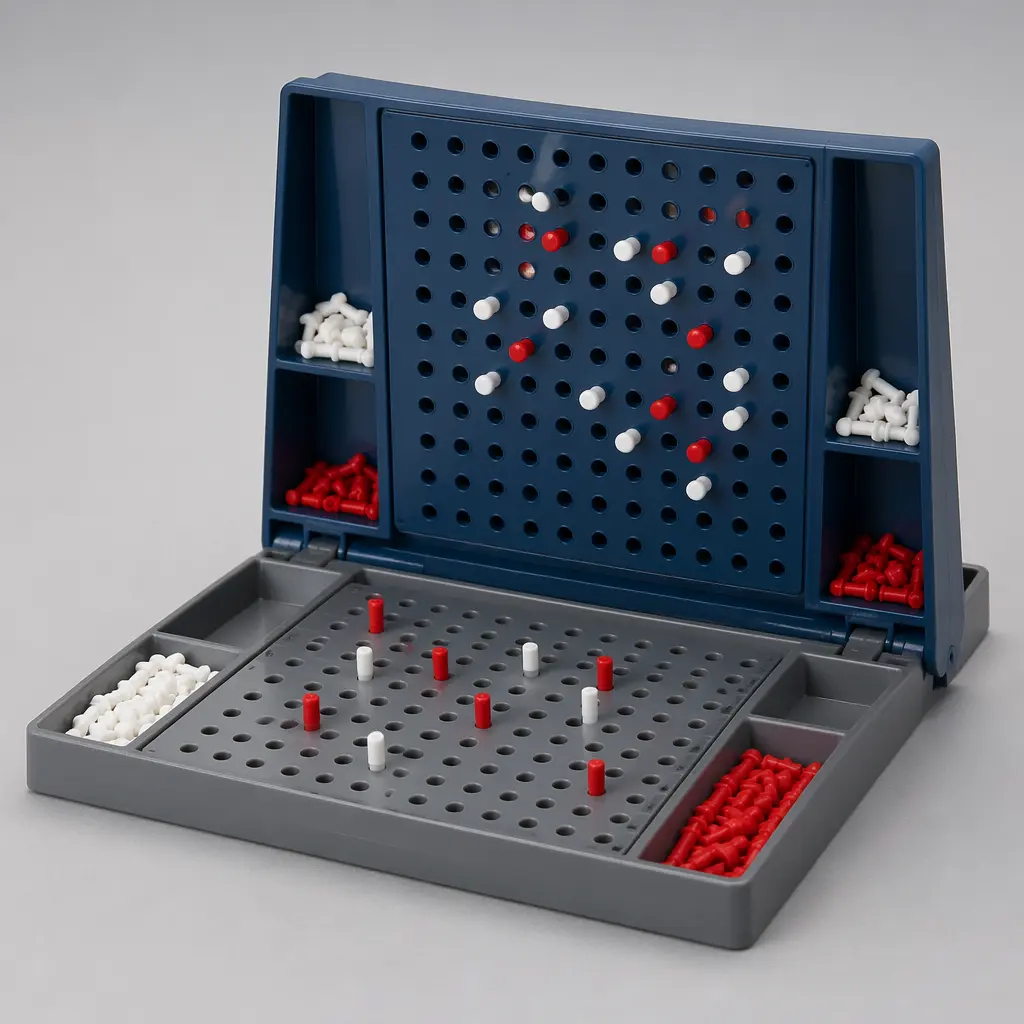
Battleship traces its roots to paper-and-pencil games played as early as World War I, where players secretly plotted ships on squared paper and called out coordinates. The commercial plastic version arrived in 1967, when Milton Bradley packaged the idea into a self‑contained, travel‑friendly box with hinged boards and pegs.
The goal was straightforward: take an abstract guessing game and make it tactile. By giving players physical boards that snapped shut and pegs that visibly tracked every guess, the publisher turned a casual pastime into a repeatable family game. It didn’t require reading, math skills beyond counting, or long explanations—just the ability to think a step ahead.
Why it works
At its core, Battleship is a game about information. Every guess reveals a tiny piece of the puzzle, and players must decide whether to sweep broadly or focus fire once a ship is found. The tension comes from not knowing whether your strategy is smarter than your opponent’s.
The physical design plays a huge role. The upright screens keep secrets intact, while the pegs provide instant, unmistakable feedback. There’s no debate over what happened—each move leaves a visible record. That clarity makes the game feel fair, even when luck plays a part.
- Simple coordinate-based guessing anyone can learn quickly
- Hidden information that creates suspense without complexity
- Tactile pegs that clearly track hits and misses
- Short setup and playtime that encourages rematches
Who it's for
Battleship is typically suitable for school‑age children and up, but its real strength is cross‑generational play. Kids enjoy the clear goal and dramatic reveals, while adults appreciate the light strategy and nostalgia. It’s especially well suited to one‑on‑one play, making it a good choice for siblings, parent‑child matchups, or travel where space is limited.
Variants and what to look for today
Over the years, Battleship has appeared in many forms, from classic peg versions to electronic boards that add sound effects. While the core gameplay stays the same, the experience can vary depending on materials and extras.
If you’re considering a set today, focus on durability and clarity. Pegs should fit snugly without being hard to remove, and the grids should close firmly to protect ship placement. Electronic versions can add novelty, but they also introduce batteries and potential failures. Simpler sets often age better.
Frequently asked questions
Is Battleship mostly luck or skill?
It’s a mix of both. Initial guesses involve probability, but once a ship is hit, smart targeting and memory significantly improve your chances of winning.
How long does a typical game take?
Most matches last between 15 and 30 minutes, depending on experience and playing style.
Can younger children play?
Younger kids can play with help, especially if an adult assists with coordinates and tracking. The physical act of placing pegs is often engaging even before full strategy clicks.
Does the theme matter to gameplay?
Not really. The naval theme provides context, but the game would function the same with almost any hidden-object setup. That abstraction is part of its lasting appeal.
Battleship endures because it does one thing exceptionally well: it makes thinking visible. Each peg tells a story of a choice made and a risk taken. In a hobby crowded with complex rules and long playtimes, this classic reminder—that tension can come from a single, well‑chosen guess—still feels fresh.