Perplexus: The clear maze that made 3D puzzling mainstream
Perplexus turned a transparent sphere into a test of balance, patience, and spatial reasoning. Launched in the early 2000s, it helped bring hands-on, screen-free puzzle play back into the spotlight.
Compare prices and availability
Check current prices and availability for this guide on eBay.
As an eBay Partner, we may be compensated if you make a purchase.
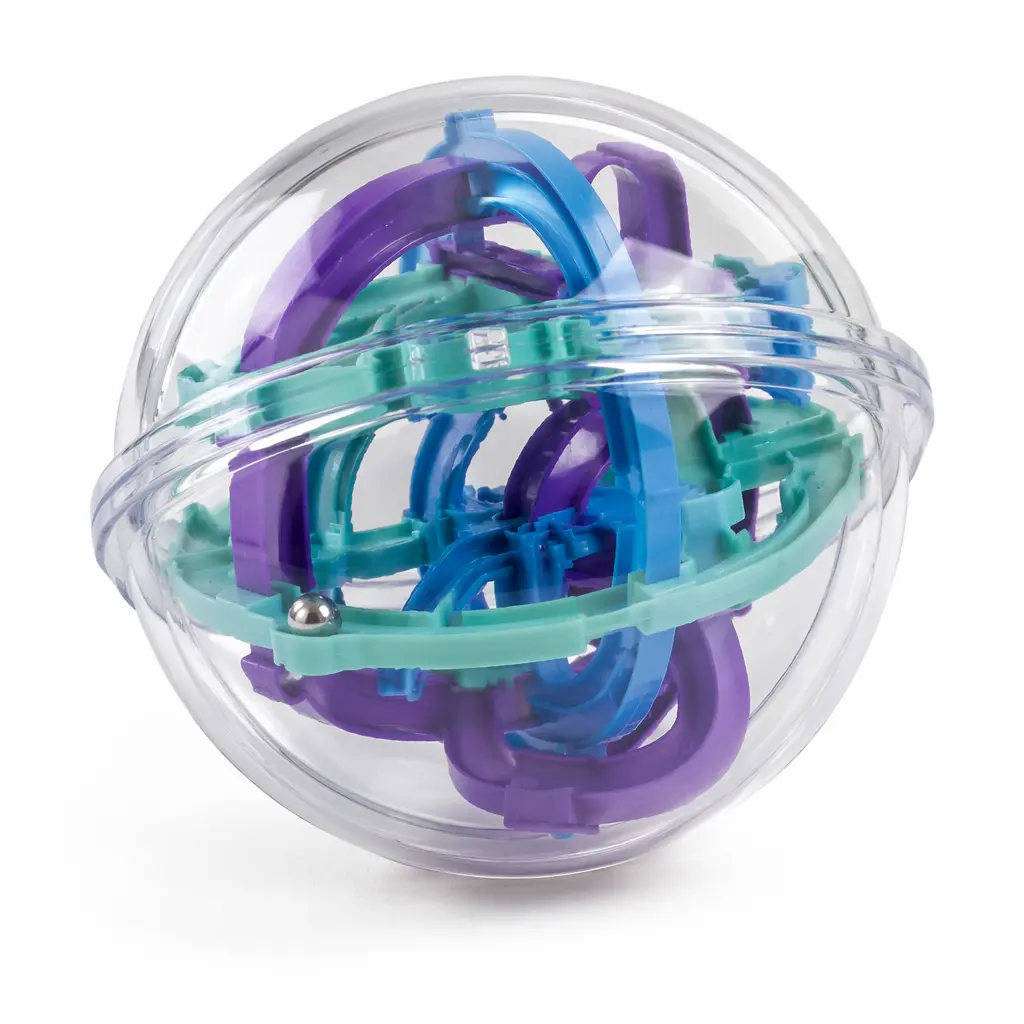
At first glance, Perplexus looks almost too simple to be frustrating: a clear plastic ball, a tiny metal bead, and a maze you can see from every angle. Pick it up, though, and the challenge becomes immediately clear. Guiding that bead along narrow tracks suspended in mid-air turns into a test of steady hands, spatial awareness, and patience that feels very different from flat, paper-based puzzles.
Where it came from
Perplexus emerged in the early 2000s, with its first major releases appearing around 2001. It was part of a wave of modern mechanical puzzles that aimed to do something new with familiar ideas. Instead of a flat maze printed on paper or molded into plastic, Perplexus lifted the maze into three dimensions and sealed it inside a transparent shell.
The original idea was deceptively straightforward: if players could see the entire maze at once, the challenge wouldn’t be finding the path, but executing it. That shift in focus—from problem-solving on paper to physical control in space—helped the toy stand out at a time when digital games were increasingly dominant.
Why it works
Perplexus works because it turns thinking into motion. You’re constantly planning your next move while adjusting the angle and tilt of the sphere, reacting in real time to gravity. The transparency removes guesswork about where the ball needs to go, but that visibility also raises the stakes: you can see exactly how close you are to failure.
The design blends mental mapping with fine motor control, which keeps the experience engaging even after repeated attempts. There’s no randomness, no batteries, and no shortcuts—just the relationship between your hands and the maze.
- A fully visible 3D maze that rewards planning
- A single metal ball that resets instantly after a fall
- Compact, self-contained design with no loose parts
- Clear difficulty progression built into the track layout
Who it’s for
Perplexus is typically recommended for older children, often around 8 and up, once fine motor control and patience have developed. That said, its appeal extends well beyond kids. Teens and adults often find it just as compelling, whether as a desk toy, a stress reliever, or a personal challenge to conquer over time.
Variants and what to look for today
Over the years, Perplexus has expanded into a family of puzzles with varying difficulty levels and maze lengths. Some versions focus on accessibility for beginners, while others add complexity with tighter turns and longer routes that can take hours to master.
When shopping today, it’s worth paying attention to build quality. The best versions have smooth, well-joined tracks and a solid shell that doesn’t flex under pressure. Cheaper imitations may look similar but often suffer from rough seams or poorly aligned paths that make success more about luck than skill.
Frequently asked questions
Is Perplexus more skill or patience?
It’s a mix of both. Skill helps you understand how the ball reacts to movement, while patience keeps frustration in check when mistakes send you back to the start.
Can younger kids play with it?
Younger children can enjoy trying it, but the finer control required may be challenging. Supervised play is recommended, especially due to the small metal ball inside.
Does it ever get boring once you finish it?
Many players find that finishing the maze once isn’t the end. Replaying it faster or with fewer mistakes becomes a new goal, much like replaying a favorite level in a game.
More than two decades after its debut, Perplexus remains a reminder that simple materials and a clever idea can still compete with screens. By turning a maze into a physical, three-dimensional experience, it carved out a lasting place in the modern puzzle landscape—and continues to challenge steady hands everywhere.