Bilibo: The spinning shell that turned open-ended play mainstream
Part seat, part spinner, part imagination prompt, Bilibo became a standout modern toy by doing very little on purpose. Its unusual shape helped popularize open-ended, child-led play.
Compare prices and availability
Check current prices and availability for this guide on eBay.
As an eBay Partner, we may be compensated if you make a purchase.
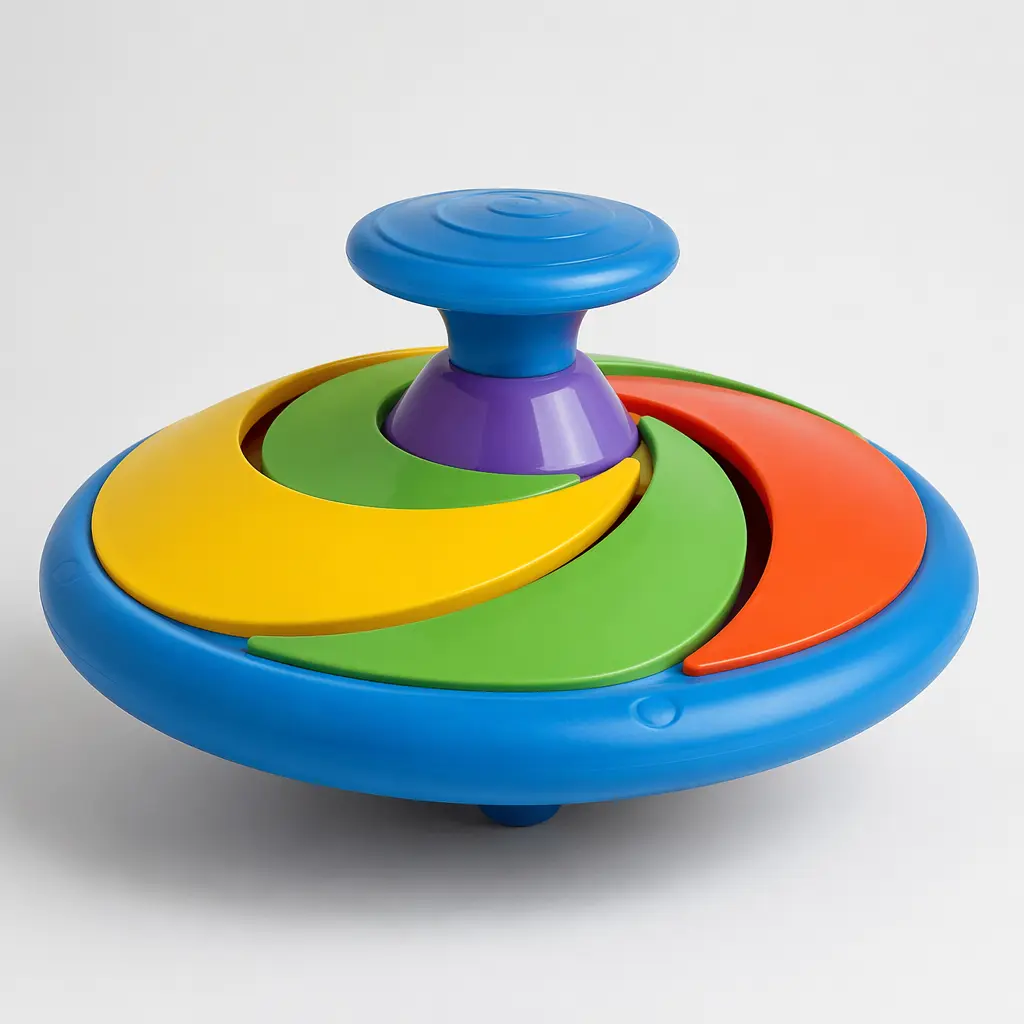
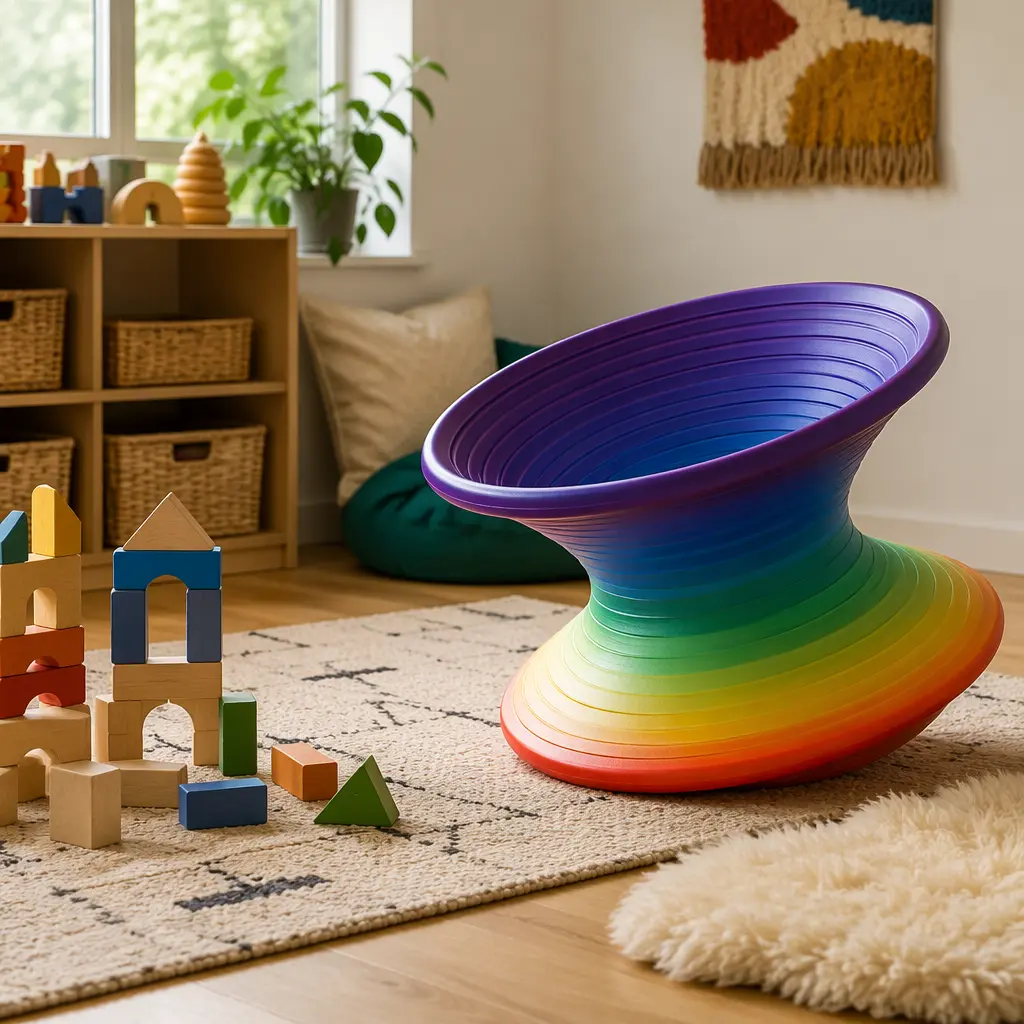
Few modern toys look as difficult to explain as Bilibo. It is a hard plastic shell with rounded edges, somewhere between a bowl, a seat, a helmet, and a spinning top. There are no buttons, electronics, or obvious instructions. Children can sit in it, spin in it, carry objects with it, stack it, hide treasures under it, or turn it into part of an imaginary world. That ambiguity is exactly why the toy became influential. Released at a time when many children's products were becoming louder and more scripted, Bilibo stood out by encouraging children to invent the game themselves.
Where it came from
Bilibo was introduced in 2001 by Swiss designers with a background in child development and industrial design. The goal was not to make a toy that performed a single task well, but to create an object that would invite movement, experimentation, and imagination. Its creators drew inspiration from the way children often ignore heavily scripted toys and instead become fascinated by packaging, household containers, or oddly shaped objects that can become many things at once.
The timing mattered. Early-2000s parenting conversations increasingly focused on reducing screen time and encouraging independent play. Educational approaches influenced by Montessori and open-ended learning were also becoming more visible outside specialist schools. Bilibo fit neatly into that cultural moment. It was durable, simple to clean, visually striking, and flexible enough to work in homes, classrooms, therapy spaces, and outdoor play environments.
Why it works
The toy's effectiveness comes from its unusual balance between structure and ambiguity. Bilibo has enough shape to suggest movement and interaction, but not enough detail to lock children into one specific use. A child can rock inside it, spin on the floor, use it as a turtle shell during pretend play, or incorporate it into obstacle courses. Because there is no "correct" way to play, children often move quickly from physical experimentation into imaginative storytelling.
Its physical design also encourages sensory feedback. The curved interior changes balance and weight distribution as children move, creating a feeling of motion that is more dynamic than a traditional chair or sled. The plastic construction is lightweight but strong, allowing children to reposition it independently without much adult help. That independence is part of the appeal: the toy responds directly to what a child decides to do with it.
- Rounded shell shape supports spinning, rocking, sitting, and carrying
- Open-ended design encourages imaginative and unscripted play
- Durable plastic construction works indoors and outdoors
- Lightweight body is easy for children to move independently
- Minimalist design avoids lights, sounds, and batteries
- Useful across a wide age range for different styles of play
Who it's for
Bilibo is generally associated with preschool and early elementary ages, but its appeal depends more on play style than strict age limits. Younger children often use it for movement and sensory exploration, while older children turn it into props for games, forts, or obstacle courses. Adults sometimes underestimate the toy because of its simplicity, yet that simplicity is often what keeps children returning to it over time. It also appears frequently in occupational therapy settings and classrooms because it can support balance, coordination, and imaginative engagement without requiring formal instructions.
Variants and what to look for today
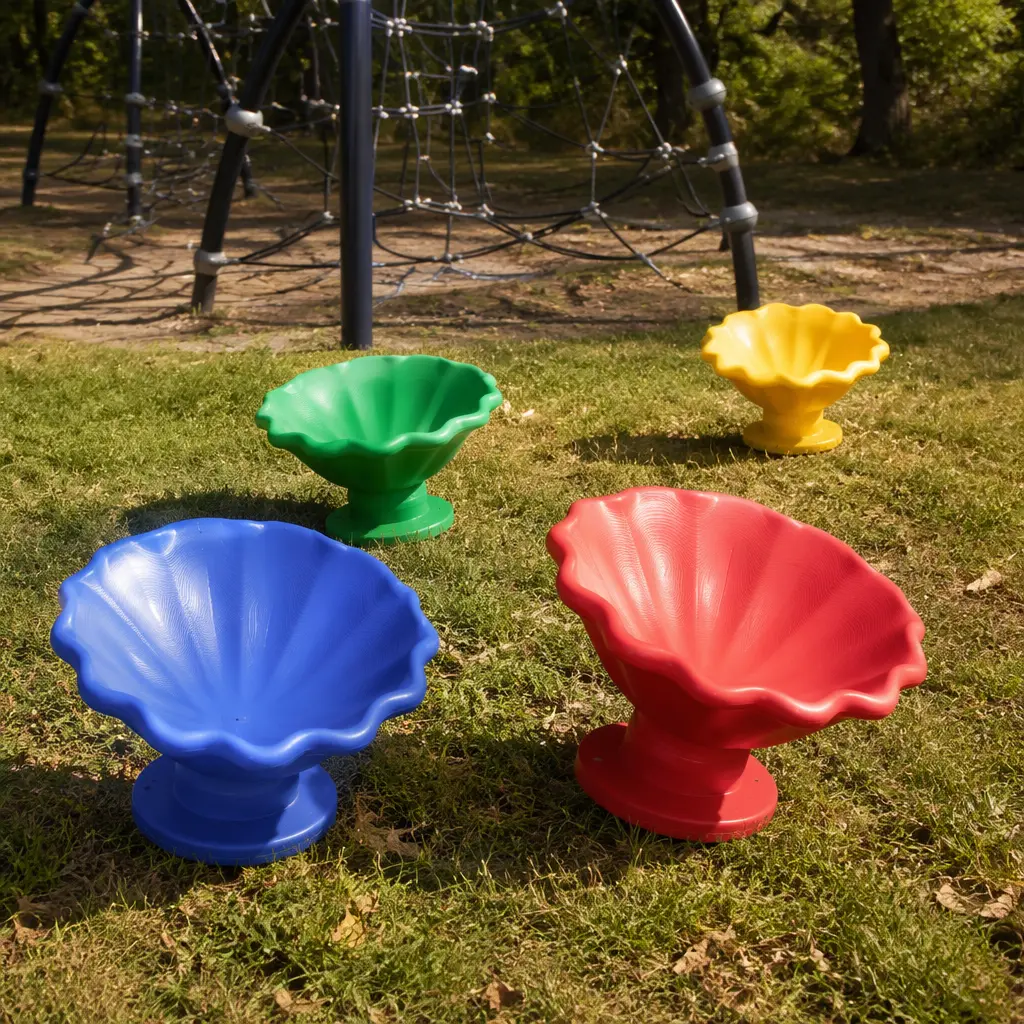
The basic Bilibo concept has remained surprisingly consistent since its release. Most versions still use the same recognizable shell shape and durable molded construction. Some sets include smaller companion pieces or accessories intended for sorting games, scooping, or stacking activities, but the central appeal remains the main shell itself.
When shopping today, the biggest differences are usually material quality and size consistency rather than features. Because the toy depends heavily on balance and body movement, sturdier construction tends to matter more than decorative extras. Lower-quality copies may use thinner plastic that flexes too easily or develops cracks under active play. Families using the toy outdoors may also prefer versions with smooth, easy-to-clean surfaces that resist scuffing and moisture.
- Look for thick, durable molded plastic with smooth edges
- Check age guidance if buying for toddlers or shared classrooms
- Outdoor-friendly finishes are useful for year-round play
- Simple designs usually hold up better than heavily modified versions
- Generic imitation shells may be less stable during spinning or rocking
Frequently asked questions
Is Bilibo meant to be educational?
Not in the traditional sense of teaching letters, numbers, or specific lessons. Its educational value comes from open-ended exploration. Children practice balance, coordination, spatial awareness, and imaginative thinking while inventing their own activities.
Why do children stay interested in such a simple toy?
Because the toy does not define the game for them. Many electronic or highly themed toys have a narrow range of actions, while Bilibo can change roles depending on a child's age, mood, or environment. That flexibility can make it feel new even after years of ownership.
Can it be used outdoors?
Yes. Many families use Bilibo-style toys indoors and outdoors for spinning, scooping sand, carrying toys, or incorporating them into active games. The durable plastic construction is one reason the toy became popular in schools and group play spaces.
Does it replace traditional pretend-play toys?
Usually it complements them instead. Children often combine Bilibo with blocks, costumes, toy animals, or household objects. Its value comes from adding movement and flexibility to play rather than replacing imaginative toys altogether.
More than two decades after its introduction, Bilibo remains a useful example of how modern toy design sometimes succeeds by removing features instead of adding them. Its curved shell shape still looks unusual, but its influence can be seen in a wider movement toward toys that encourage self-directed play. In an industry often driven by characters, apps, and constant updates, Bilibo showed that a single strange object could hold children's attention simply by giving them room to decide what it should become.