Boon Pipes Bath Toys and the Rise of Bath-Time Engineering
Boon Pipes Bath Toys turned ordinary bath time into a hands-on building activity, using modular tubes, suction cups, and flowing water to introduce simple engineering play for young children.
Compare prices and availability
Check current prices and availability for this guide on eBay.
As an eBay Partner, we may be compensated if you make a purchase.
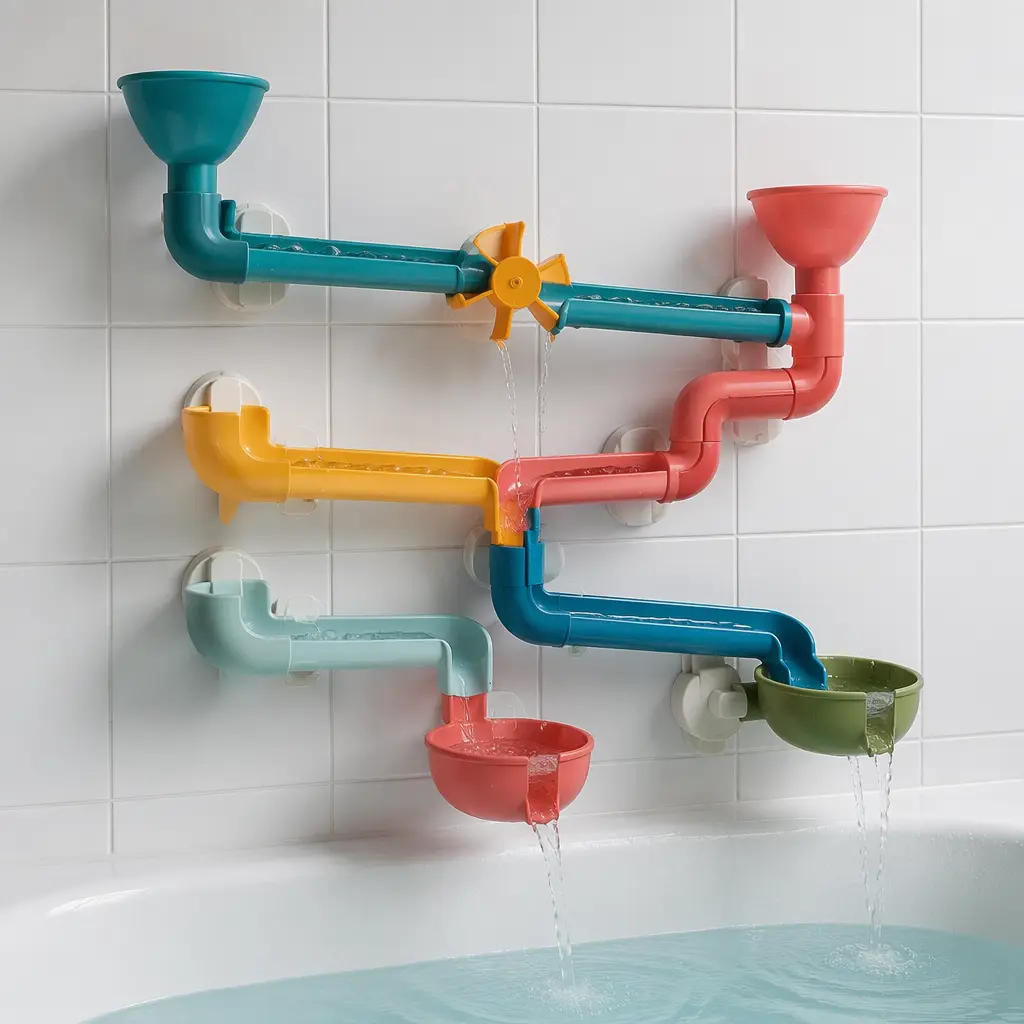
Bath toys have traditionally fallen into a familiar pattern: floating animals, pouring cups, and squeeze toys that do little more than drift around the tub. Boon Pipes Bath Toys arrived with a different idea. Instead of passive floating toys, the set encouraged children to build pathways for water, connect pieces in different directions, and experiment with movement, flow, and gravity. The result was a bath toy that felt closer to a beginner engineering kit than a traditional tub accessory. For many parents, that shift helped explain why the toy family became a modern nursery and toddler-room staple.
Where it came from
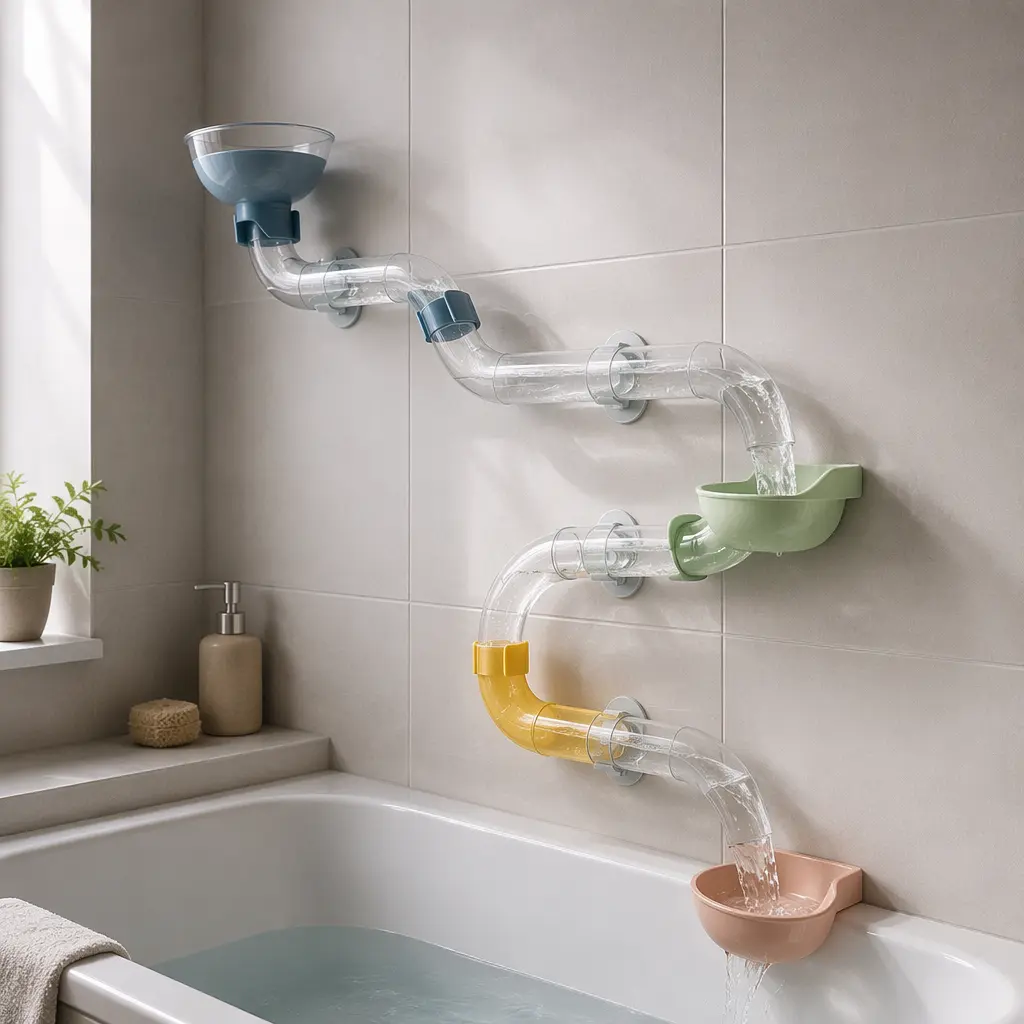
Boon emerged during the early 2000s as part of a wave of modern baby-product companies that focused on cleaner design, brighter colors, and products that blended practical parenting with playful learning. Rather than producing heavily themed character toys, the company leaned toward simple geometric forms and open-ended interaction. That design philosophy shaped the Pipes Bath Toys line.
The Pipes sets were created to make bath time more interactive without adding electronics or complicated parts. Each piece attached to smooth tile surfaces using suction cups, allowing children to arrange channels and tubes however they liked. Water could then be poured through the structures to create spinning, trickling, or cascading effects. The concept borrowed from marble runs, plumbing systems, and construction toys, but translated those ideas into a safe, water-friendly format for toddlers and preschoolers.
Why it works
What made the Pipes toys stand out was their modularity. Instead of presenting a fixed toy with one intended outcome, the sets encouraged experimentation. A child could place the tubes vertically to speed up water flow, spread them horizontally to slow it down, or combine multiple pieces into branching systems. The toy rewarded trial and error in a way that felt intuitive rather than instructional.
That open-ended structure also helped the toy stay interesting longer than many bath products. A floating toy often becomes familiar after a few uses, but modular building systems naturally invite rearrangement. Children could test new routes for water every bath, creating different reactions and movement patterns. Parents appreciated that the activity kept children engaged without relying on screens, batteries, or loud sounds.
- Modular tube pieces that can be rearranged in different layouts
- Suction-cup attachment system for tile walls and tubs
- Visible water movement that demonstrates gravity and flow
- Bright colors and oversized parts designed for younger children
- Open-ended play that combines building with sensory activity
Who it's for
The Pipes Bath Toys family is generally aimed at toddlers and preschool-aged children who are developing fine motor skills and beginning to understand cause-and-effect play. The oversized pieces are easier for small hands to grasp than traditional construction toys, and the water-based interaction adds a sensory element that many children naturally enjoy. Adults often appreciate the toys for a different reason: they can make bath time smoother by turning routine cleanup into a structured activity. The minimalist design also helped the toys appeal to parents who preferred modern-looking children's products over highly branded character merchandise.
Variants and what to look for today
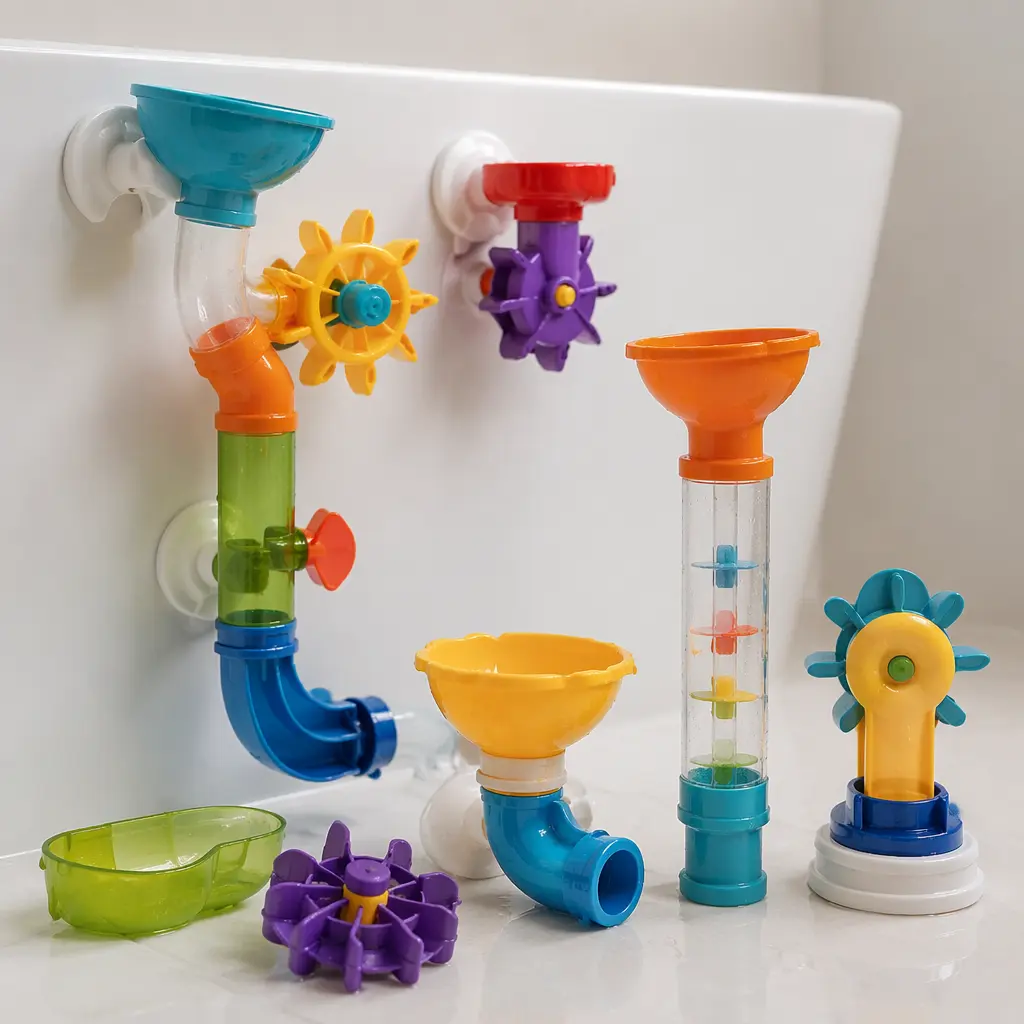
Over time, the Pipes concept expanded into multiple configurations. Some sets focused on straight tubes and elbows for creating long channels, while others introduced spinning wheels, funnels, or drip features that changed how water behaved. The core idea remained consistent: connect pieces to guide water through a custom pathway.
Today, shoppers can still find modular bath construction toys inspired by the original concept. When comparing sets, it helps to pay attention to material quality and suction performance. Strong suction cups matter because younger children can become frustrated if pieces constantly slide down wet tile. It is also worth checking whether the parts separate easily for cleaning and drying, since enclosed water toys can trap moisture if not maintained properly.
- Look for sets with removable or open-ended pieces that dry thoroughly
- Choose larger components for younger toddlers
- Check whether suction cups work on your bathroom surface type
- Consider mixed-feature sets with funnels, wheels, and straight pipes for more variety
- Avoid poorly finished imitation sets with rough plastic edges or weak connectors
Frequently asked questions
Are modular bath toys educational?
They can support several early-learning skills without feeling like formal lessons. Children experiment with sequencing, gravity, water flow, and simple construction while building tube arrangements. The play pattern also encourages problem-solving because children quickly see how changing the angle or placement of a piece affects the result.
What age works best for these toys?
Most modular bath tube toys are best suited for toddlers and preschoolers who can safely handle larger plastic pieces. Younger infants may enjoy watching water move through the tubes, but the interactive building element becomes more meaningful once children can intentionally connect and rearrange parts.
Do the suction cups work on all tubs and walls?
Suction cups usually perform best on smooth tile, glass, or glossy bathtub surfaces. Textured walls or matte finishes can reduce grip strength. Wetting both the surface and the suction cup before attaching often improves performance.
Why did these toys become so popular with parents?
Part of the appeal came from combining practical bath-time use with developmental play. Parents often looked for toys that could hold a child's attention without adding noise or electronic components. The clean visual design also fit the broader trend toward modern nursery and playroom aesthetics during the 2000s and 2010s.
Boon Pipes Bath Toys helped redefine what a bath toy could be. Instead of acting as simple floating distractions, they transformed the bathtub into a miniature workshop where children could build, test, and observe. That mix of sensory play and beginner engineering is a major reason the toy family continues to stand out in a crowded category filled with far more disposable trends.