BrainBox: Why a 10-second memory game became a family staple
BrainBox turned quick observation into a fast, family-friendly challenge. Its 10-second memory format helped the modern tabletop game find a lasting place in homes and classrooms.
Compare prices and availability
Check current prices and availability for this guide on eBay.
As an eBay Partner, we may be compensated if you make a purchase.
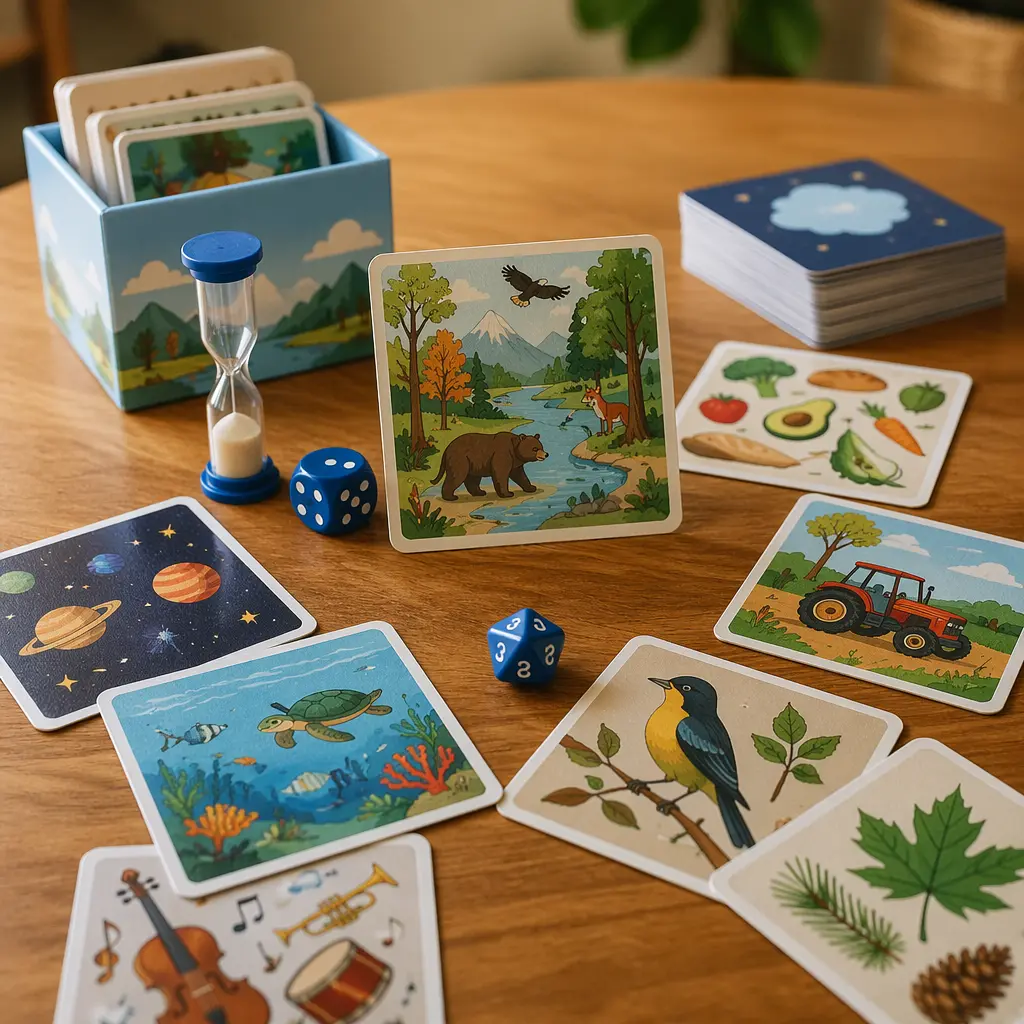
BrainBox arrived at a moment when families were rediscovering tabletop games that could compete with screens without demanding a long rules explanation. The idea was simple: study a detailed card for 10 seconds, turn it over, and answer questions from memory. That short burst of concentration gave the game a pace that felt approachable for children but still surprisingly challenging for adults. Over time, BrainBox became one of the more recognizable examples of a modern educational game that managed to feel more like a quick social activity than homework disguised as play.
Where it came from
BrainBox was introduced in 2007 during a period when educational games were expanding beyond classrooms and specialty toy stores into mainstream family entertainment. The concept was developed around visual observation and recall rather than traditional trivia. Players did not need specialist knowledge or complicated strategy. Instead, the game rewarded careful attention and quick mental processing.
The original editions focused on broad general knowledge and child-friendly topics, using heavily illustrated cards packed with small details. That format helped the series expand into themed versions covering subjects such as history, science, geography, animals, and early learning. The portability of the box and the short play sessions also made it attractive to parents looking for something that could work during travel, after dinner, or in classrooms with limited time.
Why it works
The key to BrainBox is that it compresses several cognitive skills into a very small amount of play time. Players scan a busy card under time pressure, decide which details seem important, and then try to retrieve those details moments later. Because the cards are visually dense, each round feels slightly different. Younger players often focus on obvious objects and colors, while older players develop techniques for remembering layouts, categories, or patterns.
The design also avoids one common problem with educational games: long waiting periods. Rounds move quickly, and players stay involved because every turn creates new information to notice. The game can become competitive, but it rarely feels punishing. Even incorrect answers usually lead to laughter over overlooked details hidden somewhere on the card.
- Short 10-second observation rounds that keep attention high
- Illustrated cards designed for mixed reading abilities
- Simple rules that are easy to teach across age groups
- Portable format suitable for travel and classrooms
- Themes that range from preschool basics to broader educational topics
Who it's for
BrainBox is aimed primarily at school-age children, but its broad appeal comes from how evenly it balances adults and younger players. Strong reading skills are not always essential because much of the challenge is visual. That makes the game useful for mixed-age families, grandparents playing with children, or classrooms where students have different confidence levels. Adults often discover that the timed observation element is harder than expected, especially when children begin spotting details more quickly. The game also works well for families that prefer shorter activities rather than strategy-heavy board games that require a large time commitment.
Variants and what to look for today
One reason BrainBox endured is its flexibility as a game family rather than a single fixed edition. Some versions focus on younger children with simple object recognition and counting tasks, while others lean toward academic subjects or cultural themes. Travel-sized editions and classroom-oriented sets also appeared as the brand expanded internationally.
For parents or collectors shopping today, the main consideration is matching the card complexity to the player’s age and interests. Younger children usually respond best to bright illustrations with fewer details, while older children and adults may prefer history, world knowledge, or science themes. Because many versions share the same basic mechanics, families often combine sets to keep gameplay fresh over time.
- Look for sturdy cards with clear illustrations and durable corners
- Choose age ranges based on detail density rather than box recommendations alone
- Check that timers, dice, or accessories are included in secondhand copies
- Be cautious of low-quality imitation memory games with blurry artwork or thin cards
Frequently asked questions
Is BrainBox mainly educational or mainly a party game?
It sits somewhere in the middle. The gameplay encourages memory, observation, and recall, but the fast pace keeps it feeling closer to a casual family game than a classroom exercise.
Can younger children play with older siblings?
Usually yes, especially with editions designed around pictures rather than reading-heavy questions. Adults can also adapt the timing or question difficulty to balance the game for mixed ages.
Does BrainBox require a large group?
No. It works with small family groups and can also be played one-on-one. The quick rounds make it easy to bring out for short sessions.
Why did the format become so popular?
The game combines quick setup, short rounds, and educational value without becoming overly serious. That balance made it attractive to parents, teachers, and children at the same time.
BrainBox succeeded because it understood that many families wanted games that exercised attention and memory without demanding hours of commitment. Its 10-second challenge became memorable precisely because it was so simple. In a crowded market full of elaborate board games and digital distractions, BrainBox proved that a small box of illustrated cards and a timer could still hold a room’s attention.