Taboo: Why a game about forbidden words still fills living rooms
Since 1989, Taboo has turned ordinary conversation into fast, funny chaos. Its simple word-guessing format keeps families, friends, and party guests talking across generations.
Compare prices and availability
Check current prices and availability for this guide on eBay.
As an eBay Partner, we may be compensated if you make a purchase.
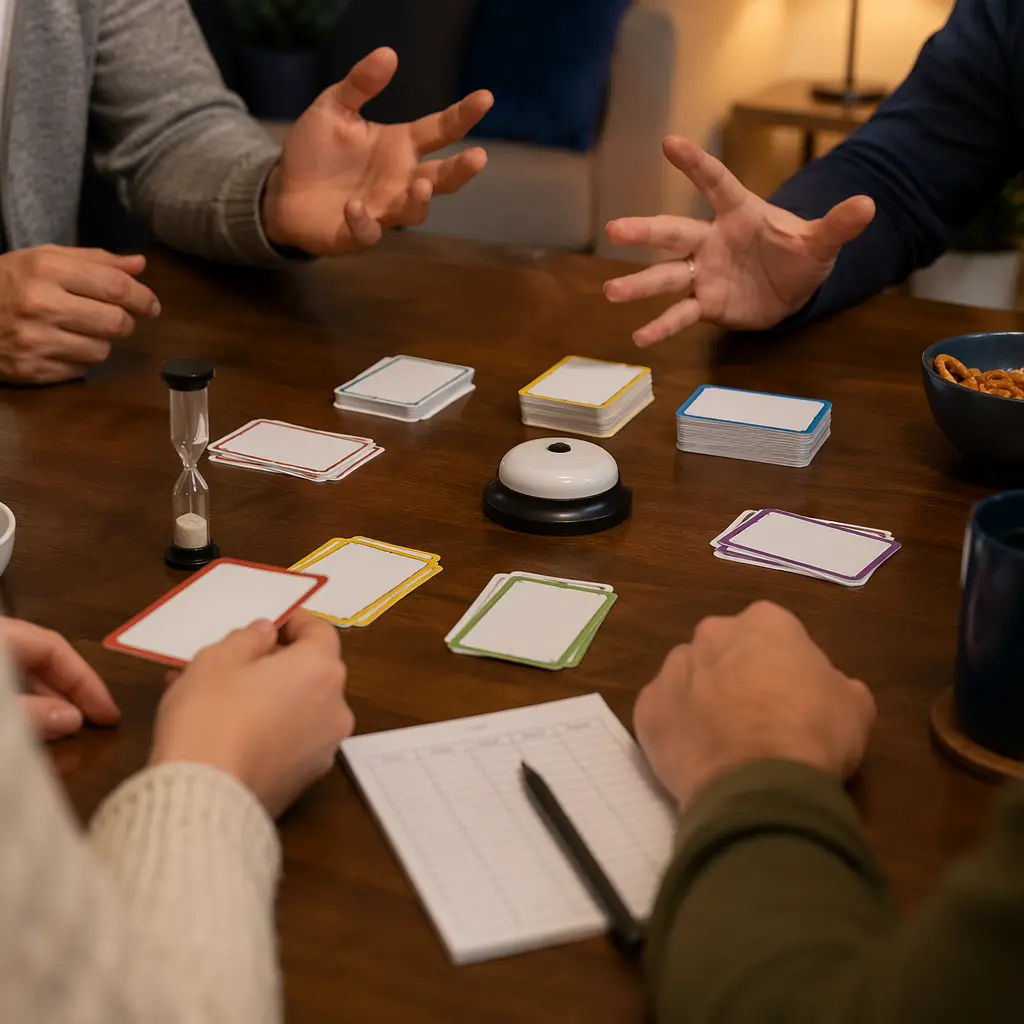
Few party games create tension quite like Taboo. The rules are easy to explain: get your team to guess a word without using a short list of obvious clues. In practice, that turns everyday language into a frantic puzzle. Players wave their hands, search for synonyms, and race against the clock while everyone else waits for the inevitable mistake and buzzer sound. Since arriving in the late 1980s, Taboo has remained a reliable choice for family gatherings, college dorms, holiday parties, and game nights because it rewards quick thinking more than deep strategy.
Where it came from
Taboo was introduced in 1989 during a period when social party games were becoming a larger part of mainstream family entertainment. The game was published by Parker Brothers, later folded into the Hasbro family of brands, and it quickly stood out because of how little setup it required. Unlike long strategy games or trivia-heavy formats, Taboo relied on conversation itself as the challenge.
The core idea was surprisingly simple: make communication harder by banning the most obvious words. Each card centered on a target word paired with several forbidden clues. A player describing “beach,” for example, might be unable to say “sand,” “ocean,” or “sun.” That restriction transformed ordinary speech into a fast improvisation exercise. The game worked equally well with teenagers, adults, and mixed-age groups, which helped it spread through households and party circles long before mobile phones and social media changed how people gathered.
Why it works
Taboo succeeds because it creates pressure without requiring complicated rules. Most players already understand the basic skill involved: describing something in different words. The challenge comes from doing it quickly while avoiding instinctive language. That produces a rhythm that is easy to watch and fun to participate in, even for people waiting their turn.
The game also scales well across personalities. Competitive players enjoy racing the timer and maximizing points, while quieter participants often find themselves laughing at accidental clues or strange descriptions. Because rounds move quickly, nobody stays stuck out of the action for long.
- Simple rules that new players learn in minutes
- Fast rounds that keep larger groups engaged
- Encourages creative language and improvisation
- Works for family gatherings, parties, and classrooms
- Minimal setup compared with larger board games
Who it's for
Taboo is generally best for older children, teenagers, and adults because it depends on vocabulary and quick verbal thinking. Many families introduce it around the preteen years, especially once players are comfortable reading cards independently. Adults often return to it because the format ages well; references and clue styles may change, but the social dynamic stays familiar. It is also one of the easier party games to bring into mixed groups where not everyone regularly plays tabletop games.
Variants and what to look for today
Over the years, Taboo has appeared in travel editions, oversized party versions, and digital adaptations. Some newer releases include electronic buzzers, updated vocabulary, or cards aimed at younger players. The structure, however, has stayed remarkably consistent. That consistency is part of why longtime fans can pick up a modern version and immediately understand how to play.
When shopping today, it is worth paying attention to the condition of older editions. Vintage copies may include worn cards, missing buzzers, or outdated references that younger players do not recognize. Modern editions usually have broader pop-culture coverage and sturdier components for repeated family use. Generic word-guessing games inspired by Taboo also exist, but some rely on weaker card writing or uneven difficulty. The strongest versions keep clues balanced so rounds feel challenging without becoming frustrating.
Frequently asked questions
Is Taboo a board game or a card game?
It is primarily a card-based party game. Some editions include scoreboards or tracking spaces, but the main gameplay comes from clue cards, a timer, and the buzzer.
How many people can play Taboo?
The game works best in teams, usually with four or more players. Larger groups often make rounds more entertaining because there are more reactions, interruptions, and guesses.
Why has Taboo lasted so long?
Its appeal comes from how universal the challenge is. Everyone uses language every day, so nearly anyone can participate immediately. The game creates funny mistakes and memorable moments without needing specialized knowledge.
Can children enjoy Taboo?
Older children and preteens often do well with family-friendly editions or relaxed house rules. Very young children may struggle with the reading and vocabulary demands unless adults simplify the clues.
More than three decades after its debut, Taboo remains one of the clearest examples of how a simple idea can sustain a party game for generations. It does not rely on elaborate components or long campaigns. Instead, it turns ordinary conversation into a shared performance full of pressure, creativity, and laughter. In a crowded game cabinet, that kind of reliable social energy is difficult to replace.