Why the Casdon Dyson Toy Vacuum Still Appeals to Preschoolers
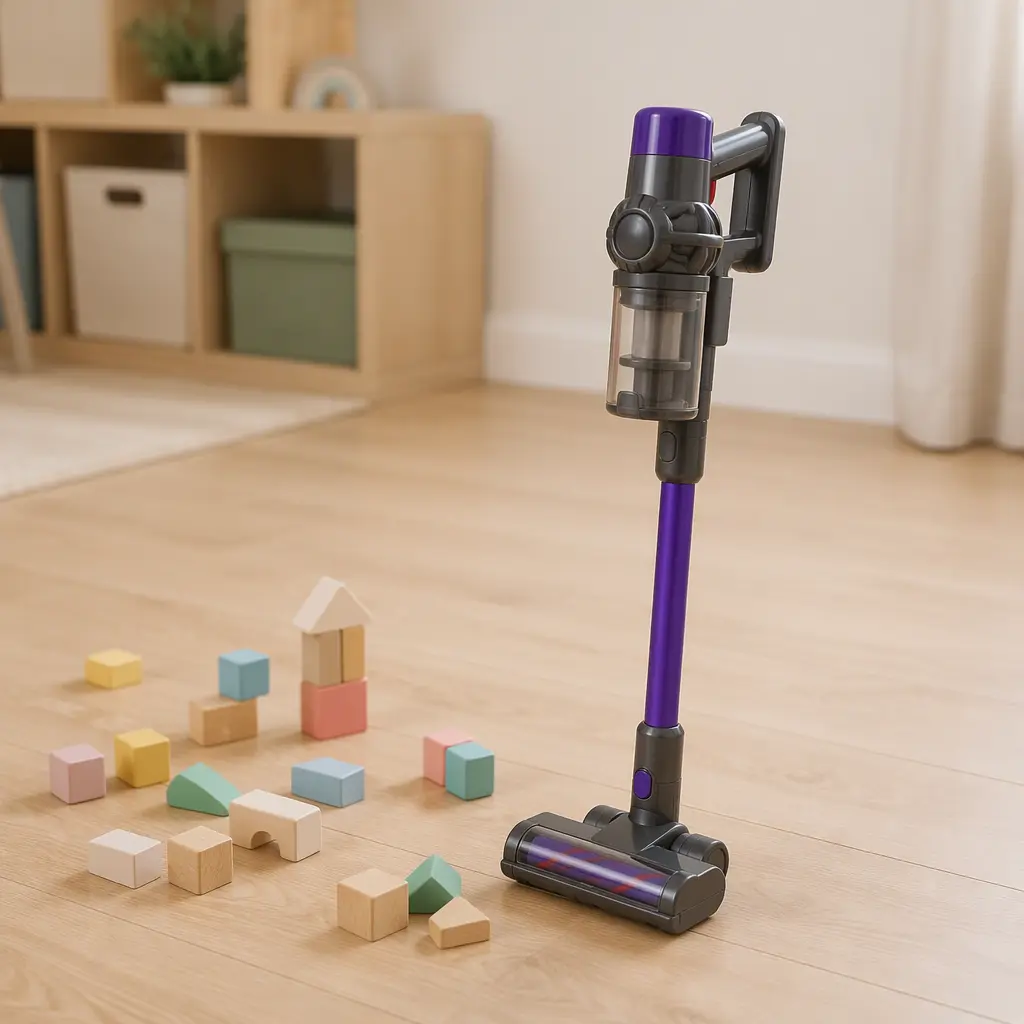
Casdon’s licensed Dyson toy vacuums turned pretend cleaning into a familiar preschool roleplay category, blending realistic styling, light sound effects and child-sized design.
Compare prices and availability
Check current prices and availability for this guide on eBay.
As an eBay Partner, we may be compensated if you make a purchase.
The Casdon Dyson cordless vacuum toy sits in a category that did not always exist in its current form: highly recognisable pretend appliances modeled after real household tech. For many preschool families, the appeal is immediately understandable. Young children often imitate the routines they see every day, and modern cordless vacuums became especially visible objects around the home as lightweight stick vacuums replaced bulkier upright cleaners. Casdon’s licensed partnership with Dyson helped turn that everyday familiarity into a long-running toy line that blends roleplay, movement and simple cause-and-effect interaction.
Where it came from
Casdon, a UK-based toy company known for miniature household roleplay products, introduced licensed Dyson toy vacuums in the early 2000s as cordless and bagless vacuum designs were becoming more recognizable to families. The idea was straightforward but commercially important: instead of a generic toy cleaner, children could use a scaled-down version that resembled the appliance many adults already owned or wanted.
That licensing approach reflected a wider shift in pretend play during the 2000s and 2010s. Toy kitchens, shopping sets and cleaning tools increasingly mirrored modern consumer products instead of abstract versions of household objects. Dyson’s industrial design language — transparent bins, slim handles and futuristic silhouettes — translated especially well into toy form because the shapes already looked playful and gadget-like. Casdon’s versions typically focused on imitation rather than true cleaning performance, using lightweight construction, simulated suction effects or moving beads and child-friendly proportions to create the sense of participation.
Why it works
The core appeal of the Casdon Dyson toy vacuum is not really about cleaning. It is about imitation, movement and routine. Preschoolers often enjoy activities that let them mirror adults in a safe and simplified way, and toy vacuums offer a physical task with immediate visual feedback. Pushing the vacuum across the floor, hearing motor-like sounds and picking up lightweight debris substitutes can feel purposeful even when the toy is mostly theatrical.
Licensed styling also matters more than it might appear at first glance. Children are highly observant about household routines, and recognizable shapes can strengthen pretend scenarios. The toy becomes easier to fit into everyday imaginative play because it resembles an object already associated with family life. For parents, these toys also occupy an unusual middle ground between active play equipment and domestic roleplay gear, encouraging movement rather than purely seated play.
- Scaled-down cordless vacuum styling inspired by modern household appliances
- Lightweight construction designed for preschool handling
- Mechanical or battery-powered sound and bead effects for pretend suction
- Roleplay focused on imitation of familiar routines
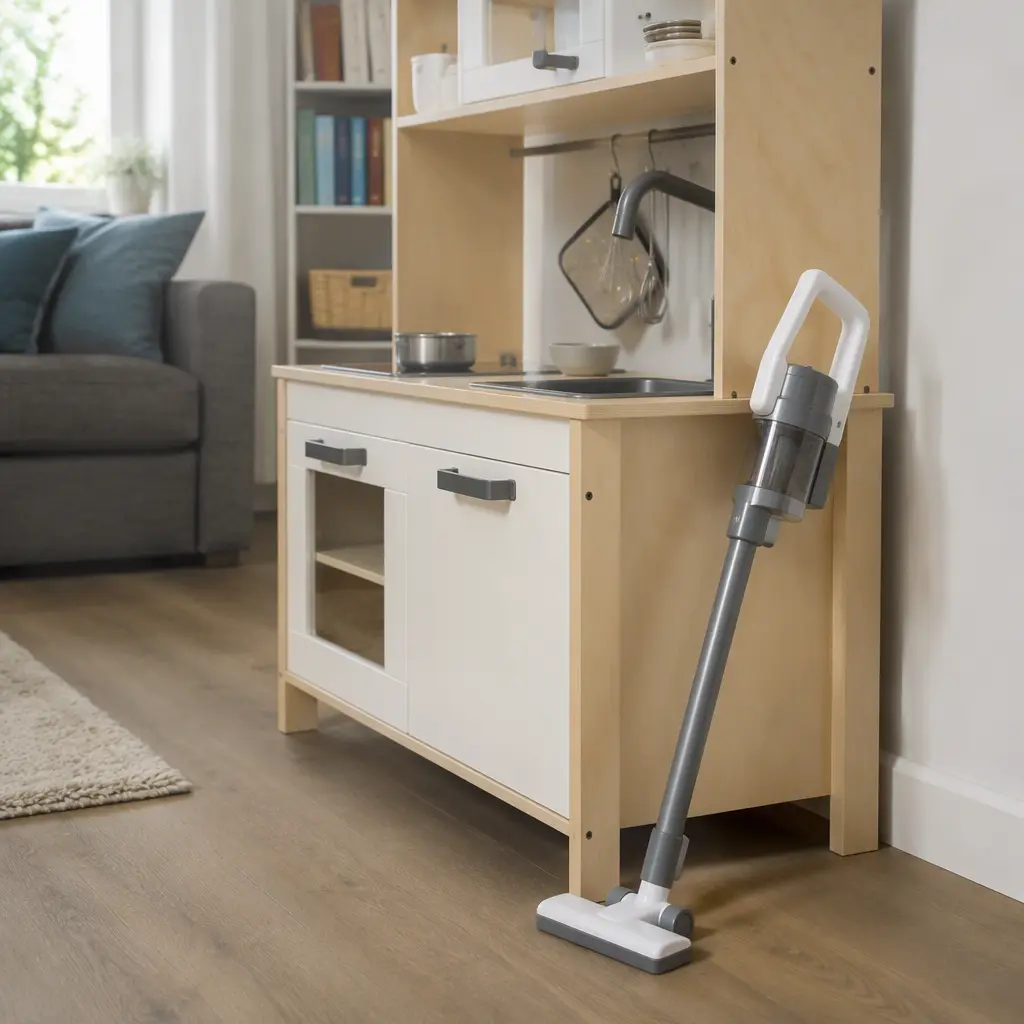
- Compact design that fits naturally alongside play kitchens and housekeeping sets
Who it's for
Most versions of the Casdon Dyson line are aimed at preschool and early elementary-age children who enjoy imitation play and movement-based toys. The appeal tends to be strongest during the years when children are actively copying adult routines and experimenting with responsibility-themed play. Adults sometimes underestimate how long this interest lasts; realistic household toys often remain popular because they integrate easily with broader imaginative setups like toy kitchens, laundry stations or pretend stores. The toy line also appeals to gift buyers looking for something active but not screen-based, especially in homes where children already show curiosity about real appliances.
Variants and what to look for today
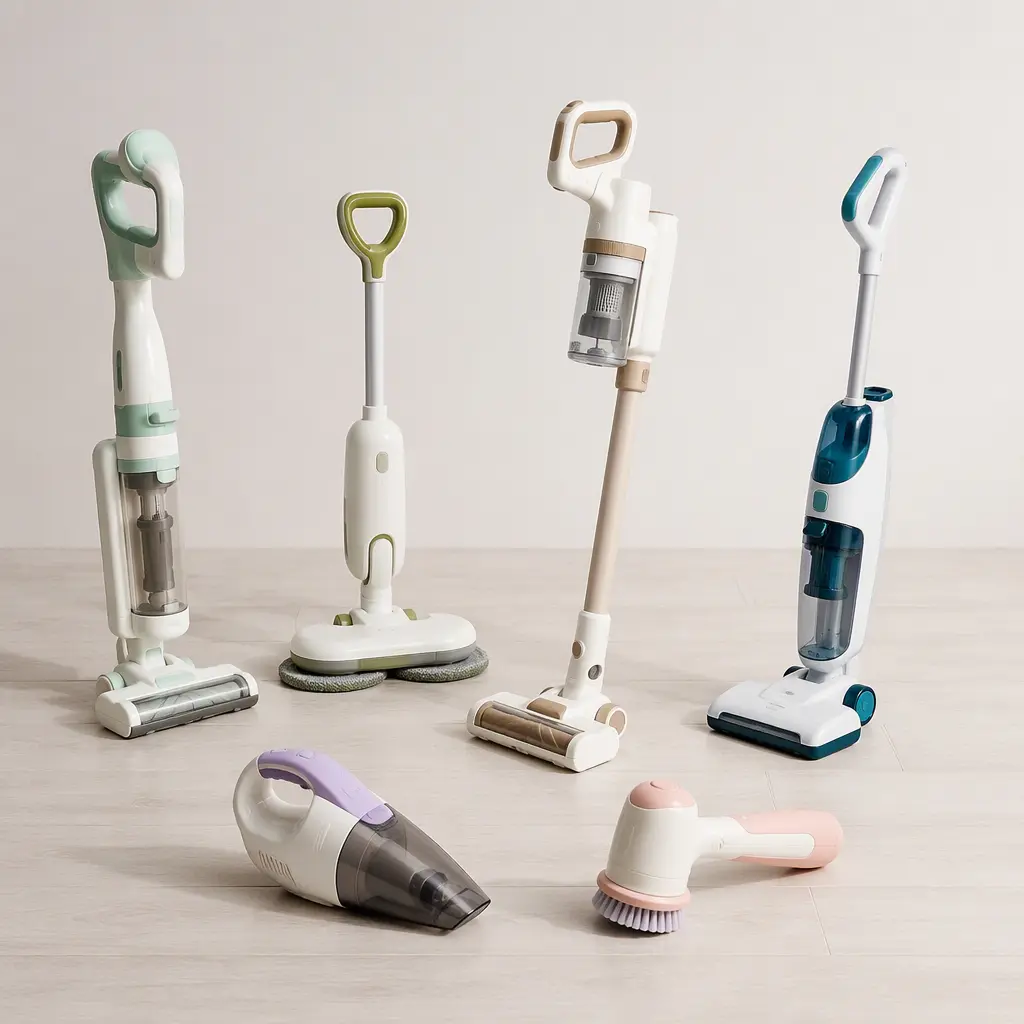
Over time, the Casdon Dyson range expanded beyond a single upright-style toy into multiple cordless-inspired formats, handheld versions and accessory sets. Designs generally track the broader look of Dyson’s real consumer appliances without attempting to reproduce every technical feature. Some versions emphasize realistic appearance, while others focus more on interactive elements like spinning particles, removable debris compartments or simple sound effects.
Families shopping today will usually encounter a mix of older and newer styling generations online and in toy retailers. The biggest differences tend to involve scale, included accessories and whether the toy relies on batteries for sound or simulated suction effects. Build quality can vary significantly across imitation toy vacuums in the broader market, so many parents look for sturdier wheels, secure battery compartments and lightweight handling over extra gimmicks.
- Cordless stick-style versions designed for upright pretend cleaning
- Smaller handheld variants for younger children or compact play spaces
- Accessory-focused sets bundled with toy dustpans or cleaning tools
- Battery-powered editions with simple audio or particle movement effects
- Generic lookalikes that resemble premium appliance toys but use thinner plastics or rough wheel movement
Frequently asked questions
Does the toy actually clean floors?
Most Casdon Dyson toy vacuums are designed primarily for pretend play rather than functional cleaning. Some models use lightweight beads or small foam particles to simulate suction activity, but they are not replacements for real household vacuums.
Are these toys electronic or purely mechanical?
It depends on the version. Many editions include battery-powered sound effects or moving internal particles, while others rely mostly on rolling movement and manual interaction. Features vary by release and retailer listing.
Why do children enjoy pretend cleaning so much?
Pretend cleaning combines imitation, physical activity and visible routines. Young children often enjoy tasks that mirror adult behavior because they create a sense of participation and mastery. Toy appliances also fit naturally into broader imaginative household play.
Is licensed branding important in preschool toys?
For younger children, familiar design cues can make roleplay feel more believable and connected to daily life. Licensed toys based on recognizable appliances often stand out because children already associate the shapes and colors with routines they see at home.
The Casdon Dyson cordless vacuum toy line shows how everyday technology can move into the toy aisle and become part of imaginative childhood play. What began as a simple miniature appliance concept grew alongside the rise of recognizable household gadgets, helping define a modern category of realistic pretend-cleaning toys. Its staying power comes less from novelty and more from familiarity: children like joining in with the world around them, and this toy gives them a scaled-down way to do exactly that.