Castle Logix: The fairy-tale puzzle game built for spatial thinking
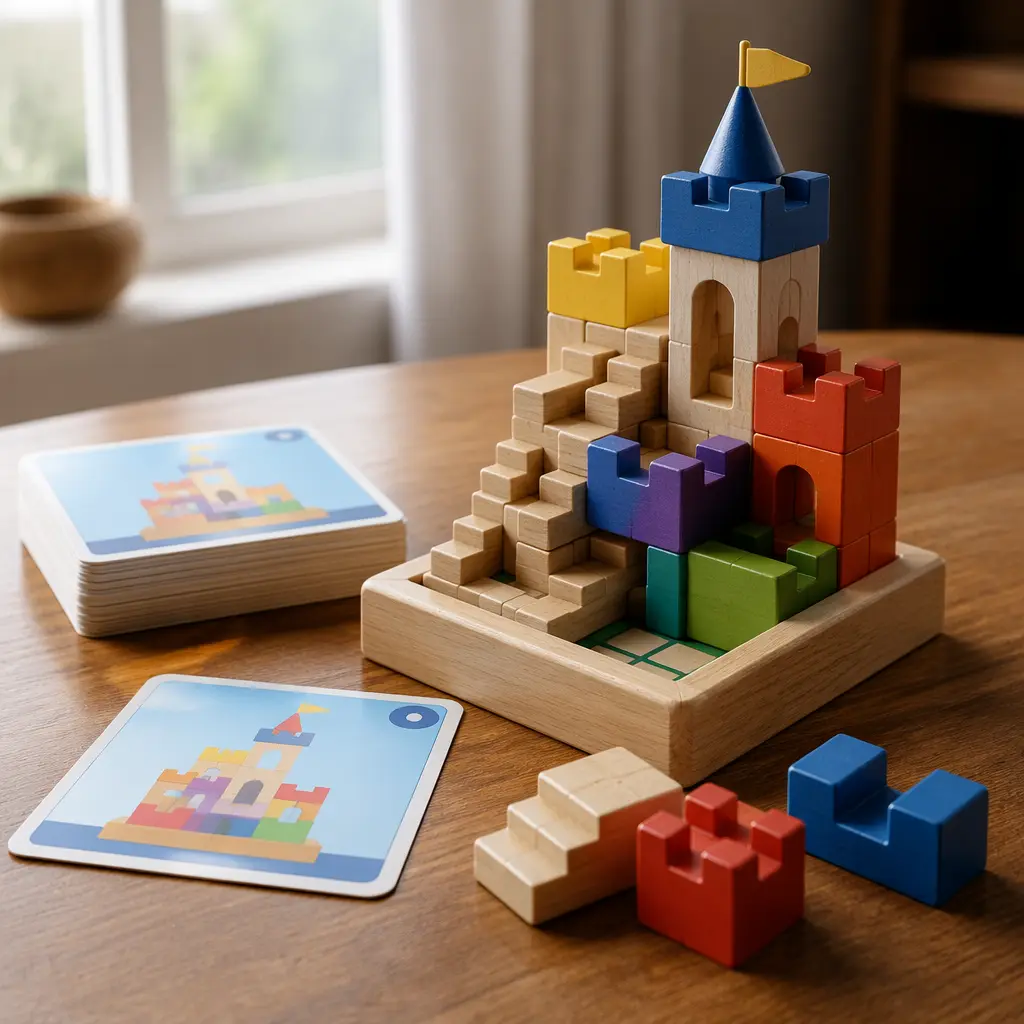
Castle Logix blends wooden blocks, towers, and puzzle cards into a compact brain game that has become a familiar sight in gifted-learning classrooms and family game shelves.
Compare prices and availability
Check current prices and availability for this guide on eBay.
As an eBay Partner, we may be compensated if you make a purchase.
Castle Logix occupies an unusual corner of the toy world. It looks like a simple fairy-tale construction set at first glance, with chunky wooden towers, bright colors, and castle walls that seem aimed at younger children. But beneath that storybook appearance is a carefully designed spatial-logic puzzle that asks players to think in three dimensions. Over the years, the game has quietly built a reputation among parents, teachers, occupational therapists, and gifted-learning programs because it encourages planning, visualization, and problem-solving without feeling like formal schoolwork.
Where it came from
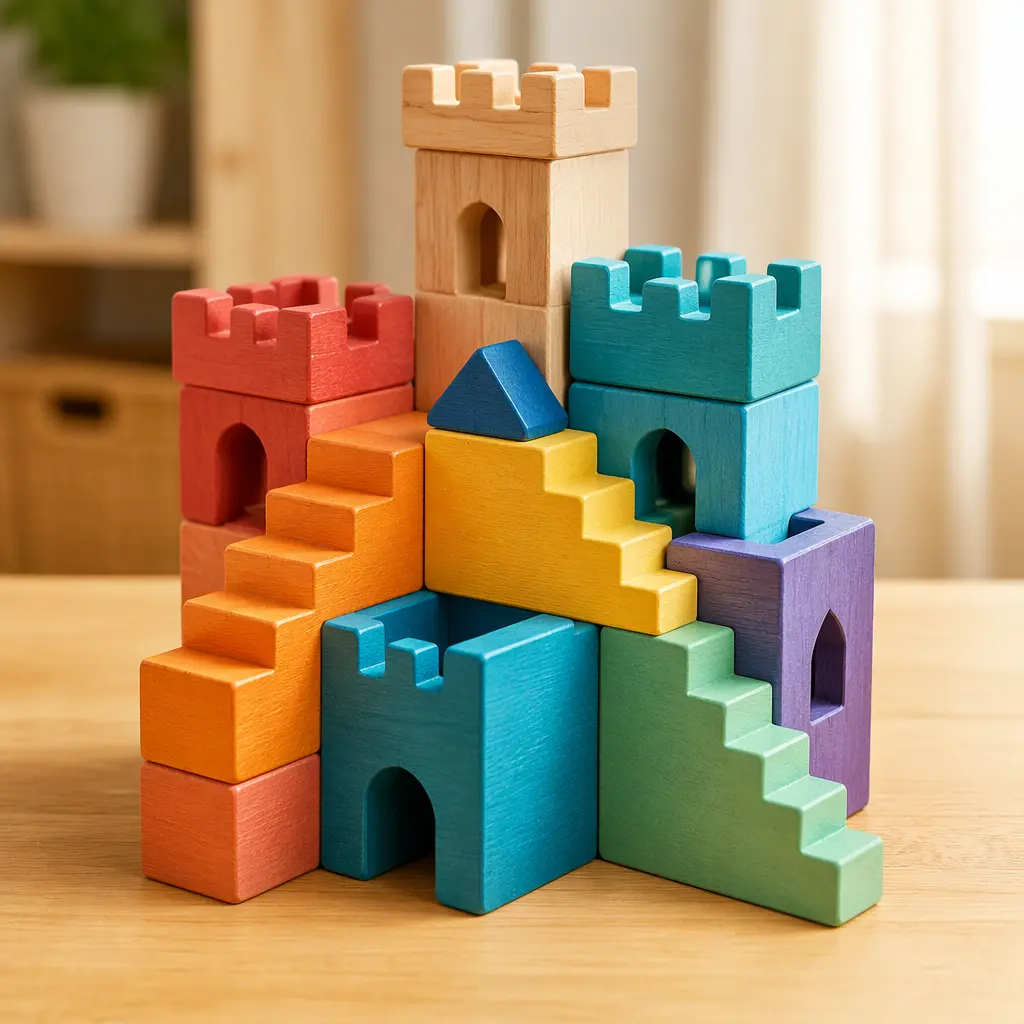
Castle Logix was introduced in 2007 by SmartGames, a company known for single-player logic puzzles that combine tactile play with increasingly difficult challenges. SmartGames built much of its catalog around compact brain games that could work at home, in classrooms, or during travel, and Castle Logix became one of its more recognizable titles because of its unusual visual theme. Instead of abstract geometric blocks alone, the game presents puzzle solving as castle building.
The core idea is straightforward. Players receive a challenge showing part of a castle arrangement and must use the included pieces to recreate the complete structure. The trick is that the castle exists in three dimensions, so towers can hide behind walls, heights must align correctly, and perspective matters. That blend of visual logic and physical manipulation helped the game find an audience beyond traditional puzzle fans. Educators often appreciated that children could practice spatial reasoning skills while remaining engaged in imaginative play.
Why it works
Many logic puzzles rely on symbols, numbers, or strict rules that can intimidate younger players. Castle Logix takes a softer approach. The wooden pieces are inviting to handle, and the castle theme creates an immediate sense of play. A child can begin by stacking towers and building freely before ever attempting the formal puzzle cards. That lowers the barrier to entry while still introducing fairly advanced concepts related to orientation, sequencing, and visual analysis.
The design also benefits from the physical nature of the pieces. Digital puzzle apps can train similar skills, but Castle Logix asks players to rotate objects in real space and understand how shapes interact vertically as well as horizontally. Teachers and therapists sometimes use it because those hands-on actions can support fine motor practice alongside cognitive problem-solving. The challenge progression is another reason the game endures. Easier setups create quick success, while advanced puzzles demand patience and multi-step planning.
- Wooden pieces sized for repeated hands-on use
- Challenges that gradually increase in difficulty
- Strong emphasis on three-dimensional spatial reasoning
- Open-ended building potential beyond the official puzzles
- Compact format that works well for classrooms and travel
Who it's for
Castle Logix is typically introduced to children in the early elementary years, but its appeal stretches further than its fairy-tale appearance might suggest. Younger players often enjoy it as a construction toy first, while older children approach it more strategically as a logic challenge. Adults who enjoy brain teasers may also find satisfaction in the higher-level puzzles, particularly because the solutions require careful observation rather than speed. In classroom settings, the game frequently appears in enrichment programs, STEM corners, and gifted-learning environments because it rewards experimentation and persistence without requiring advanced reading skills.
Variants and what to look for today
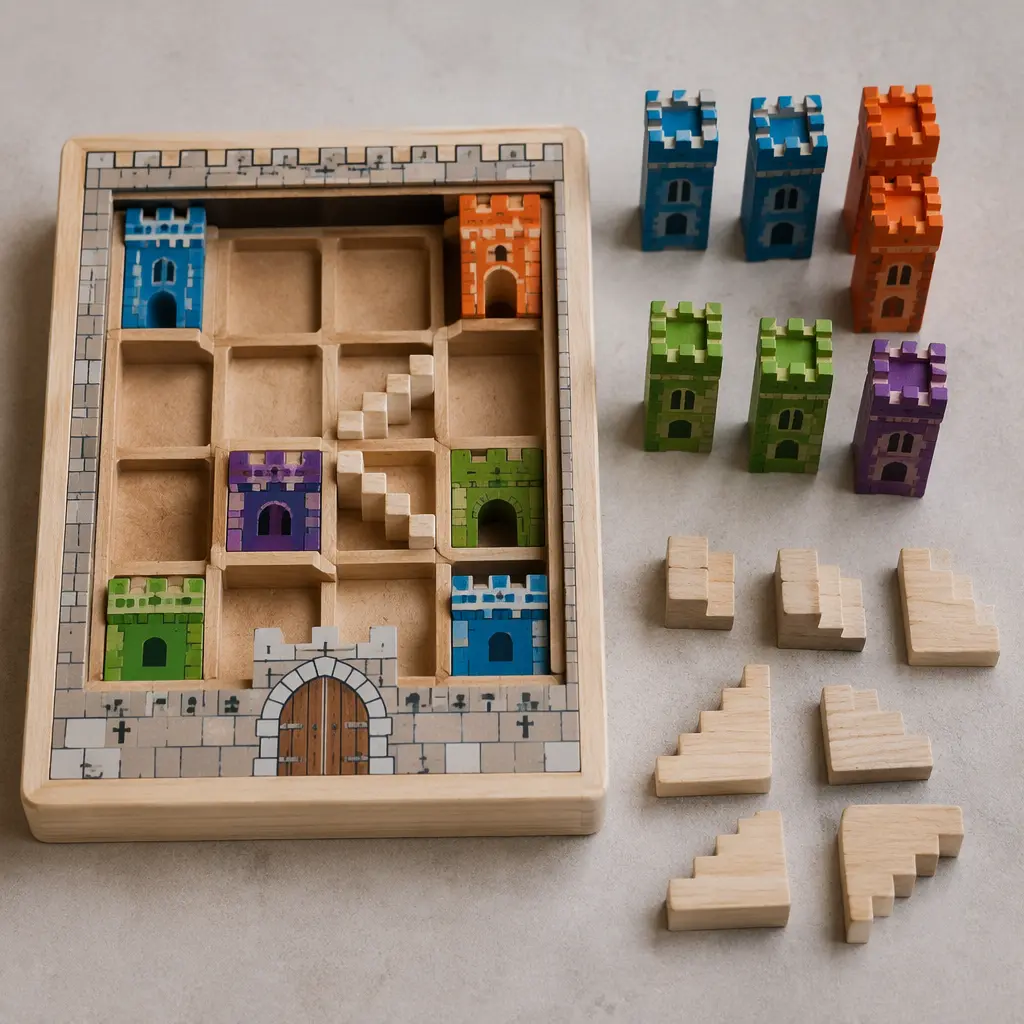
Castle Logix has remained fairly consistent over the years, which is part of its long-term appeal. Most editions retain the same central formula of wooden towers, stair pieces, and challenge cards. Buyers today will usually encounter either newer boxed releases or secondhand copies from earlier production runs. Because the game relies on precise piece placement, completeness matters. Missing even a single tower can prevent some puzzles from working correctly.
When shopping for a copy, it is worth paying attention to build quality. The original style of smooth wooden components is one reason many families and schools keep the game for years. Lower-quality imitations sometimes use lighter materials or poorly fitting pieces that make the puzzles frustrating instead of satisfying. Puzzle cards should also be sturdy and clearly printed, since perspective details are important to solving the challenges.
- Check that all puzzle pieces and challenge cards are included
- Look for sturdy wooden construction with smooth edges
- Consider travel-friendly storage if using it in classrooms or therapy sessions
- Avoid heavily worn sets where tower heights may no longer align properly
Frequently asked questions
Is Castle Logix mainly a toy or an educational tool?
It works comfortably as both. Children often approach it as imaginative castle building, while adults recognize the underlying logic and spatial-reasoning exercises. Its strongest feature may be that it rarely feels like formal instruction.
Why does it appear in gifted-learning classrooms?
The puzzle structure encourages visualization, pattern analysis, sequencing, and flexible thinking. Because players physically manipulate pieces in three dimensions, teachers often use it to support spatial reasoning skills that are important in mathematics, engineering, and design-oriented learning.
Can younger children play without solving the official puzzles?
Yes. Many children simply enjoy stacking the towers and inventing castle layouts. That free-play aspect helps the game appeal to a wider age range than a purely rules-based puzzle might.
Does Castle Logix hold up over time?
Well-maintained sets generally age well because the gameplay depends on timeless mechanical ideas rather than electronics or trends. Wooden components and straightforward rules have helped the game remain relevant long after its original release.
Castle Logix has endured because it understands something many educational toys miss: children are more willing to tackle difficult thinking when the experience feels playful and tactile. Its castle theme may look gentle and storybook-inspired, but the puzzle design underneath is carefully engineered. Nearly two decades after its release, it remains a small but influential example of how thoughtful toy design can turn abstract cognitive skills into something concrete, approachable, and genuinely fun.