Clue: How a murder mystery became a family game-night staple
First published in 1949, Clue turned a whodunit into a shared puzzle. Its mix of deduction, storytelling, and social play explains why families still gather around it generations later.
Compare prices and availability
Check current prices and availability for this guide on eBay.
As an eBay Partner, we may be compensated if you make a purchase.
Few board games open with such a bold premise: someone has been murdered, and it’s up to the players to solve the crime. Clue takes that dramatic hook and turns it into a family-friendly puzzle built on logic, memory, and a bit of theatrical fun. For decades, it has been a go-to choice for rainy afternoons, holidays, and multigenerational game nights—familiar enough to teach quickly, yet rich enough to stay interesting.
Where it came from
Clue originated in the late 1940s, first published in 1949. It was created in the UK under the name Cluedo, blending the words “clue” and “ludo” (Latin for “I play”). The inventor reportedly developed the idea during wartime air-raid blackouts, when traditional entertainment options were limited. The concept drew inspiration from classic country-house mystery fiction, where a small group of suspects, a confined setting, and a limited set of weapons create a tidy puzzle.
When the game crossed the Atlantic, it was shortened to Clue and marketed to American families eager for wholesome, social entertainment. From the start, it stood apart from roll-and-move games by asking players to think like detectives. The goal wasn’t to reach a finish line, but to make the right accusation before anyone else.
Why it works
At its core, Clue is a game of deduction. Players gather information through movement, questioning, and careful note-taking, gradually narrowing down the solution. That structure makes every turn feel purposeful. Even when it’s not your turn, you’re listening, watching, and updating your mental picture of the mystery.
The design balances chance and logic. Dice rolls determine movement, keeping younger players competitive, while the deduction element rewards careful reasoning. The theme does a lot of work, too: the idea of sneaking through rooms and making accusations gives players permission to be a little dramatic without crossing into anything graphic.
- A simple core mystery that’s different every game
- Hidden information that rewards attention and memory
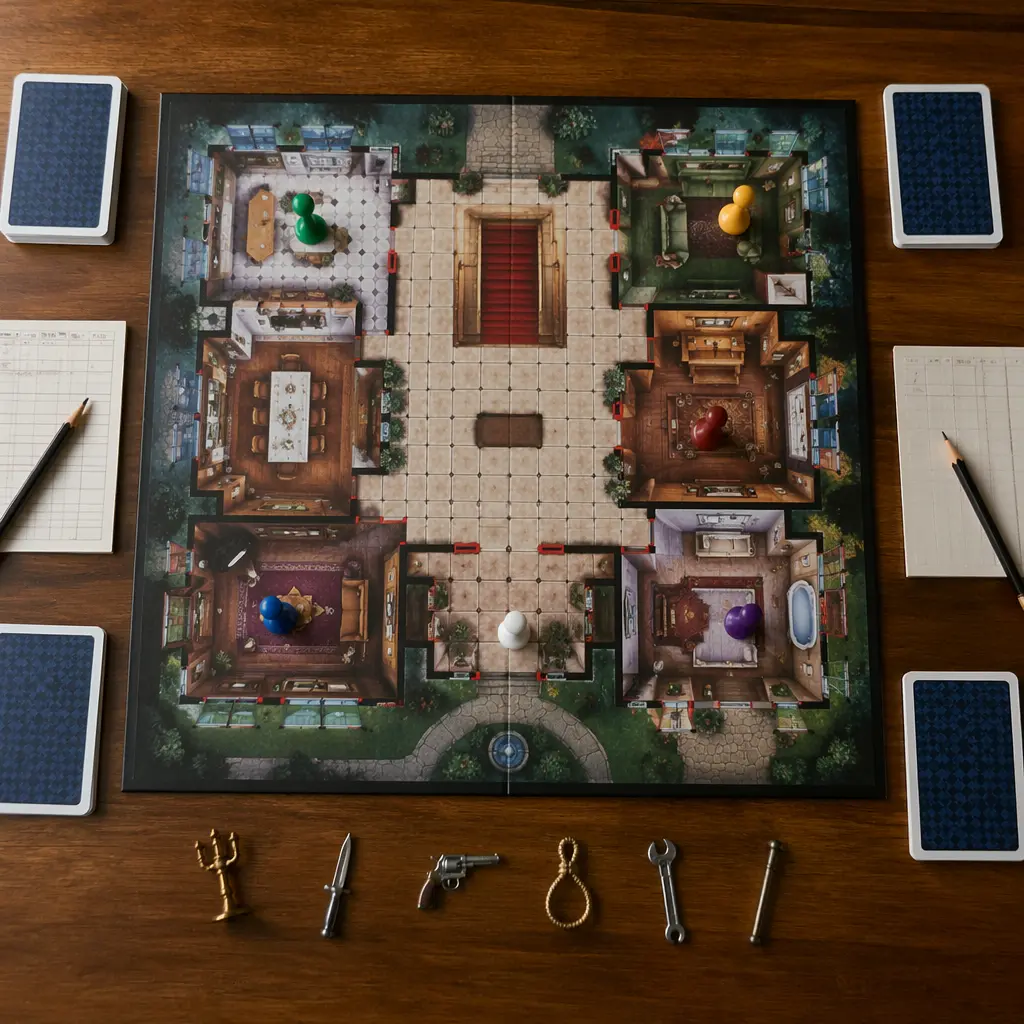
- A fixed set of suspects, rooms, and weapons that’s easy to learn
- Social interaction through questioning and deduction
Who it’s for
Clue is typically recommended for school-age children and up, but its real strength is how it brings different ages together. Kids enjoy the movement and the clear objective, while teens and adults appreciate the logical challenge. Many parents find it’s one of the first “thinking” games children can grow into, and plenty of adults still pull it out for nostalgic reasons long after childhood.
Variants and what to look for today
Over the years, Clue has seen numerous reprints and themed variations, but the classic mansion mystery remains the reference point. Modern editions often streamline the rules slightly, update the artwork, or improve component quality while keeping the same basic structure.
If you’re picking up a copy today, look for sturdy boards that lie flat, easy-to-read cards, and clear player aids for note-taking. Travel-sized versions can be handy for holidays, while deluxe editions may include upgraded pieces. As with many classic games, there are also generic mystery games inspired by Clue; they can be fun, but they don’t always match the pacing or balance that made the original endure.
Frequently asked questions
Is Clue too scary for kids?
Despite its murder-mystery theme, Clue is presented in a light, almost storybook way. There’s no violence shown, and the focus is on solving a puzzle rather than depicting a crime. Most families find it suitable for children who can handle mild suspense.
How long does a typical game last?
A standard game usually takes under an hour, especially once everyone knows the rules. First-time players may take a bit longer as they learn how to track clues and make deductions.
Do you need a full group to play?
Clue works best with several players, since more people mean more information being shared and hidden. That said, smaller groups can still enjoy it, especially if everyone is engaged in the deduction process.
Why has Clue lasted so long?
The combination of theme, simplicity, and replayability is hard to beat. Each game tells a slightly different story, and the rules are easy to pass down, making it a natural heirloom game in many families.
More than 75 years after its debut, Clue remains a reminder that a good idea doesn’t need constant reinvention. By inviting players to think, talk, and imagine together, it earns its place on the shelf—ready to be rediscovered by the next generation of would-be detectives.