The Cootie Catcher: How a folded paper toy ruled the playground
Made from a single sheet of paper, the cootie catcher became a playground game, craft project, and social ritual—proof that imagination can turn the simplest materials into lasting fun.
Compare prices and availability
Check current prices and availability for this guide on eBay.
As an eBay Partner, we may be compensated if you make a purchase.
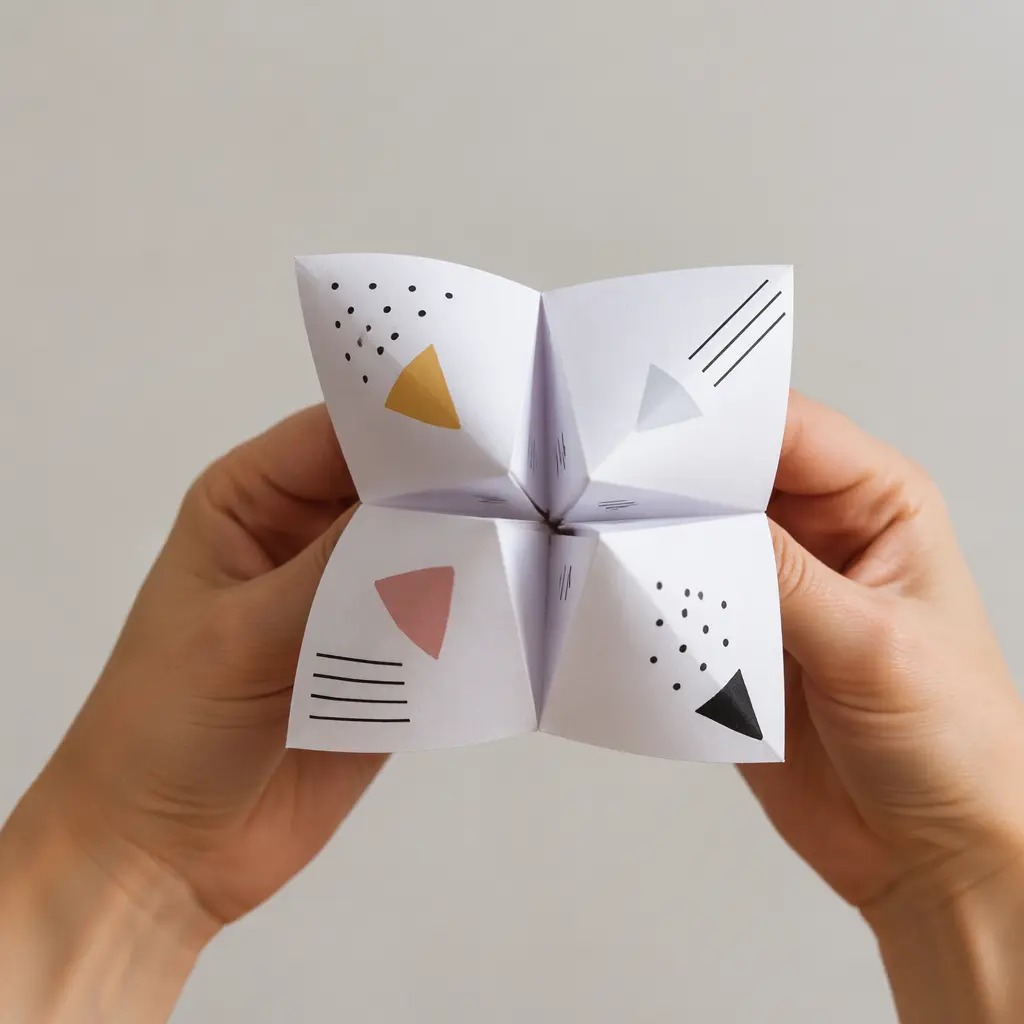
The cootie catcher—also known as the paper fortune teller—is one of the most low-tech toys ever to achieve global fame. It needs no batteries, no packaging, and no store shelf. All it takes is a square of paper and a few folds. Yet for generations of children, it has been a game, a craft project, and a surprisingly important social ritual, passed hand to hand on playgrounds and in classrooms.
Where it came from
Unlike many iconic toys, the cootie catcher doesn’t have a single inventor or launch date. Variations of folded-paper toys have existed for centuries, with roots in origami traditions and European paper-folding games. Versions resembling the modern fortune teller appear in early 20th-century children’s folklore, spreading through schools rather than shops.
Its many names hint at how it traveled: “cootie catcher” in parts of the US, “fortune teller” elsewhere, and different local nicknames around the world. The toy evolved through oral tradition, with each generation tweaking the rules, fortunes, and decorations. In that way, it’s less a product and more a piece of shared culture.
Why it works
At its core, the cootie catcher succeeds because it combines making, playing, and social interaction. Folding it is a small achievement—complex enough to feel clever, simple enough to master quickly. Once finished, it becomes a prop for conversation, laughter, and light suspense.
The design is deceptively smart. Four flaps hide choices, and the opening-and-closing motion builds anticipation before revealing a message. It’s part toy, part performance, and part secret-sharing device.
- Made from a single sheet of paper
- Combines craft skills with imaginative play
- Interactive two-person game
- Infinitely customizable with colors and drawings
- Portable and easy to remake
Who it's for
The cootie catcher is most commonly enjoyed by primary-school-aged children, typically from around age six and up, when folding skills and reading come together. That said, its appeal doesn’t stop there. Teens often rediscover it as a nostalgic craft, and adults recognize it as a reminder of a time when play was improvised rather than purchased. It also works well in classrooms and activity groups, bridging ages with minimal setup.
Variants and what to look for today
Because the cootie catcher isn’t a branded product, modern versions tend to appear as part of craft kits, classroom packs, or printable activity sheets. Some come pre-printed with colors or symbols, while others are blank, inviting kids to design their own fortunes and themes.
When choosing materials today, the main thing to look for is paper quality. Thin paper tears easily at the folds, while very thick card can be frustrating for small hands. Standard craft paper or light cardstock usually works best. As with many classic paper toys, the charm is in making it yourself rather than buying a finished version.
Frequently asked questions
Why is it called a cootie catcher?
The name likely comes from early playground games where the toy was jokingly used to “catch cooties,” a made-up childhood illness. The playful gross-out humor helped the name stick, even though many people prefer the more neutral term “fortune teller.”
Is it the same as origami?
It uses origami-style folding techniques, but it’s better described as a paper game than traditional origami. The focus is on interaction and play, not just the finished form.
Do kids still play with them today?
Yes, especially in schools and camps where simple crafts are encouraged. The cootie catcher also pops up online as a nostalgic activity shared by parents and teachers.
Can it be educational?
Absolutely. Teachers often use fortune tellers to reinforce spelling, math facts, or discussion prompts, turning the toy into a learning tool.
In an age of screens and smart toys, the cootie catcher stands as a reminder that play doesn’t have to be complicated. With nothing more than paper and imagination, it creates connection, creativity, and a bit of mystery—qualities that never really go out of style.