Cootie: The preschool game that made silliness the strategy
First released in 1949, Cootie turned building a goofy plastic bug into a lesson in turn-taking and luck. Its simple rules and absurd payoff made it a preschool staple for generations.
Compare prices and availability
Check current prices and availability for this guide on eBay.
As an eBay Partner, we may be compensated if you make a purchase.
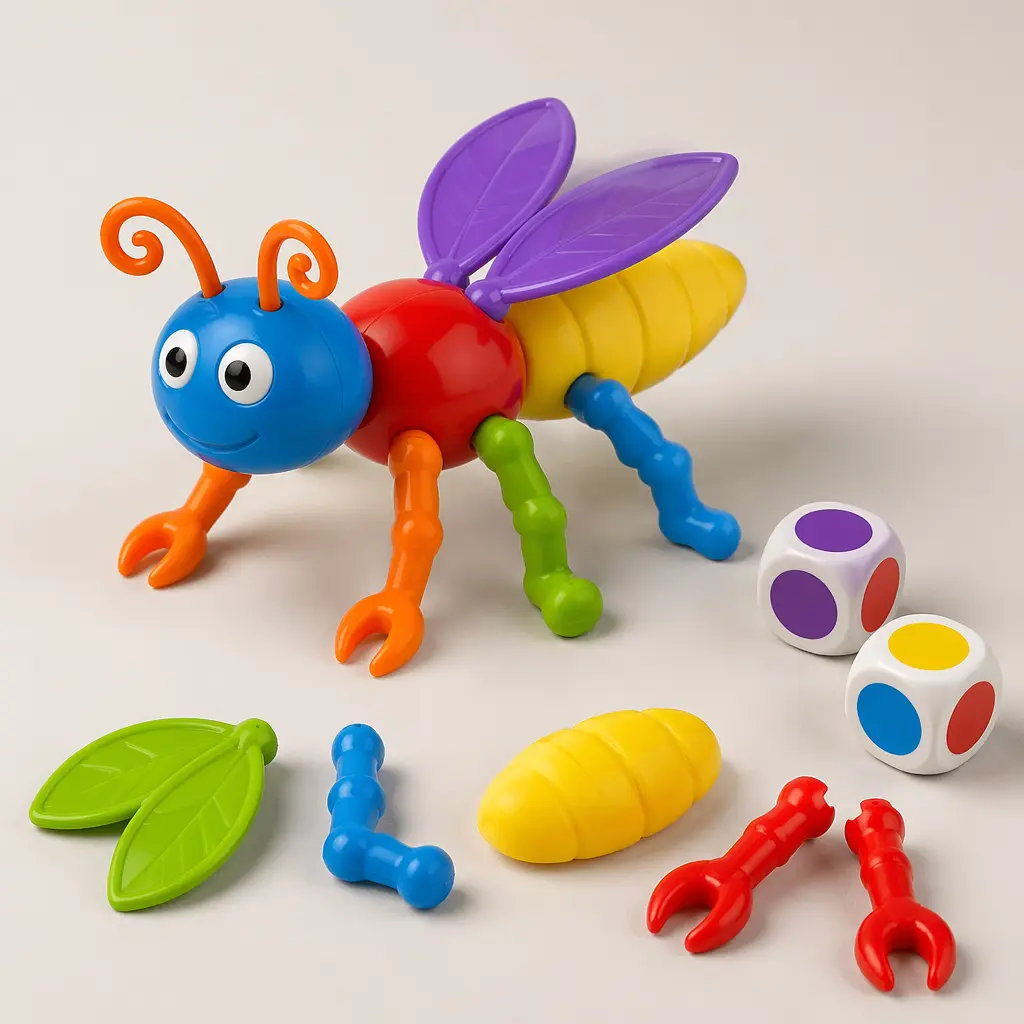
Cootie is the kind of game that doesn’t pretend to be clever. Players roll a die, collect plastic bug parts, and race to build the first complete creature. The result is lopsided, colorful, and faintly ridiculous—and that’s exactly the point. For preschoolers, Cootie was often a first introduction to board games, proving that winning didn’t require strategy, just patience and a sense of humor.
Where it came from
Cootie was invented in 1949 by William Schaper, a Minneapolis advertising executive who noticed his children assembling a bug-like figure from leftover parts. Sensing a toy idea, he developed a simple dice game around the concept. The result became the first product of Schaper Toys, the company that later produced classics like Trouble and Sorry!.
Released in post-war America, Cootie fit neatly into a growing market for affordable family games. It required no reading, no board, and minimal setup. The game’s success helped establish the idea that very young children could have games designed specifically for their developmental stage.
Why it works
At its core, Cootie is a pure luck game. Players roll a die and add parts to their bug in a fixed order. There are no choices to debate and no penalties to remember. This simplicity is exactly why it works for young children, who can focus on turn-taking and anticipation rather than rules.
- No reading or math required beyond counting pips
- Short turns that keep attention spans intact
- A physical, visual payoff as the bug takes shape
- Silly aesthetics that invite laughter rather than competition
The humor is baked into the design. Watching an uneven bug slowly come together—sometimes stuck without legs or eyes for several turns—keeps the mood light and the stakes low.
Who it's for
Cootie is aimed squarely at preschoolers, typically ages three to five. It’s often one of the first structured games children play with adults. For parents and grandparents, the appeal is nostalgic. For kids, it’s about rolling the die, snapping on parts, and laughing at the result.
Variants and what to look for today
Over the decades, Cootie has been reissued many times with minor cosmetic updates. The core experience remains the same: plastic body parts, a die, and a race to complete the bug. Modern versions tend to use brighter plastics and sturdier connectors.
If you’re picking one up today, look for pieces that are chunky and easy to handle, especially for younger children. Be cautious with off-brand copies that use very small or flimsy parts, which can be frustrating—or unsafe—for preschool play.
Frequently asked questions
How long does a game of Cootie last?
Most games finish in 10 to 15 minutes, depending on luck. That short playtime is ideal for younger children.
Does Cootie teach any skills?
While it’s not educational in a formal sense, it helps with turn-taking, counting, and following simple sequences.
Can adults enjoy playing Cootie?
Adults usually enjoy it as a shared activity rather than a challenge. The fun comes from watching children react to the game’s randomness.
Is it still relevant compared to modern games?
Yes, because its appeal isn’t about novelty. Cootie fills a niche that many modern games overlook: pure, silly introduction to game play.
Cootie has lasted more than seven decades by embracing its own absurdity. It doesn’t try to grow with the child or add layers of depth. Instead, it meets young players where they are, reminding families that sometimes the simplest games leave the strongest memories.