Crocodile Dentist: The simple suspense game that still works
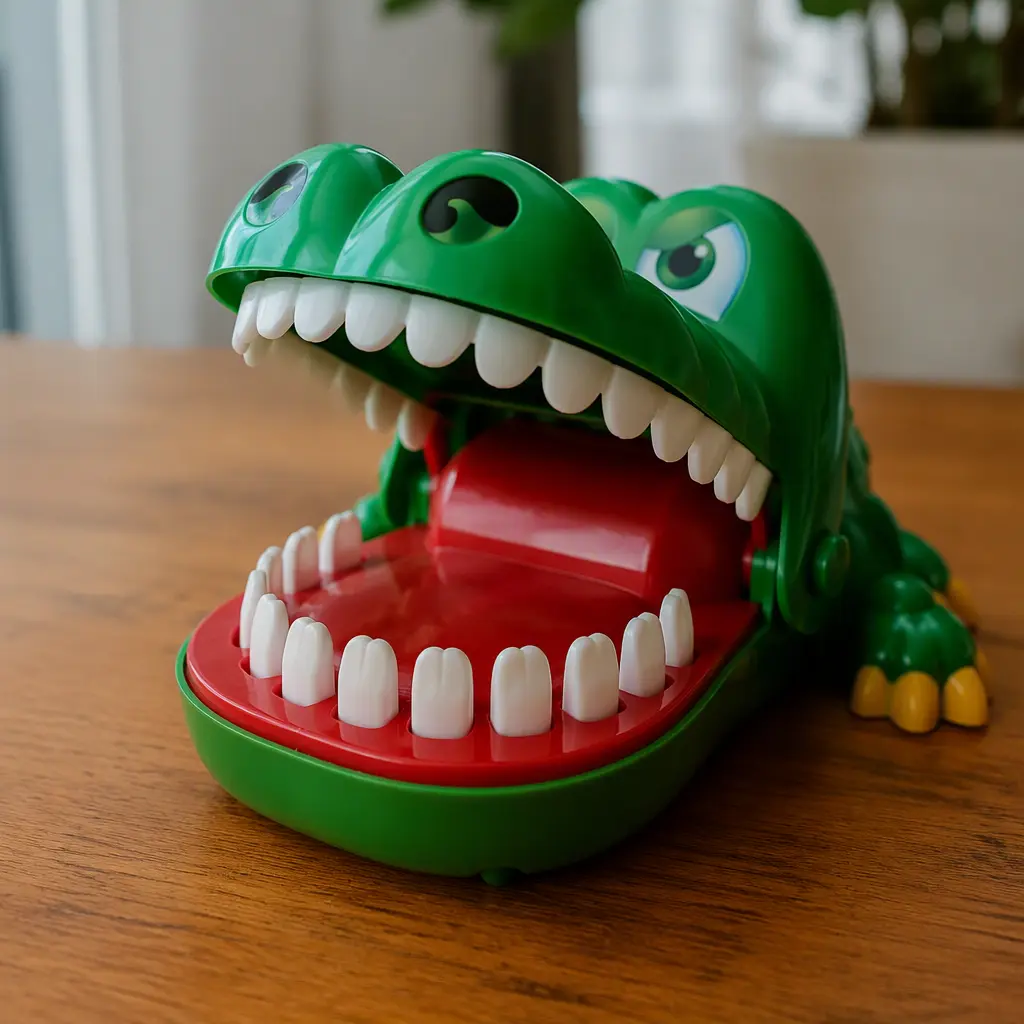
Crocodile Dentist turned a basic plastic crocodile into a fast, suspenseful family game. Its random snapping mechanic and easy rules helped it become a lasting party favorite.
Compare prices and availability
Check current prices and availability for this guide on eBay.
As an eBay Partner, we may be compensated if you make a purchase.
Some toys survive because they are deep, strategic, or endlessly customizable. Crocodile Dentist lasted for almost the opposite reason. The game takes one simple idea — press the wrong tooth and the crocodile snaps shut — and stretches it into a few seconds of pure suspense. Children immediately understand the joke, adults instantly recognize the tension, and nearly every round ends with laughter, surprise, or someone dramatically pulling their hand away at the last second. It became one of those rare family games that can work across generations without needing complicated instructions or a long setup.
Where it came from
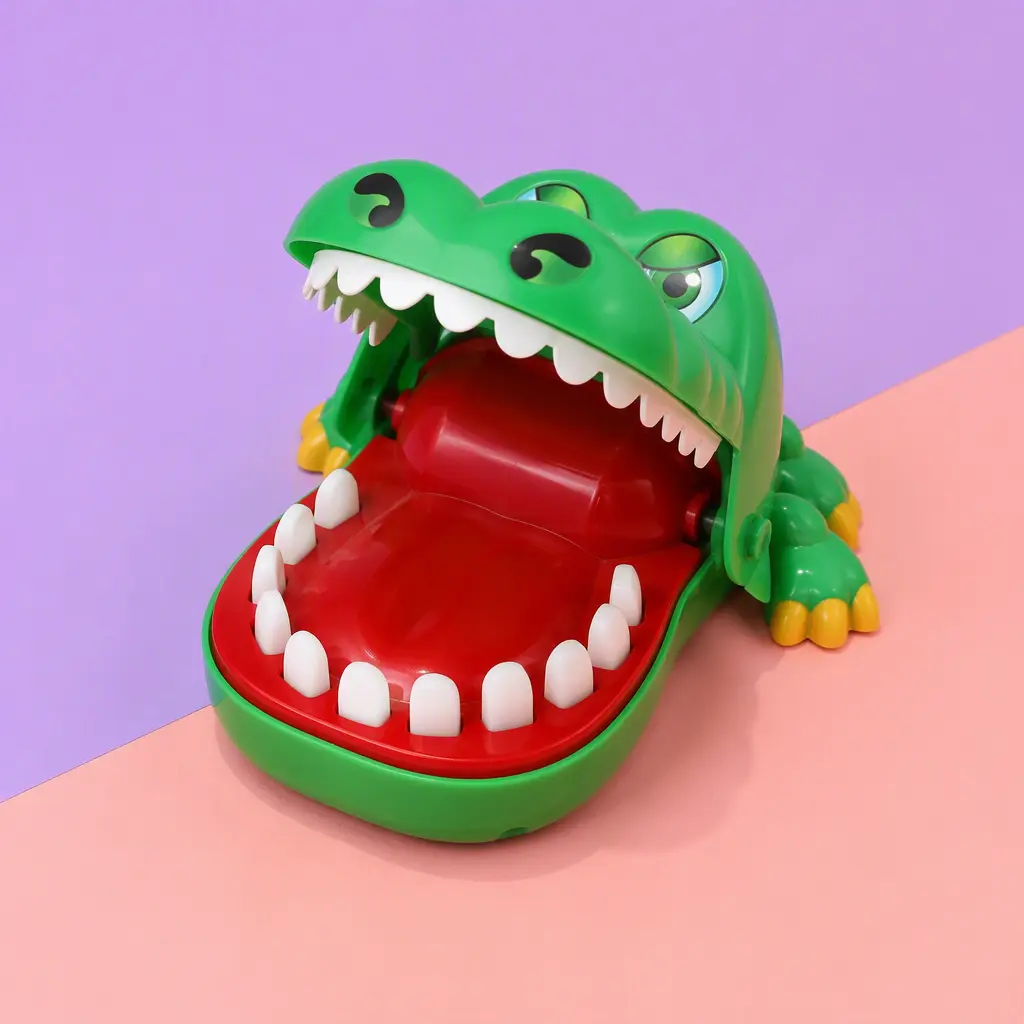
Crocodile Dentist appeared in 1990 during a period when quick-reaction family games were becoming especially popular. The concept was straightforward enough to explain in seconds: players take turns pressing down one tooth inside a crocodile's mouth, trying to avoid the trigger tooth that causes the jaws to snap shut. The mechanism relied less on skill than on anticipation, making every turn feel slightly risky even though the stakes were completely harmless.
The toy fit neatly into a larger trend of compact tabletop games built around physical comedy and suspense. Unlike trivia games or strategy-heavy board games, Crocodile Dentist did not depend on reading ability, long attention spans, or prior experience. That accessibility helped it spread quickly into family living rooms, classrooms, waiting areas, and toy shelves around the world. The crocodile theme also mattered more than it might seem. The oversized cartoon mouth transformed a simple mechanical trigger into something theatrical, giving children the thrill of interacting with a pretend dangerous animal in a safe and silly format.
Why it works
The game's design is remarkably efficient. There are no cards to shuffle, batteries to replace, or complex scoring systems to track. Every round creates a tiny arc of tension as players test one tooth after another. The suspense comes from uncertainty rather than difficulty. Nobody can fully predict when the crocodile will snap, and that randomness keeps younger children competitive with older players.
The physical response is equally important. The snapping jaws create a quick burst of movement and sound that feels dramatic without being truly frightening. That split-second surprise is the entire engine of the game. It works because the toy asks players to voluntarily place their hand near the danger zone again and again, even though they know exactly what might happen.
- Fast setup and very short rounds make it easy for mixed-age groups
- Simple rules allow young children to join without much explanation
- The snapping motion creates suspense without requiring screens or electronics
- Compact size makes it useful for travel, parties, and classrooms
- Randomized play means adults and children have roughly equal odds
Who it's for
Crocodile Dentist is generally aimed at younger children, especially those who enjoy reaction-based games and playful jump scares. Most children can understand the rules almost immediately, which makes it popular with families looking for something easy to start after dinner or during gatherings. Adults often end up enjoying it for different reasons. The game taps into the same instinct that powers simple carnival games or tension-based party activities: everyone knows the outcome is harmless, but the anticipation still works. That broad appeal helps explain why the toy has stayed visible long after many more complicated games disappeared from store shelves.
Variants and what to look for today
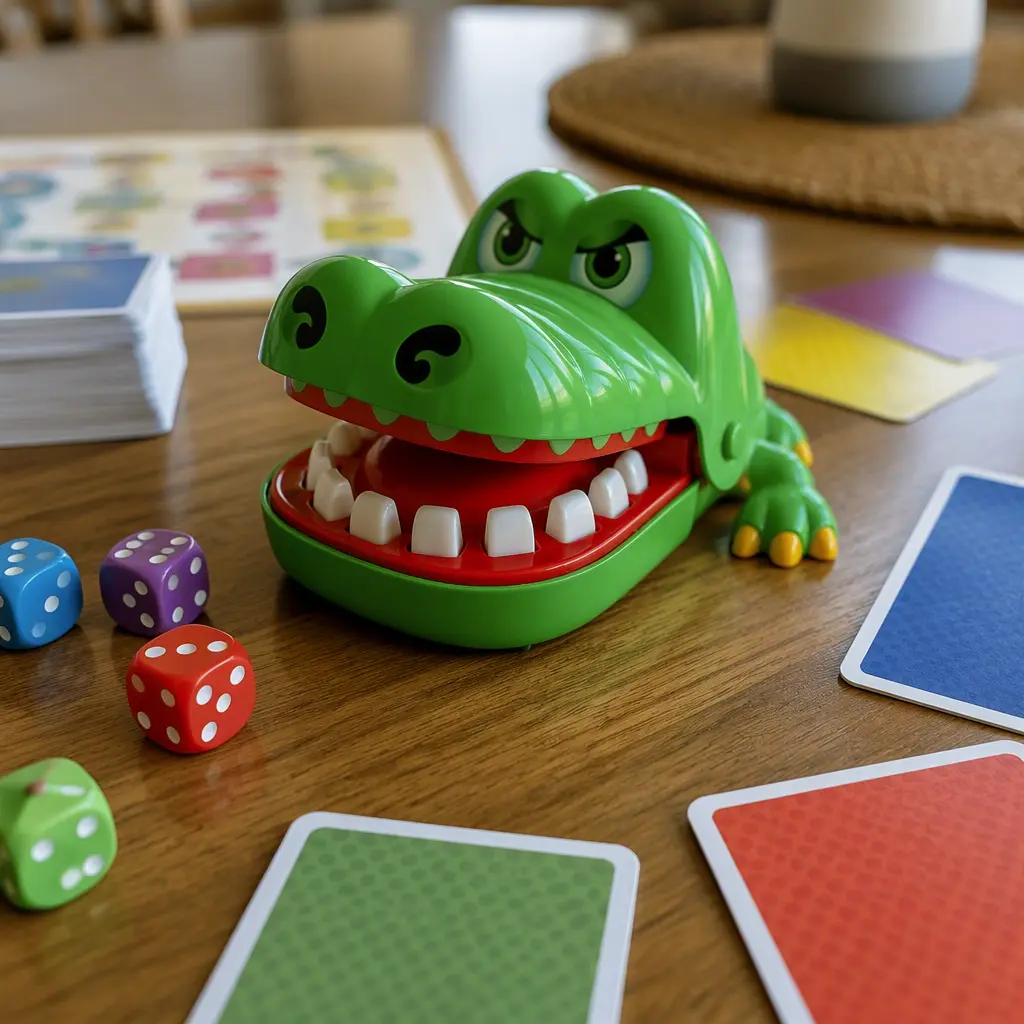
Over the years, the basic idea has appeared in many slightly different forms. Some versions enlarge the crocodile, while others change the color palette or adjust the snapping force. The core mechanic usually remains the same because that simplicity is the product's entire identity. Modern editions may use lighter plastics or revised spring systems compared with early releases, but the overall experience is intentionally familiar.
Collectors sometimes seek out older editions for nostalgia, especially versions with sturdier construction or packaging from the early 1990s. Families buying a current version should pay more attention to build quality than branding details. A good crocodile dentist game should reset easily, snap consistently, and feel durable enough for repeated play sessions.
- Look for smooth jaw movement and a reliable reset mechanism
- Choose versions with rounded teeth and sturdy hinges for younger players
- Travel-sized editions can be easier to pack but may feel less dramatic
- Avoid extremely flimsy knock-off versions with weak springs or sharp plastic edges
- Vintage editions may appeal more to collectors than to everyday family play
Frequently asked questions
Is Crocodile Dentist a board game?
It is usually grouped with family and party board games, even though it does not use a traditional game board. Its gameplay is built around a physical toy mechanism rather than cards or strategic movement.
Does the snapping tooth change every round?
In most versions, the trigger tooth changes position when the crocodile is reset. That randomization keeps rounds unpredictable and prevents players from memorizing a pattern.
Can adults enjoy it too?
Yes. Adults often enjoy the game because of the shared suspense and quick pacing. It works especially well in groups where players want something light and easy between longer games or activities.
Why did the game become so well known?
The concept is easy to understand from a single glance. A crocodile with snapping jaws communicates the entire joke immediately, which helped the game stand out in toy aisles and television advertising during the 1990s.
Crocodile Dentist remains a good reminder that memorable toy design does not always require layers of technology or complicated rules. Its entire experience can be explained in one sentence, yet the tension still works decades later. The toy transformed a tiny mechanical surprise into a social game that children continue to discover for the first time, usually with the same nervous laughter that made it popular in the beginning.