Curling Tabletop Games: The Tiny Sport That Took Over Game Night
Miniature curling games turned a niche winter sport into an easy family activity, blending simple rules, satisfying strategy, and quick rounds that work across generations.
Compare prices and availability
Check current prices and availability for this guide on eBay.
As an eBay Partner, we may be compensated if you make a purchase.
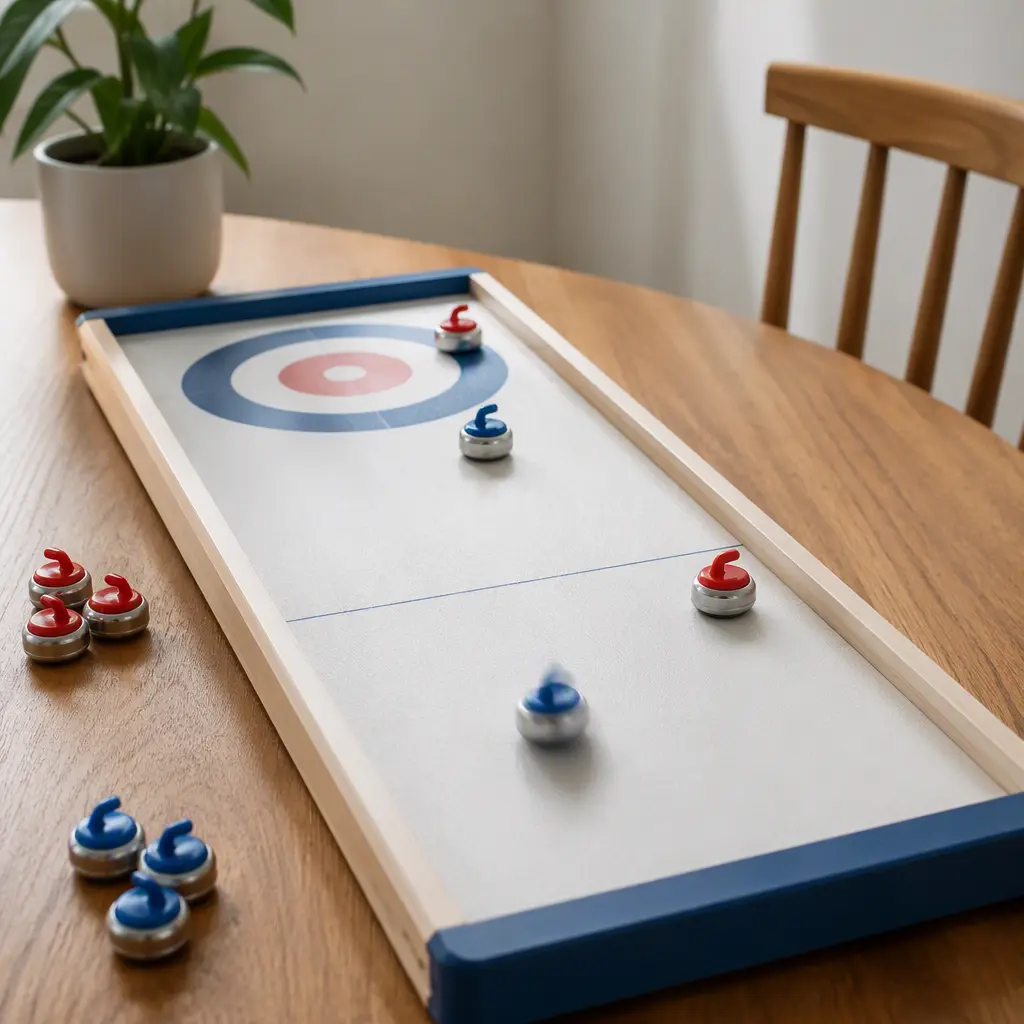
Tabletop curling games arrived quietly during the surge of at-home entertainment in the early 2020s, but they quickly found a place alongside puzzles, card games, and classic family board games. The appeal is easy to understand after a single round. Players slide small weighted stones down a compact surface, aiming for a target while knocking opponents away. The action feels familiar even to people who have never watched full Olympic curling matches, and the games create the same combination of precision, luck, and light competition that makes shuffleboard and bocce enduring favorites.
Where it came from
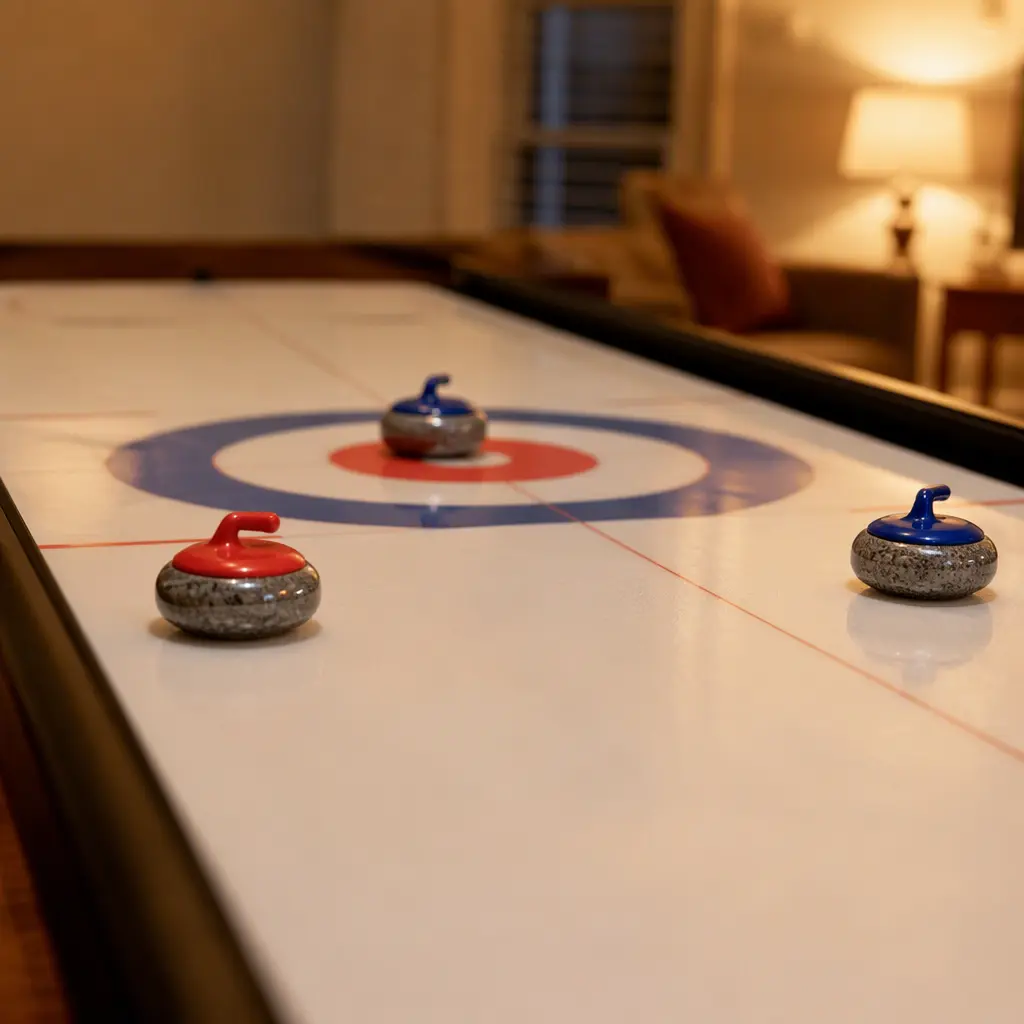
Curling itself dates back centuries, with roots in Scotland and a long history as a winter sport played on ice. The tabletop versions are much newer. Around 2020, several toy and game companies began releasing compact curling sets designed for kitchen tables, coffee tables, and office break rooms. Their timing mattered. Families were spending more evenings at home and looking for activities that were easy to learn without requiring screens, large spaces, or lengthy setup.
Most modern tabletop curling sets simplify the sport into a portable lane made from smooth plastic or laminated material, along with lightweight stones that slide using bearings, ball rollers, or polished bases. The original purpose was straightforward: recreate the satisfying strategy of curling in a form that worked indoors and could be played casually in short bursts. Unlike some sports adaptations that lose the feeling of the real activity, miniature curling translated surprisingly well because the core mechanic—carefully controlling speed and angle—remains intact even at a smaller scale.
Why it works
The design succeeds because it combines physical skill with approachable rules. Players understand the goal almost immediately: get closer to the center than the other side. Yet every round creates tactical decisions about blocking shots, clearing the scoring area, or playing defensively. Since turns are quick and the stones glide visibly across the surface, the game creates tension without becoming complicated.
Another reason these sets became popular is their flexibility. Younger children can enjoy simply sliding stones and watching collisions, while older players naturally develop strategies around positioning and shot control. Many sets also fit neatly into small apartments or travel bags, making them easier to bring out than larger party games or sports equipment.
- Simple rules that can be learned in minutes
- Physical skill mixed with light strategy
- Compact design that works on ordinary tables
- Short rounds that keep groups engaged
- Appeal for both children and adults
- Satisfying sliding and collision mechanics
Who it's for
Most tabletop curling games work best for school-age children, teens, and adults, especially in mixed-age groups where highly competitive games can become frustrating. The learning curve is gentle enough for younger players, but the precision element keeps older players interested. Adults often enjoy the games as a relaxed alternative to louder party games, particularly during holidays or casual gatherings. Office settings also adopted miniature curling because rounds can be played quickly without extensive explanation. The combination of tactile play and easy conversation makes these games especially effective for family nights where not everyone wants a deeply strategic experience.
Variants and what to look for today
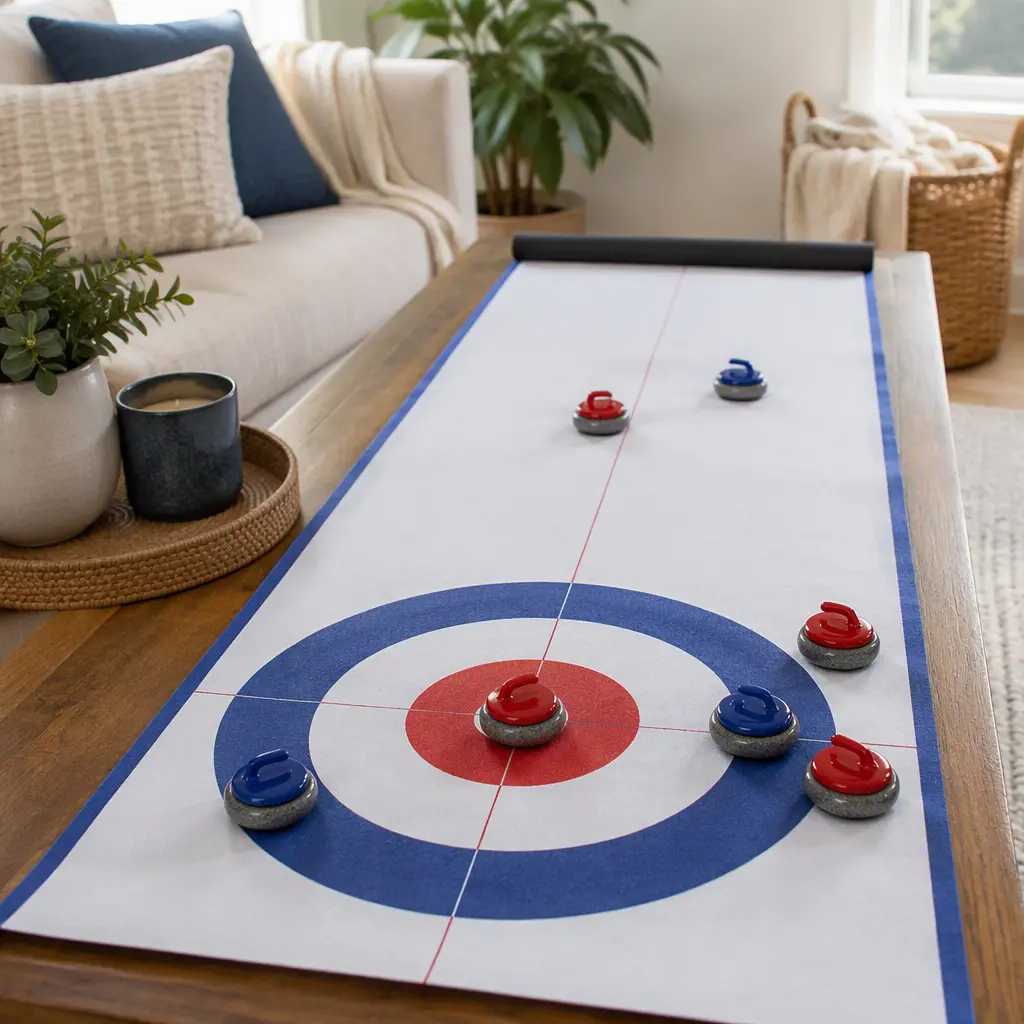
The category has expanded beyond simple novelty kits. Entry-level sets often include a printed lane and lightweight stones suitable for occasional family play, while more advanced versions use heavier pieces with smoother gliding action for greater control. Some sets mimic regulation curling layouts closely, while others shorten the lane and focus on faster rounds designed for parties.
Materials matter more than many buyers expect. A smooth, stable playing surface helps maintain consistent movement, and sturdier stones generally create more satisfying gameplay. Foldable mats are convenient for storage, but rigid lanes can provide straighter movement and fewer wrinkles during play. It is also worth checking whether replacement stones are available, since lighter pieces can disappear under furniture surprisingly easily.
- Compact travel sets for vacations or office use
- Longer lane versions with more realistic gameplay
- Magnetic or bearing-based stones for smoother movement
- Foldable mats for easier storage
- Starter sets aimed at younger children
- Premium tabletop editions with heavier stones
Frequently asked questions
Do tabletop curling games really feel like curling?
They capture the basic rhythm and strategy surprisingly well. While there is no ice or sweeping, players still judge speed, angle, and positioning in ways that resemble the full sport.
Are these games suitable for younger children?
Most sets are simple enough for children around six years old and up, though younger players may need help understanding scoring. Adult supervision is important with smaller stones that could become choking hazards.
How long does a typical game last?
Many family rounds last between 10 and 20 minutes depending on the number of ends played. The quick pace is one reason the games work well during gatherings and holidays.
What makes one set better than another?
The quality of the surface and the consistency of the stones usually matter most. Better-balanced stones glide more predictably, while smoother lanes reduce frustration and improve accuracy.
Tabletop curling games succeeded because they translated a niche winter sport into something immediate, portable, and social. They fit modern family habits well: easy to set up, quick to explain, and satisfying even in short sessions. In a market crowded with complex strategy games and fast-changing trends, miniature curling found a durable audience by doing something simpler. It gives people a reason to gather around a table, line up a careful shot, and celebrate when a tiny stone lands exactly where they hoped.