Fisher-Price Smart Stages Puppy and the Rise of Talking Toys
Fisher-Price Smart Stages Puppy helped define a generation of interactive learning plush toys, blending songs, buttons and staged content years before AI-powered toys became mainstream.
Compare prices and availability
Check current prices and availability for this guide on eBay.
As an eBay Partner, we may be compensated if you make a purchase.
Long before generative AI became part of the toy conversation, interactive learning toys were already introducing children to responsive technology through songs, phrases and simple back-and-forth play. Fisher-Price Smart Stages Puppy became one of the most recognizable examples of that shift. The talking plush combines cuddly toy design with lights, buttons and age-adjusted educational content, aiming to grow alongside infants and toddlers during their earliest learning stages. For many parents, it represents a transitional product between traditional stuffed animals and today’s increasingly connected toy-tech category.
Where it came from
Fisher-Price introduced the Smart Stages Puppy line in the early 2010s as part of a broader push toward developmental toys that could adapt to different ages. The idea was straightforward but influential: instead of offering a fixed set of songs or phrases, the toy could change its learning content as children grew. That adjustable structure reflected a wider industry trend at the time, with manufacturers looking for ways to extend the lifespan of electronic learning toys beyond a narrow developmental window.
The Puppy itself built on an older category of talking plush toys that had already been popular for decades. Earlier electronic stuffed animals typically relied on a handful of sound triggers and repetitive phrases. Smart Stages expanded the formula by organizing content into developmental levels, usually accessed through a parent-controlled selector. Depending on the stage, the toy might focus on first words, counting, colors, body parts or singalong prompts. While not internet-connected in the way many modern smart devices are, it introduced a kind of staged personalization that foreshadowed later discussions about adaptive learning technology in toys.
Why it works
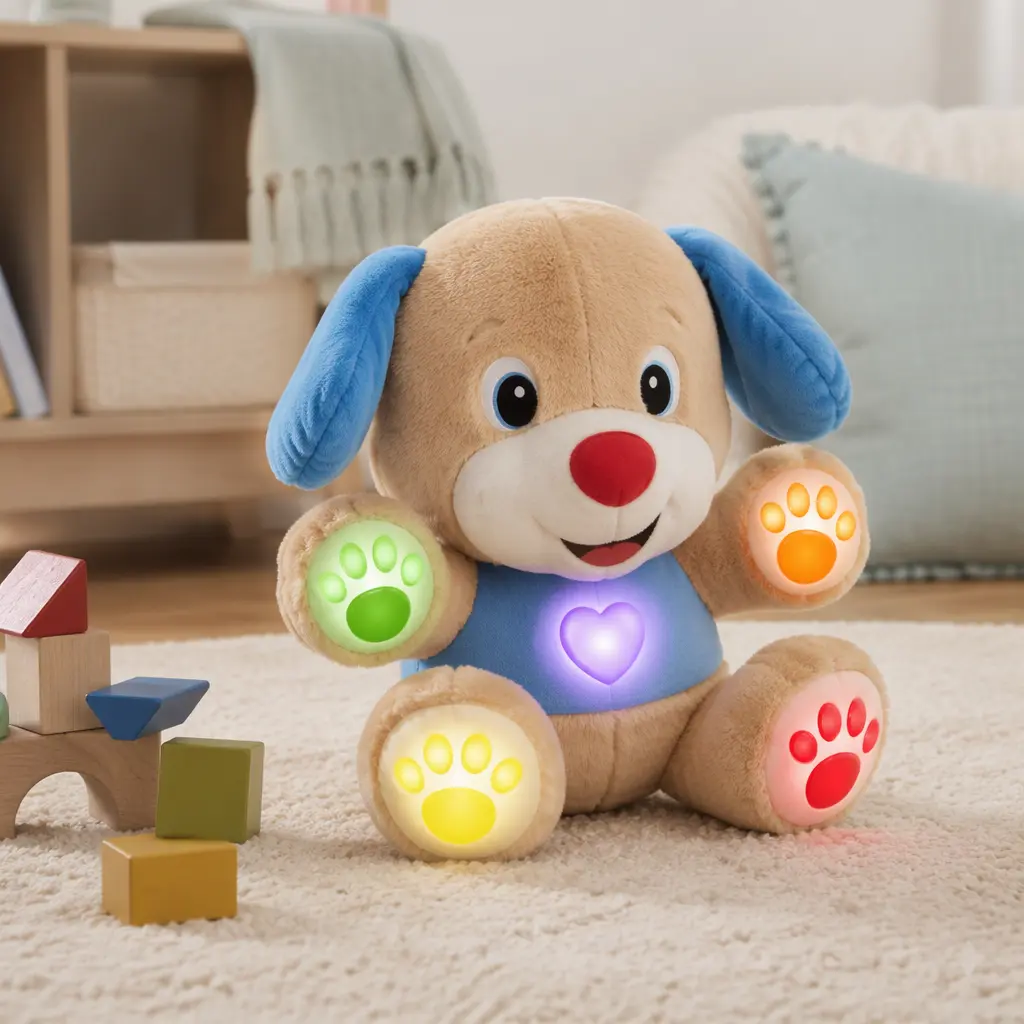
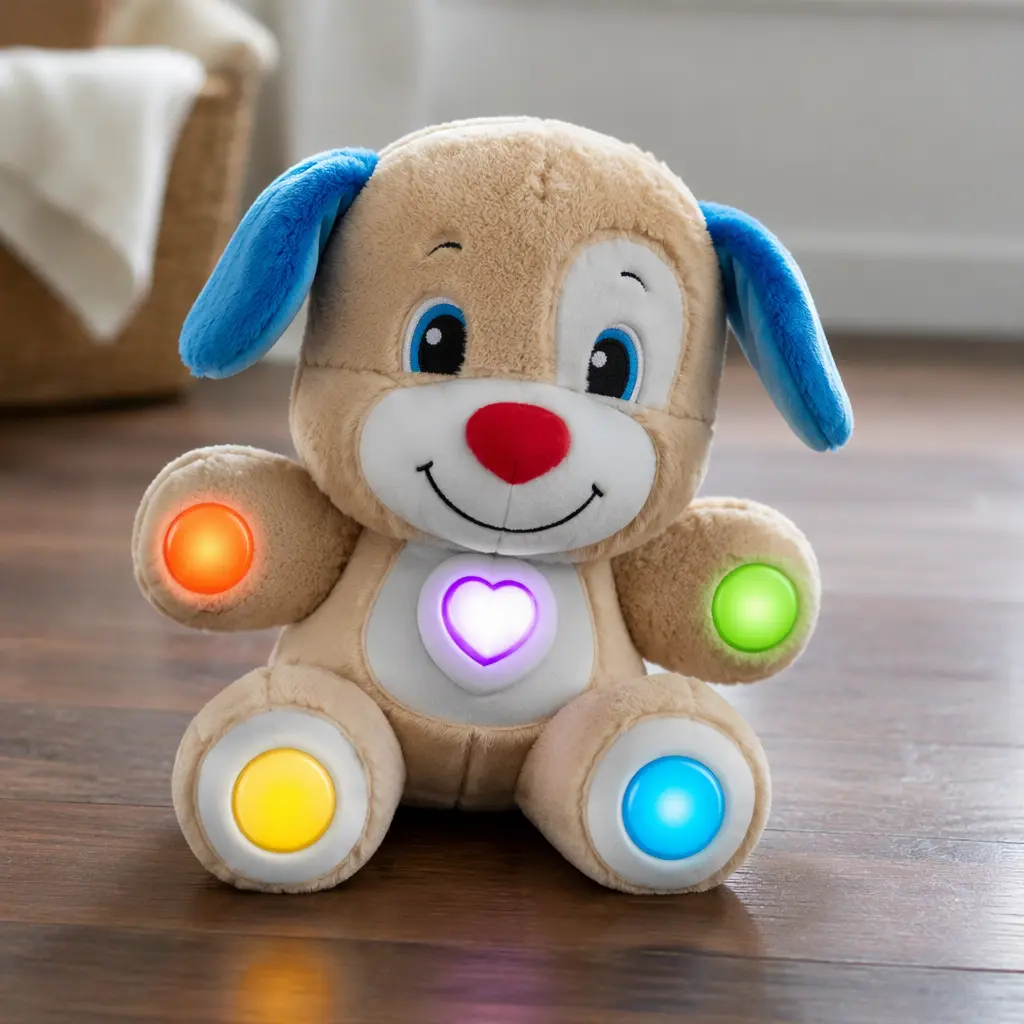
Part of the Puppy’s staying power comes from its balance between familiarity and stimulation. At its core, it is still a soft plush companion designed for hugging and comfort. The electronic layer sits on top of that foundation rather than replacing it. Large buttons placed on the paws, tummy and other body areas encourage cause-and-effect play, while music and spoken responses reward interaction quickly enough to hold a young child’s attention.
The toy also reflects a period when manufacturers increasingly emphasized guided developmental milestones in marketing and product design. Instead of presenting electronics as a novelty alone, toys like Smart Stages Puppy framed songs and spoken prompts as part of structured early learning routines. That positioning helped electronic plush toys become more acceptable in nurseries and playrooms that might otherwise have favored simpler sensory toys.
- Soft plush body designed for comfort alongside electronic interaction
- Age-stage learning modes that adjust songs and phrases over time
- Large colorful buttons aimed at early motor-skill play
- Music, counting and vocabulary themes common to early learning toys
- Battery-powered operation without requiring cloud connectivity or accounts
Who it's for
Smart Stages Puppy is generally aimed at babies and toddlers, especially children beginning to explore sound-response interaction and simple language repetition. The oversized controls and plush construction are intended for early developmental play rather than complex gameplay or screen-based interaction. Adults often recognize it as part of a broader generation of learning toys that became common in homes, childcare settings and gift registries during the 2010s. It also appeals to collectors of modern Fisher-Price products and parents interested in toys that offer electronic features without depending heavily on apps or internet services.
Variants and what to look for today
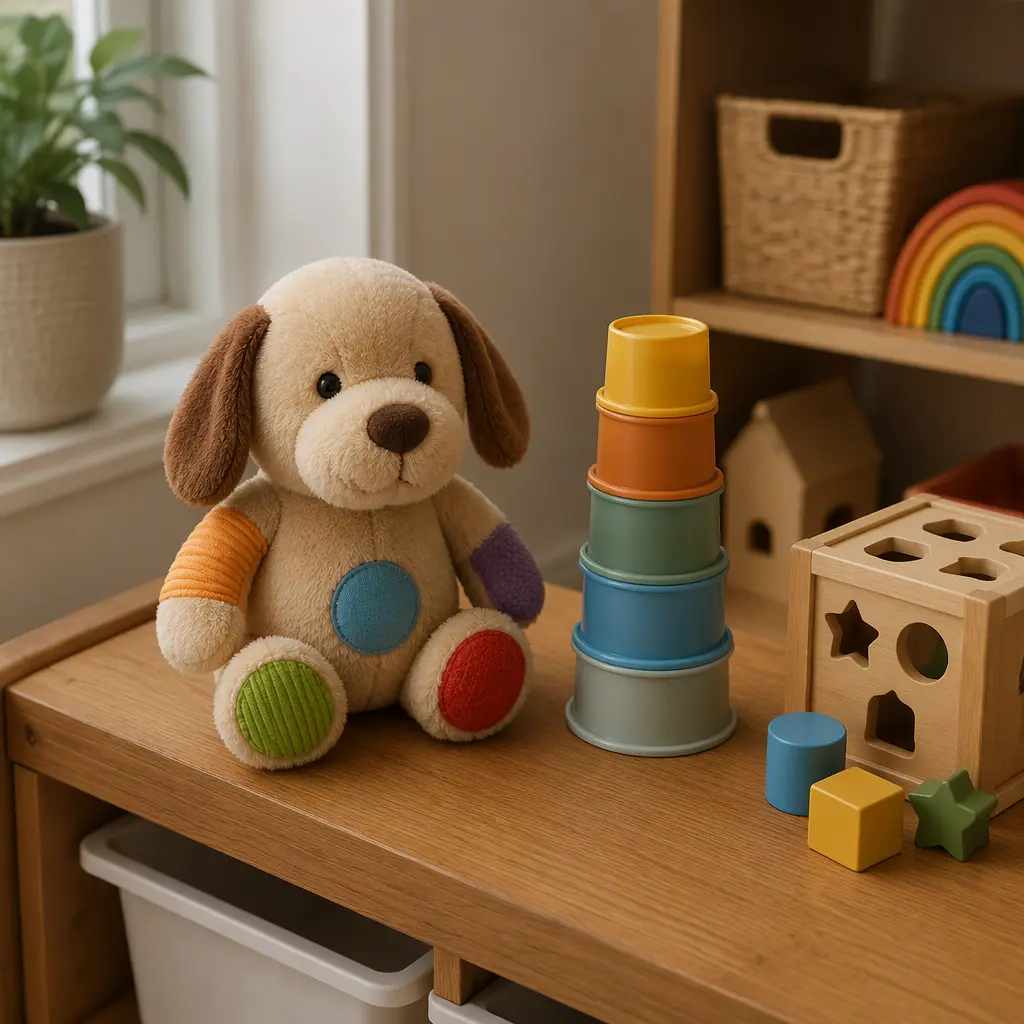
Over the years, Fisher-Price has released multiple versions and related characters within the Laugh & Learn and Smart Stages families. Different editions may vary in color accents, sound libraries, fabric textures or included songs. Some versions emphasize bilingual learning or regional language support, while others are packaged as seasonal or nursery-themed variations. Because the core design remained recognizable across releases, many families simply refer to all of them as “the Puppy” regardless of the exact edition.
Parents shopping today may encounter both current retail versions and older secondhand models. Battery compartments, speaker quality and fabric condition are often the most practical things to check when buying used electronic plush toys. Since songs and voice clips can differ between generations, shoppers looking for a specific nostalgic version may want to confirm the production year or product photos before purchasing.
- Look for intact battery compartments and corrosion-free contacts
- Check whether the toy includes multiple learning stages or language modes
- Expect song libraries and voice recordings to differ between releases
- Be cautious of heavily worn plush fabric or weak speaker output
- Verify compatibility with locally available batteries before gifting
Frequently asked questions
Is Smart Stages Puppy an AI toy?
No. The toy uses pre-recorded songs, phrases and programmed responses rather than generative AI systems. Its interactions are scripted and button-triggered, without conversational understanding or cloud-based language generation.
Does it require Wi‑Fi or an app?
Most versions are self-contained electronic toys powered by batteries. They typically do not require internet access, user accounts or companion apps for normal play.
Why did this type of toy become so popular?
Interactive learning toys expanded rapidly during the 2000s and 2010s as manufacturers combined affordable electronics with developmental-learning themes. Parents were increasingly interested in toys that mixed music, language exposure and sensory interaction in one product.
Are older versions still usable today?
Many older units continue working if their electronics remain in good condition and battery compartments are clean. Because the toy does not depend heavily on online services, it avoids some of the compatibility issues associated with app-connected products.
Smart Stages Puppy occupies an interesting place in toy history because it arrived before the current wave of AI-powered products yet already reflected many of the same ideas about adaptive interaction and technology-assisted learning. Its lasting popularity suggests that, for younger children especially, simple responsive play still matters more than cutting-edge complexity. Even as toy technology evolves, the familiar formula of music, repetition and comforting plush design continues to hold its place in nurseries and playrooms.