FurReal Friends: How robotic pets entered the playroom
FurReal Friends turned plush animals into responsive robotic companions, blending soft toy comfort with sensors, sounds, and movement in a way that shaped modern interactive toys.
Compare prices and availability
Check current prices and availability for this guide on eBay.
As an eBay Partner, we may be compensated if you make a purchase.
FurReal Friends arrived at a moment when toy companies were searching for ways to make electronics feel more personal. Instead of treating technology as something hidden behind a screen, the line placed motors, sensors, and sound chips inside familiar plush animals. The result was a toy family that behaved somewhere between a stuffed pet and a simple household robot. Children could pet them, feed them, talk to them, or watch them respond with blinking eyes, wagging tails, and small movements that felt surprisingly lifelike for mass-market toys. More than two decades after the line debuted, FurReal Friends remains one of the clearest examples of how robotics entered everyday play.
Where it came from
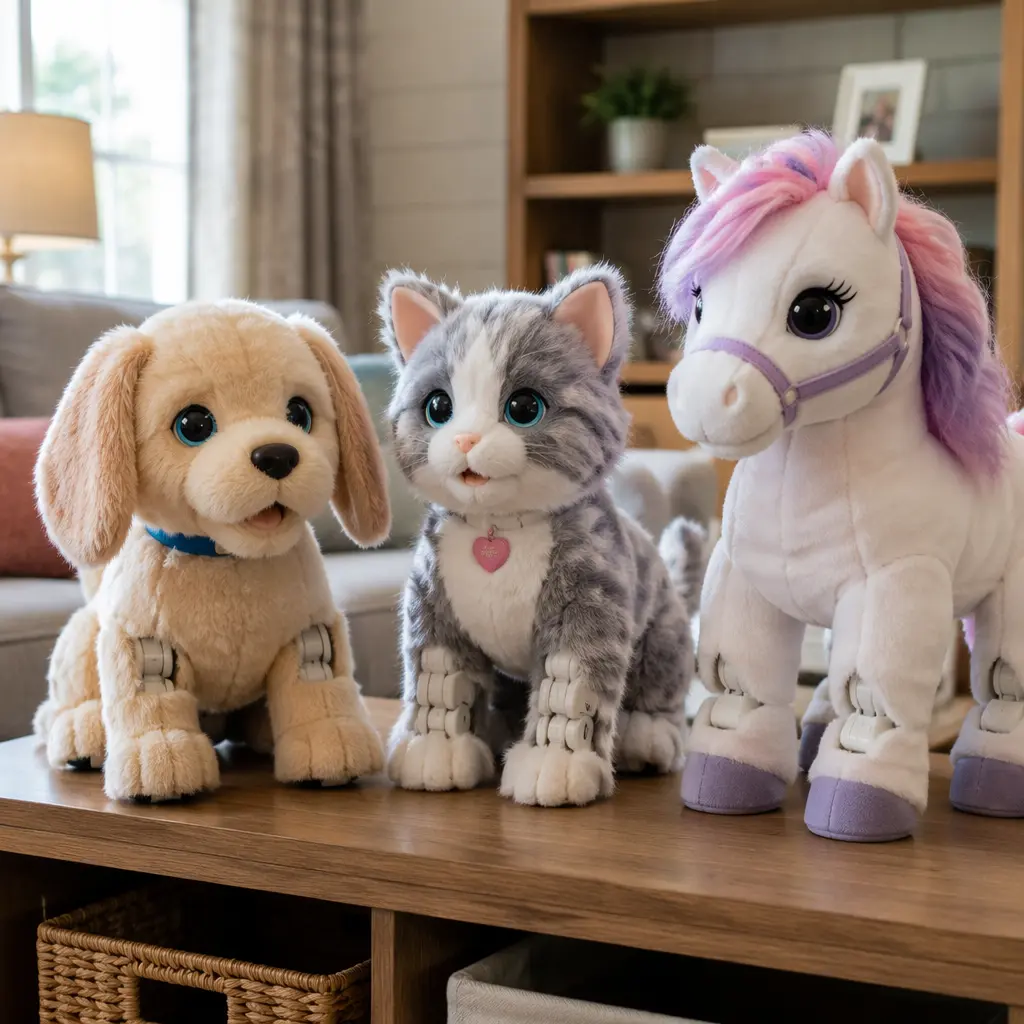
FurReal Friends launched in 2002 under Hasbro at a time when electronic pets were already familiar to children through virtual toys and talking dolls. The difference was physical interaction. Earlier electronic companions often relied on buttons and scripted responses, but FurReal toys encouraged tactile play. Children could stroke a dog’s back, clap near a cat, or hold accessories near sensors to trigger reactions. The toys borrowed ideas from animatronics and consumer electronics while still presenting themselves first as cuddly companions.
The original lineup focused heavily on household pets such as dogs and cats, though the range quickly expanded into ponies, exotic animals, fantasy creatures, and smaller handheld companions. Some editions became surprisingly elaborate, using coordinated motors to create walking motions, expressive faces, or feeding actions. While the technology inside was relatively simple compared with modern robotics, the toys succeeded because they translated mechanical responses into recognizable animal behavior. That made them feel approachable rather than technical.
Why it works
The appeal of FurReal Friends comes from the balance between predictability and surprise. Children quickly learn that certain actions trigger specific responses, but the toys also include randomized sounds and motions that prevent interactions from feeling entirely repetitive. A puppy may bark differently each time it is petted, or a cat may shift position unexpectedly while resting. Those small variations help create the illusion of personality without requiring advanced artificial intelligence.
The physical design also matters. FurReal toys are intentionally soft and rounded, with visible fabric textures and simplified features that keep them firmly in toy territory. Even when movement is mechanical, the plush covering reduces the sense of machinery. This combination helped bridge two categories that had traditionally been separate: comforting stuffed animals and battery-powered gadgets.
- Touch sensors that respond to petting, feeding, or sound
- Motorized movements such as blinking, tail wagging, head turning, or walking
- Built-in sound effects designed to mimic animal behavior
- Soft plush exteriors that make electronic components feel approachable
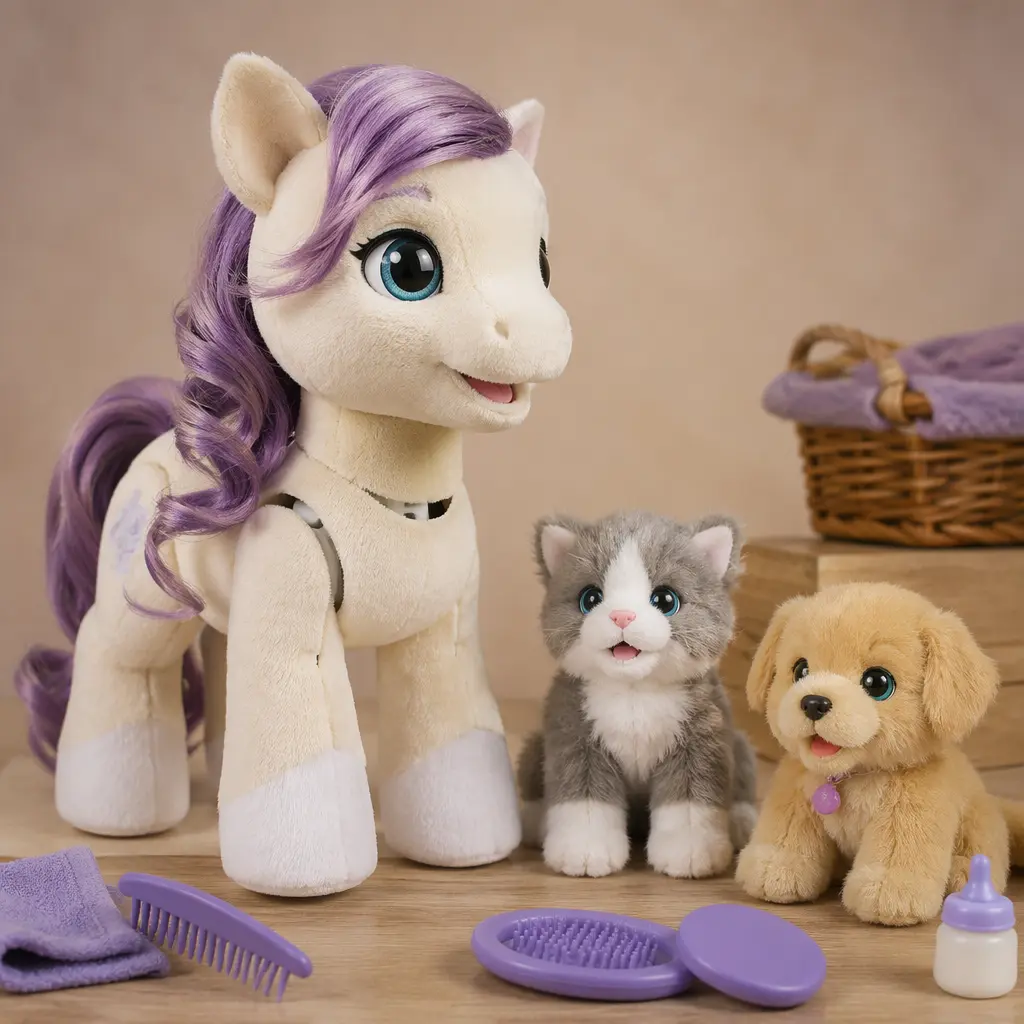
- Accessory-based interaction including bottles, treats, brushes, or leashes
Who it's for
FurReal Friends has typically been aimed at children who enjoy nurturing or role-play toys, especially those not yet ready for the responsibilities of a real pet. Younger children are often drawn to the responsive sounds and movements, while older kids may enjoy imaginative caregiving play. The line also found an audience among adults interested in toy technology and the history of consumer robotics. Many collectors view FurReal toys as an important step between simple talking toys and the more advanced companion robots that appeared later in homes and classrooms.
Variants and what to look for today
One reason the FurReal Friends brand lasted is its flexibility. Over the years, the line shifted from larger showcase animals toward smaller and more portable toys with simplified electronics. Early editions often emphasized realism, with detailed fur patterns and more extensive movement systems. Later versions leaned into portability, colorful designs, and app-connected features. Some toys focused on nurturing play, while others centered on novelty reactions or collectible appeal.
Buyers looking for FurReal toys today will find both vintage and modern interpretations. Older models can be appealing because of their larger scale and more ambitious mechanical movement, but they may require careful battery compartment cleaning or replacement parts. Modern editions are usually lighter, quieter, and easier to maintain. Generic imitation robotic pets are also common, particularly online. These can vary widely in build quality, responsiveness, and durability.
- Check battery compartments for corrosion on secondhand toys
- Test movement and sound functions before purchasing used models
- Look for soft fabric condition around moving joints and ears
- Expect newer versions to prioritize portability over realism
- Keep small accessories organized to avoid missing play pieces
Frequently asked questions
Are FurReal Friends considered robots?
In a basic sense, yes. They use sensors, motors, and programmed responses to interact with users. They are simplified consumer robots designed primarily for entertainment and role-play rather than advanced autonomy.
Why did these toys become so popular in the 2000s?
The early 2000s saw rapid growth in affordable electronics and battery-powered toys. FurReal Friends arrived when families were becoming comfortable with interactive gadgets, but still wanted toys that felt warm and familiar rather than screen-focused.
Do older FurReal toys still work reliably?
Many do, especially if they were stored carefully. The most common problems involve battery corrosion, worn gears, or fabric damage around moving parts. Collectors often test movement and sound functions before buying vintage examples.
How did FurReal influence later toys?
The line helped normalize responsive playthings that combine plush materials with embedded electronics. Many later interactive pets, companion robots, and app-connected toys borrowed the idea that technology could feel emotional and tactile rather than purely mechanical.
FurReal Friends occupies an interesting place in toy history because it treated robotics not as a futuristic novelty but as part of everyday imaginative play. By wrapping sensors and motors in soft fabric and familiar animal shapes, the line made interactive technology approachable for children and parents alike. That balance between comfort and innovation is the reason these robotic pets continue to stand out long after their early 2000s debut.