GeoTrax: The Toddler Train System Built for Big Action
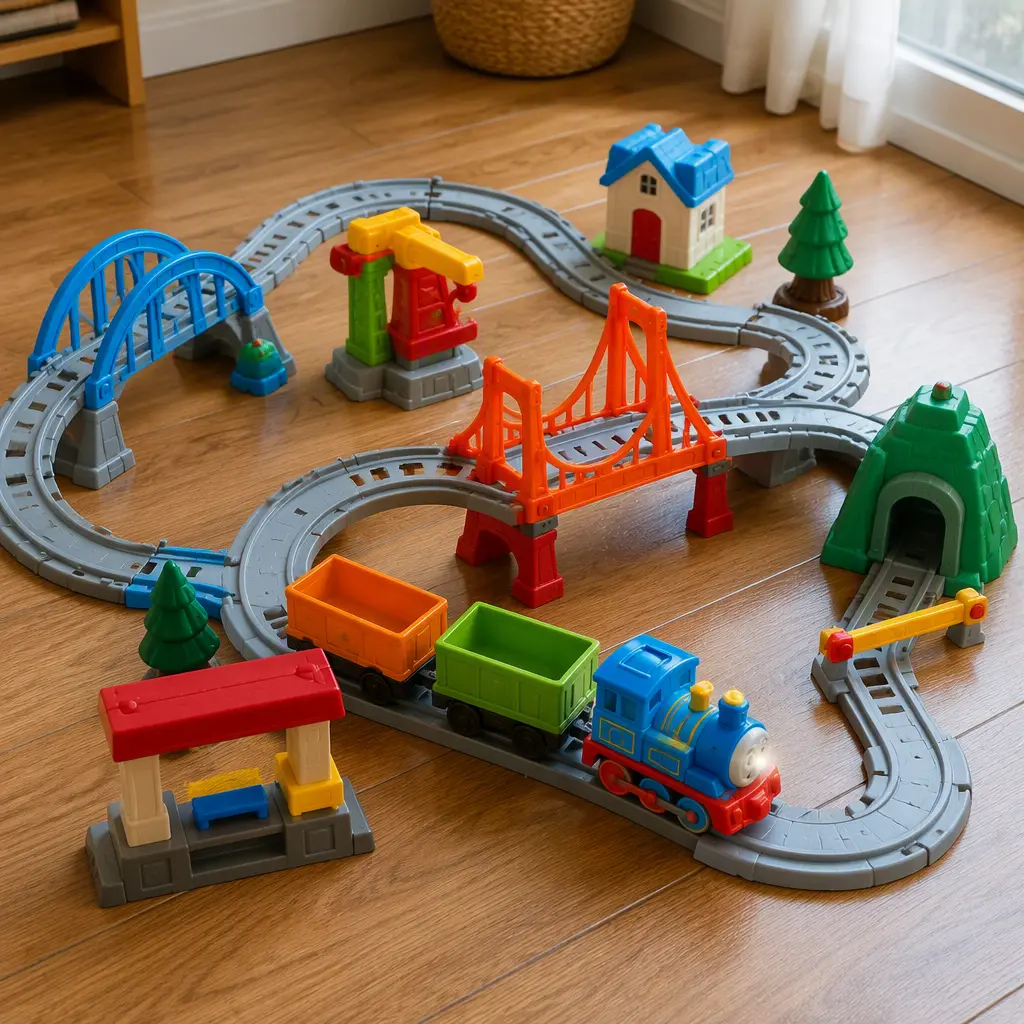
Fisher-Price GeoTrax combined chunky toddler-friendly tracks with battery-powered trains and remote-triggered action, creating a railway system that stayed approachable for younger kids.
Compare prices and availability
Check current prices and availability for this guide on eBay.
As an eBay Partner, we may be compensated if you make a purchase.
GeoTrax arrived at a moment when many toy train systems were either too delicate for preschoolers or too limited to hold their attention for long. Introduced by Fisher-Price in the early 2000s, the line combined large snap-together tracks with battery-powered trains, oversized scenery pieces, and simple remote controls designed for small hands. The result was a train system that felt active and interactive without becoming frustrating. For many families, GeoTrax became the bridge between basic push-along toys and more advanced model railway sets.
Where it came from
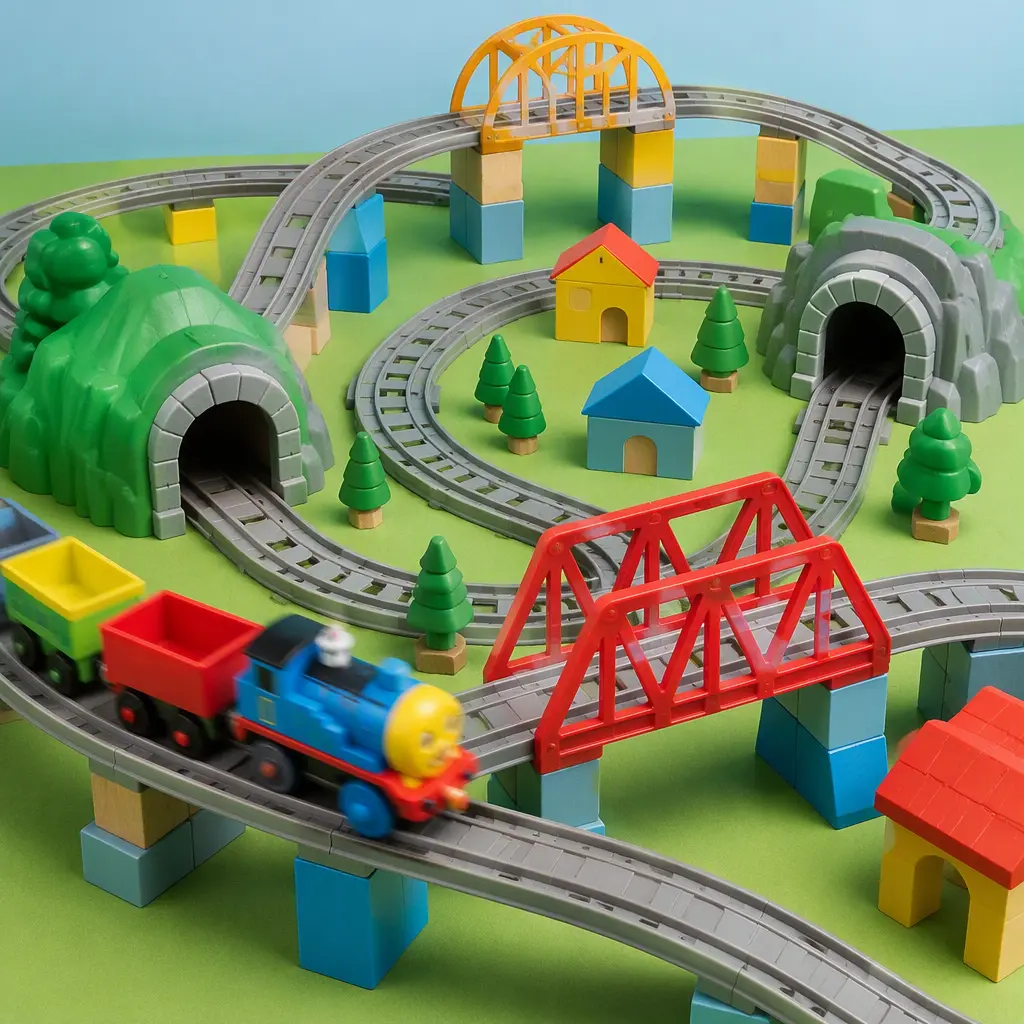
Fisher-Price launched GeoTrax in 2003 during a period when preschool toys increasingly focused on interaction and motorized features. Traditional wooden train systems remained popular, but they often depended entirely on manual play and could be difficult for younger children to assemble securely. GeoTrax approached the category from a different angle. The tracks snapped together with large connectors, the trains were durable enough for rough handling, and many sets included electronic sounds or movement triggered by simple buttons.
The original concept centered on accessibility. Instead of expecting children to carefully guide tiny train cars around fragile layouts, GeoTrax encouraged active play. Battery-powered engines could move on their own, while large remote controls let children start, stop, reverse, or activate sounds. Expansion sets added airports, construction zones, suspension bridges, and themed destinations, turning the system into a broad transportation world rather than a strict railway simulation. That wider imaginative scope helped GeoTrax stand out from hobby-oriented train brands.
Why it works
The core appeal of GeoTrax came from the balance between independence and simplicity. Young children could operate trains without needing advanced coordination, but they still felt in control of what happened. The oversized remotes were intentionally basic, usually relying on one or two large buttons. Pressing a button caused an immediate visible reaction, whether a locomotive began moving or a crossing gate swung open. That direct cause-and-effect relationship matched the developmental stage of the preschool audience.
The physical design also mattered. Tracks were broad and stable, making derailments less common than in slimmer train systems. Accessories were large enough to grasp easily, and many moving parts were engineered to survive drops or rough assembly. While the trains were motorized, the system still encouraged open-ended building and rearranging. Children could create loops, stations, bridges, or sprawling transportation layouts without worrying about precision alignment.
- Chunky snap-together track pieces designed for small hands
- Battery-powered locomotives with simple remote controls
- Large interactive accessories such as bridges, tunnels, and gates
- Durable construction intended for preschool-level play
- Mix of guided train movement and imaginative free play
Who it's for
GeoTrax was aimed primarily at preschoolers, especially children who liked vehicles but were not yet ready for smaller hobby train systems. The large pieces reduced frustration and made setup easier for both children and parents. At the same time, the line developed a following among collectors and nostalgic adults who appreciated its unusual design philosophy. Unlike highly realistic model railroads, GeoTrax focused on movement, color, and interaction. That playful identity helped it remain memorable even after production ended.
Variants and what to look for today
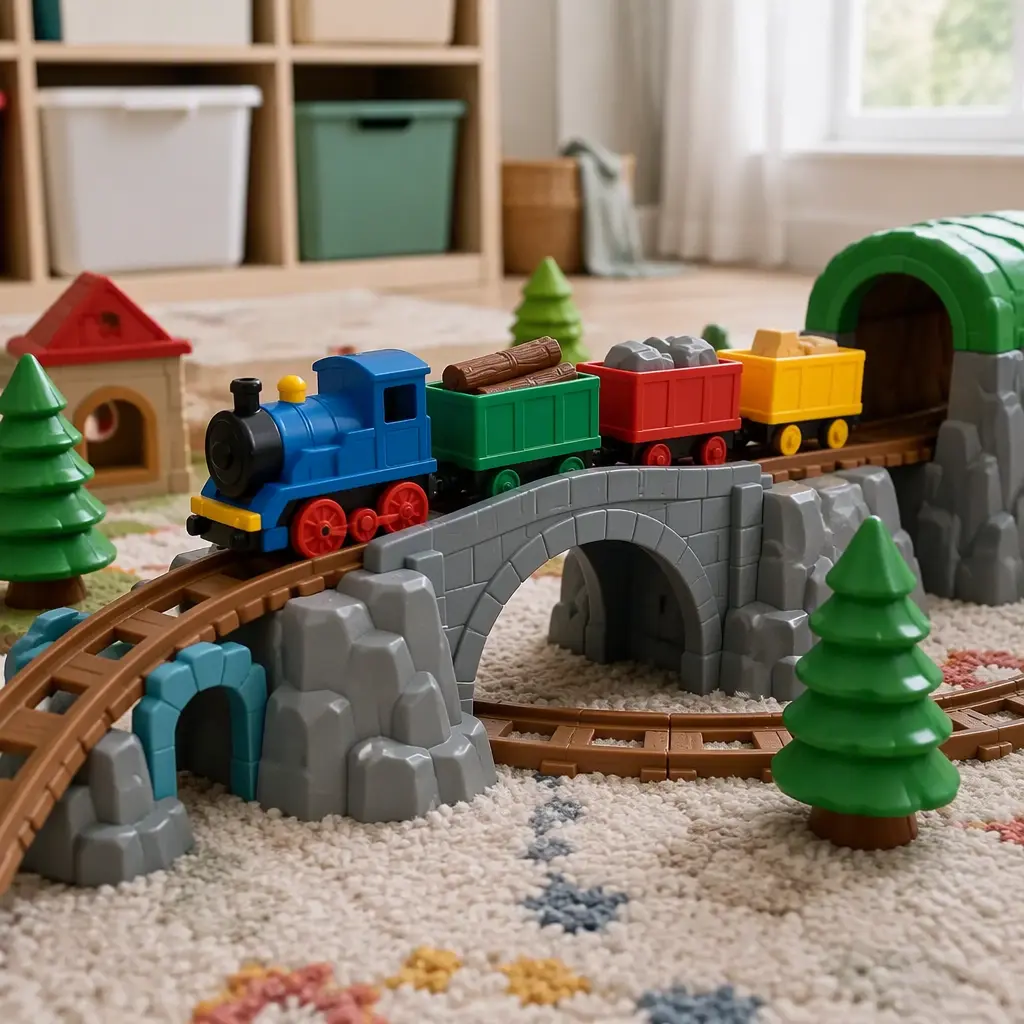
Over its production run, GeoTrax expanded into a surprisingly wide range of themes. Some sets focused on freight railroads and passenger stations, while others introduced airports, rescue vehicles, construction equipment, or adventure-style environments. The system remained largely compatible across releases, which encouraged families to keep adding to existing layouts. Many children built sprawling mixed transportation worlds that blended trains with roads, cranes, and loading stations.
Today, GeoTrax is no longer in active production, so most sets appear through secondhand marketplaces, toy resale shops, or collector communities. Condition matters because electronic components and battery compartments can wear over time. Buyers often look for complete track bundles rather than individual trains, since replacement pieces can be harder to match later. It is also common to find mixed lots where accessories from different themes are combined together.
- Check battery compartments for corrosion before buying used trains
- Look for complete track connector tabs without cracks
- Large bundles often provide better layout flexibility than single sets
- Original remotes are useful because some trains relied on proprietary controls
- Avoid heavily sun-faded pieces if display quality matters
Frequently asked questions
Was GeoTrax compatible with wooden train tracks?
Not directly. GeoTrax used its own larger plastic track system with different connectors and proportions. Some families improvised mixed play setups, but the tracks themselves were not designed to connect with standard wooden railway systems.
Why did GeoTrax become so popular?
The line succeeded because it reduced many common frustrations associated with preschool train toys. The tracks were sturdy, the trains moved under their own power, and the controls were simple enough for young children to master quickly. It also balanced construction play with vehicle play, broadening its appeal.
Are GeoTrax trains collectible?
Some retired sets and accessories are sought after by collectors, particularly complete layouts with working electronics and original remotes. However, the line is generally valued more for nostalgia and play potential than for rare investment pieces.
Can GeoTrax still be used by children today?
Yes, many sets remain functional if they have been stored well. Parents should check older electronic toys for worn wiring, damaged battery compartments, or cracked plastic before regular use. Because the pieces are large and durable, many surviving sets still hold up surprisingly well.
GeoTrax occupied a distinctive space in toy history. It treated preschool train play as something energetic and interactive rather than delicate or purely educational. By combining motorized action with sturdy construction and imaginative layouts, the system gave younger children a way to feel in charge of a busy transportation world. Even years after leaving store shelves, it remains one of the more recognizable examples of how thoughtful toy design can adapt a classic category for a new generation.