Heelys: When everyday shoes learned to roll
Around 2000, Heelys turned walking into a trick by hiding a wheel in the heel. This profile looks at where they came from, why kids loved them, and what to know if you’re eyeing a pair today.
Compare prices and availability
Check current prices and availability for this guide on eBay.
As an eBay Partner, we may be compensated if you make a purchase.
For a brief, unforgettable stretch of the early 2000s, walking itself became a party trick. With a subtle shift of weight, a regular-looking trainer could glide across the playground. Heelys didn’t ask kids to carry a board or strap on skates; they promised something more magical. What if your everyday shoes could roll?
Where it came from
Heelys trace back to 2000, when Roger Adams, a casual roller hockey player, wondered if skating could be blended into everyday footwear. Instead of inventing a new sport, he focused on a simple idea: put a removable wheel in the heel of a shoe. The result was something that looked ordinary enough for school corridors but behaved like a skate when the wearer leaned back.
The timing mattered. Skate culture was already mainstream, and kids were hungry for tricks that felt rebellious but accessible. Heelys spread quickly through word of mouth, playground demos, and pop culture appearances. Within a few years, the shoes were both wildly popular and quietly controversial, banned in some schools and shopping centres for being too fun, too fast, or too distracting.
Why it works
At heart, Heelys succeed because they collapse two modes of movement into one object. Walking and rolling share the same shoe, and the transition between them feels like a secret skill. You don’t need a ramp or a lesson; you just lean back and let physics do the rest.
The design is deceptively simple, but it taps into something powerful: the thrill of mastering balance in public space. Kids could practise in the driveway, then show off at the supermarket. The shoes rewarded patience, coordination, and confidence, even if the learning curve came with a few scrapes.
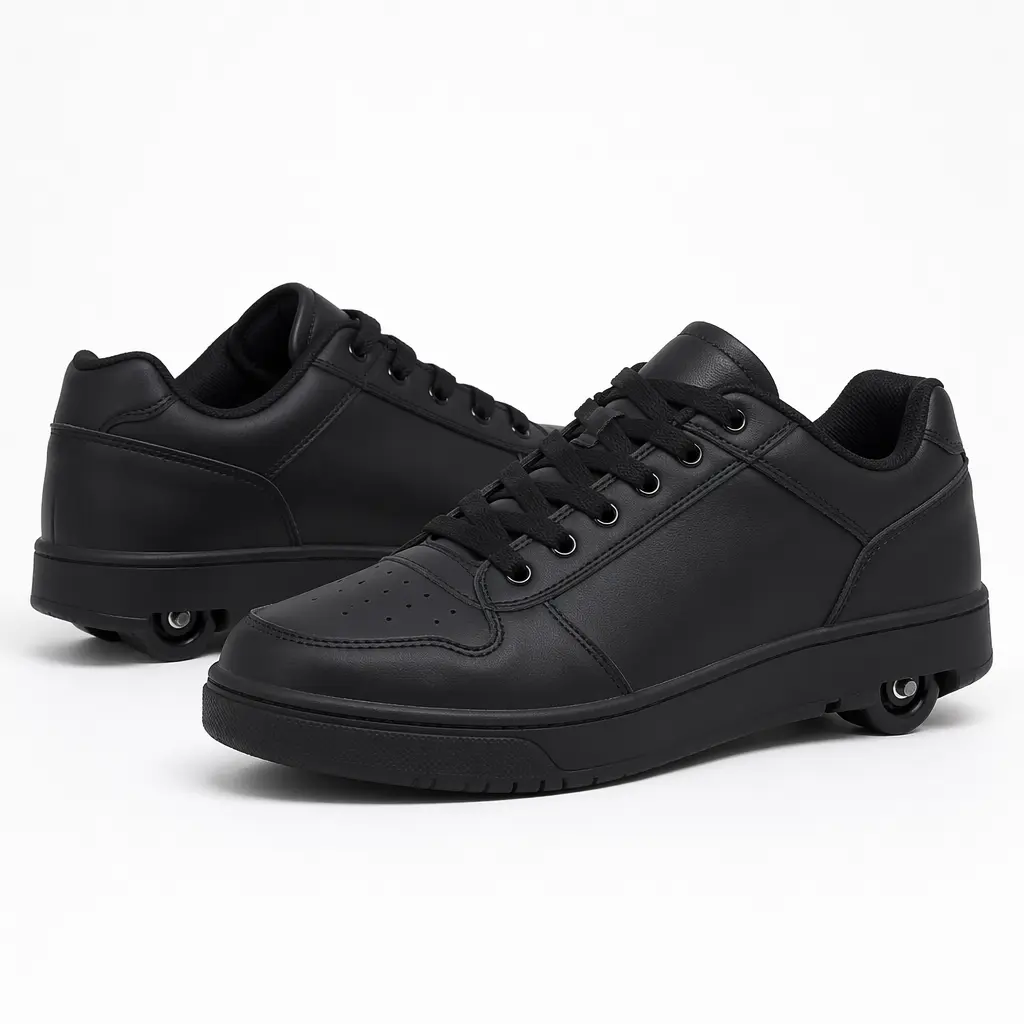
- A single wheel set into the heel for controlled gliding
- Rubber soles and toe grip for normal walking
- Removable wheel plugs to convert back to standard shoes
- Low-profile look that blends in with everyday trainers
Who it’s for
Heelys are typically aimed at school-age children and teens who already have decent balance and spatial awareness. Younger kids can use them, but they benefit from supervision and protective gear while learning. Adults, meanwhile, often approach Heelys with nostalgia. For some, they’re a playful way to revisit the early 2000s; for others, they’re a genuine form of casual exercise that turns errands into micro-adventures.
Variants and what to look for today
Modern Heelys-style shoes come in a range of silhouettes, from chunky skate-inspired designs to lighter, more athletic profiles. Some versions use one wheel per shoe, staying true to the original feel, while others experiment with two wheels for extra stability. The core experience, however, remains the same: walk normally, then roll when the mood strikes.
If you’re shopping today, comfort and fit matter more than nostalgia. Look for shoes with good ankle support, durable heel housings, and wheels that can be removed or replaced. Generic copies exist, but poorly fitted wheels or weak materials can affect both safety and enjoyment. As ever, a helmet and pads go a long way, especially for first-time riders.
Frequently asked questions
Are Heelys hard to learn?
Most beginners can roll short distances within an afternoon. Stopping and turning take longer, and confidence grows with practice. Expect a learning curve similar to skating, but with the comfort of normal walking in between.
Can you walk normally in them?
Yes. With the wheel in place, walking feels slightly different but manageable. With the wheel removed and the plug inserted, they behave much like standard trainers.
Why were they banned in some places?
Concerns centred on safety and property damage. Rolling indoors increases the risk of falls and collisions, particularly in crowded areas like schools or malls.
Are they still popular?
While not the cultural juggernaut they once were, Heelys maintain a steady fan base. They’re fuelled by nostalgia, social media clips, and new generations discovering them for the first time.
Heelys occupy a special place in toy history because they blurred the line between footwear and plaything. They didn’t just add wheels to shoes; they reimagined how kids moved through everyday life. For a moment, the world felt smoother, faster, and a little more fun, one heel roll at a time.