Hot Wheels: How a 1968 toy car became a lifelong hobby
From flame-painted die-cast cars to orange track, Hot Wheels reshaped toy racing in 1968 and never slowed down. Here’s how the design clicked, why it endured, and what matters if you’re buying today.
Compare prices and availability
Check current prices and availability for this guide on eBay.
As an eBay Partner, we may be compensated if you make a purchase.
Hot Wheels are toy cars, but that description barely covers it. Since their debut in 1968, they’ve been playthings, collectibles, and miniature design statements all at once. The hook was simple: cars that looked faster, rolled faster, and felt cooler than anything else in the toy aisle. More than five decades on, Hot Wheels still sit at the crossroads of kid-friendly racing and adult nostalgia—and that balance is a big reason they never went away.
Where it came from
Hot Wheels were launched in 1968 by Mattel, a company already known for toys but not for cars. The goal was to challenge Matchbox, the dominant name in die-cast vehicles at the time. Elliot Handler, one of Mattel’s founders, pushed for something different: not scaled-down copies of real cars, but exaggerated machines that looked like they belonged on a racetrack or a comic book page.
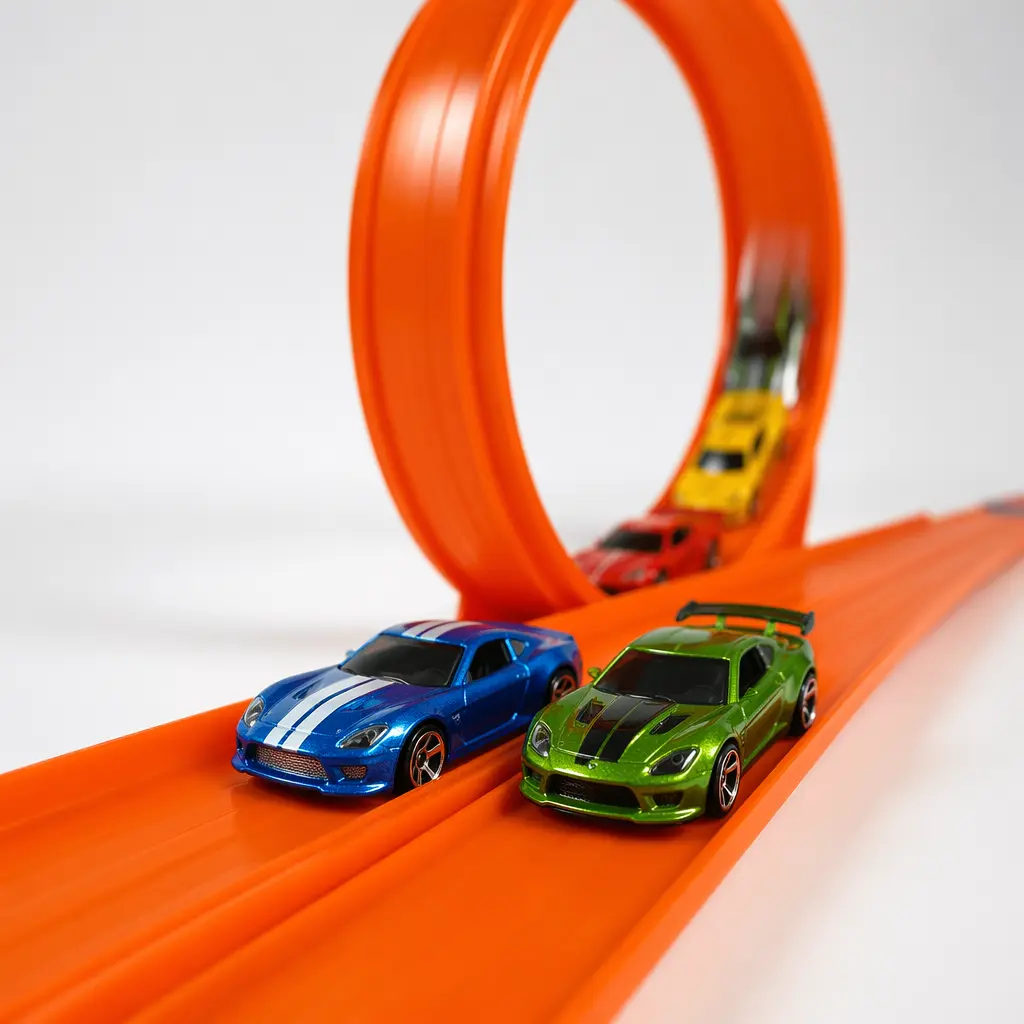
The timing helped. Car culture was booming in the late 1960s, especially in the United States. Muscle cars, custom paint jobs, and drag racing influenced the first Hot Wheels lineup, known today as the “Sweet 16.” These early cars used a new low-friction wheel design that made them noticeably faster on the floor—and on the bright orange track Mattel introduced alongside them.
Why it works
At their core, Hot Wheels succeed because they combine fantasy with function. The cars don’t just look wild; they’re built to move. Smooth axles, lightweight bodies, and standardized sizing mean almost any car works on almost any track. That consistency lets kids mix sets freely and build ever-more-elaborate courses.
Design is the other half of the equation. Hot Wheels lean into bold colors, oversized engines, and playful proportions. Even when the cars are based on real-world vehicles, they’re usually tweaked for drama. Over the years, that approach has kept the brand flexible as tastes changed.
- Fast-rolling wheels designed for track play
- Standardized size that works across decades of sets
- Mix of real-world cars and fantasy designs
- Durable metal bodies with simple plastic details
Who it’s for
Hot Wheels are typically aimed at children aged three and up, but the audience stretches much wider. Younger kids enjoy pushing cars across the floor and watching them race down ramps. Older children gravitate toward track systems and stunts. Adults often rediscover Hot Wheels as collectibles, focusing on specific themes, car styles, or eras. It’s one of those rare toy lines that can sit comfortably in a playroom or a display case.
Variants and what to look for today
Today’s Hot Wheels lineup is vast, but it still revolves around a few familiar ideas. Single cars remain the entry point, often sold in themed assortments. Track sets range from simple straightaways to complex stunt builds. There are also premium lines aimed at collectors, usually with heavier bodies and more detailed finishes.
If you’re buying for play, compatibility matters most. Standard-sized cars work on standard track, even across generations. For collectors, condition and consistency matter more than novelty. Be wary of very cheap imitations that don’t roll well or fit track properly; part of the Hot Wheels appeal is how reliably everything works together.
Frequently asked questions
Are Hot Wheels all the same size?
Most Hot Wheels cars are designed to a consistent scale that works with the brand’s track systems. While designs vary in width and height, they generally fit standard track without issue.
Can old Hot Wheels work on new track?
Yes. One of the strengths of the brand is backward compatibility. Cars from decades ago usually run just fine on modern track pieces.
Are Hot Wheels meant to be collectibles or toys?
Both. They’re built to be played with, but certain lines and themes appeal strongly to adult collectors. The same basic car can serve either purpose.
Do Hot Wheels need batteries?
Traditional Hot Wheels cars and track rely on gravity and push power. Some modern accessories may include motorized elements, but the core experience is battery-free.
Hot Wheels endure because they respect play. They don’t demand instructions, screens, or upgrades—just a smooth surface and a little imagination. Whether you’re handing one to a preschooler or rediscovering a favorite car from your own childhood, the appeal is immediate and surprisingly timeless.