Hungry Hungry Hippos: When chaos became the whole game
Since the late 1960s, Hungry Hungry Hippos has turned frantic button-mashing into family fun, proving that speed, noise, and chaos can be a design feature—not a flaw.
Compare prices and availability
Check current prices and availability for this guide on eBay.
As an eBay Partner, we may be compensated if you make a purchase.
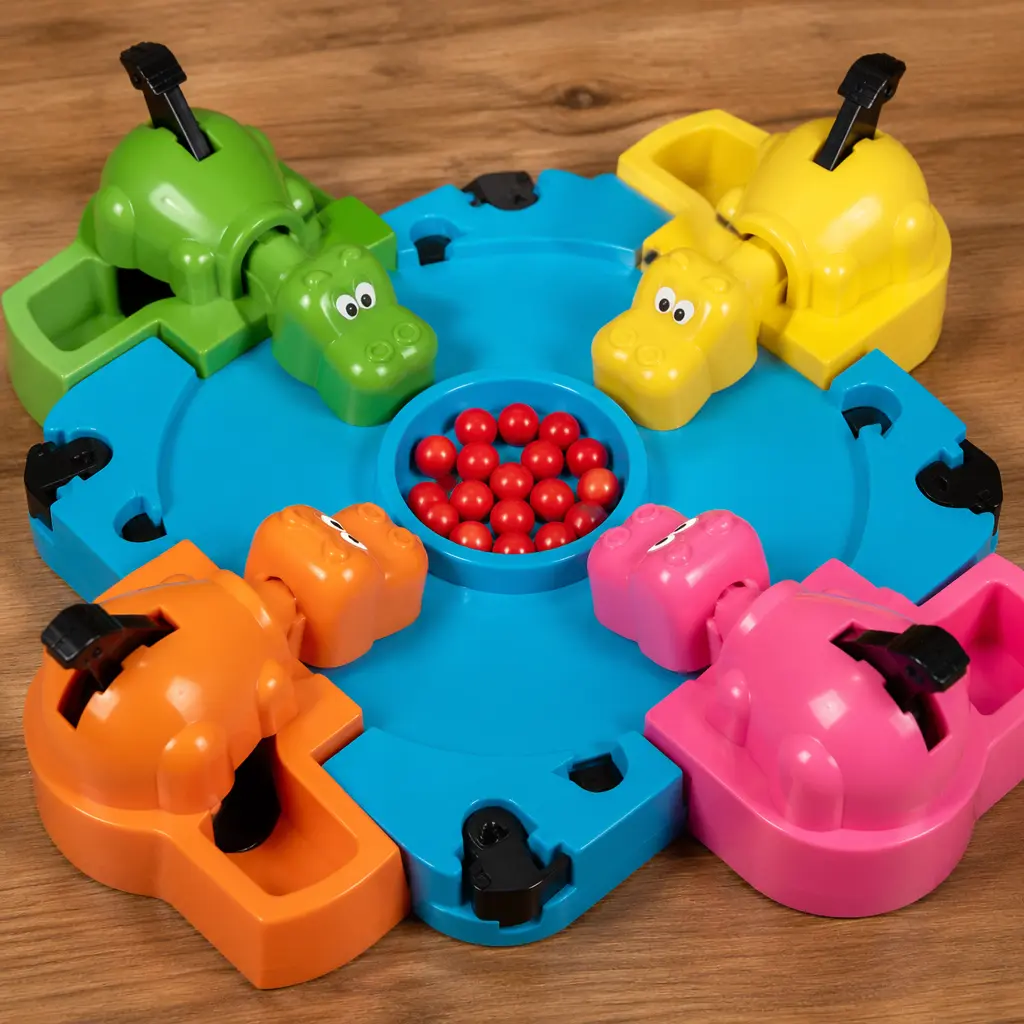
Hungry Hungry Hippos is not subtle. From the moment the marbles spill into the middle, the game announces itself with clacking plastic, flying hands, and the unmistakable feeling that everyone is playing at once. For decades, this tabletop staple has embraced chaos as its core mechanic, turning what could have been a simple counting game into a loud, kinetic race that still fills living rooms with laughter.
Where it came from
Hungry Hungry Hippos first appeared in 1967, emerging from an era when toy makers were experimenting with action-oriented board games that went beyond turn-taking and dice rolls. The idea was simple but bold: four players compete simultaneously, each controlling a chomping hippo, trying to grab as many marbles as possible before they’re gone.
The game was developed under the banner of a major American toy company known for family-friendly hits. Its original purpose wasn’t educational in the traditional sense; it was about energy and immediacy. At a time when many board games rewarded patience and planning, Hungry Hungry Hippos flipped the script by rewarding fast reactions and unrestrained enthusiasm.
Why it works
At its heart, Hungry Hungry Hippos works because it removes almost every barrier between players and play. There’s no waiting your turn, no reading long instructions, and no complicated setup. The moment the marbles are released, the game becomes a shared burst of action where everyone is equally involved.
The physical design does most of the heavy lifting. Each player has a lever that makes their hippo lunge forward, scooping marbles into a hidden tray. The movement is exaggerated and satisfying, and the sound becomes part of the experience. Key features that make the design endure include:
- Simultaneous play that keeps all players engaged
- Simple cause-and-effect controls that even young children grasp quickly
- Bright colors and chunky pieces that read clearly from across the table
- A built-in sense of urgency created by a finite number of marbles
Who it's for
Hungry Hungry Hippos is typically recommended for preschool and early primary ages, but its appeal stretches wider. Younger children love the physical action and clear goal, while adults often enjoy it as a nostalgia piece or a quick, silly break from more strategic games. It’s one of those rare toys where mixed ages can genuinely play together without adjusting the rules.
Variants and what to look for today
Over the years, Hungry Hungry Hippos has seen various refreshes and format tweaks. Modern versions tend to be lighter, with fewer marbles and sometimes a more compact board designed for easier storage. Some editions add themed colors or minor rule variations, but the core experience remains unchanged.
If you’re shopping today, focus on build quality rather than novelty. Look for sturdy levers that snap back reliably and marbles that are large enough to handle easily. Be cautious of off-brand versions that use thinner plastic or poorly aligned mechanisms, as they can sap the fun quickly. The best versions feel robust enough to survive enthusiastic play.
Frequently asked questions
Is Hungry Hungry Hippos a skill game or a luck game?
It’s a mix, but it leans heavily toward reflexes rather than strategy. Quick reactions and steady button-mashing matter more than planning, which is part of its appeal.
How long does a game usually last?
Most rounds are over in under two minutes. That short playtime makes it easy to replay or rotate players without anyone losing interest.
Can younger children play safely?
With supervision, yes. The main concern is the marbles, so the game is best played with children old enough not to put small objects in their mouths.
Does it work well for adults?
While it’s not a deep game, adults often enjoy it as a nostalgic, high-energy diversion, especially in social or family settings.
Hungry Hungry Hippos endures because it knows exactly what it is. It doesn’t try to be clever or educational on the surface; it aims to be loud, fast, and a little ridiculous. In doing so, it captures something timeless about play: sometimes the best moments come from letting go and embracing the mess.