Laser Maze: The optics puzzle that made light into a game
Laser Maze turned mirrors, splitters, and beams of light into a family-friendly logic challenge. Since 2007, the tabletop puzzle has blended STEM concepts with satisfying hands-on play.
Compare prices and availability
Check current prices and availability for this guide on eBay.
As an eBay Partner, we may be compensated if you make a purchase.
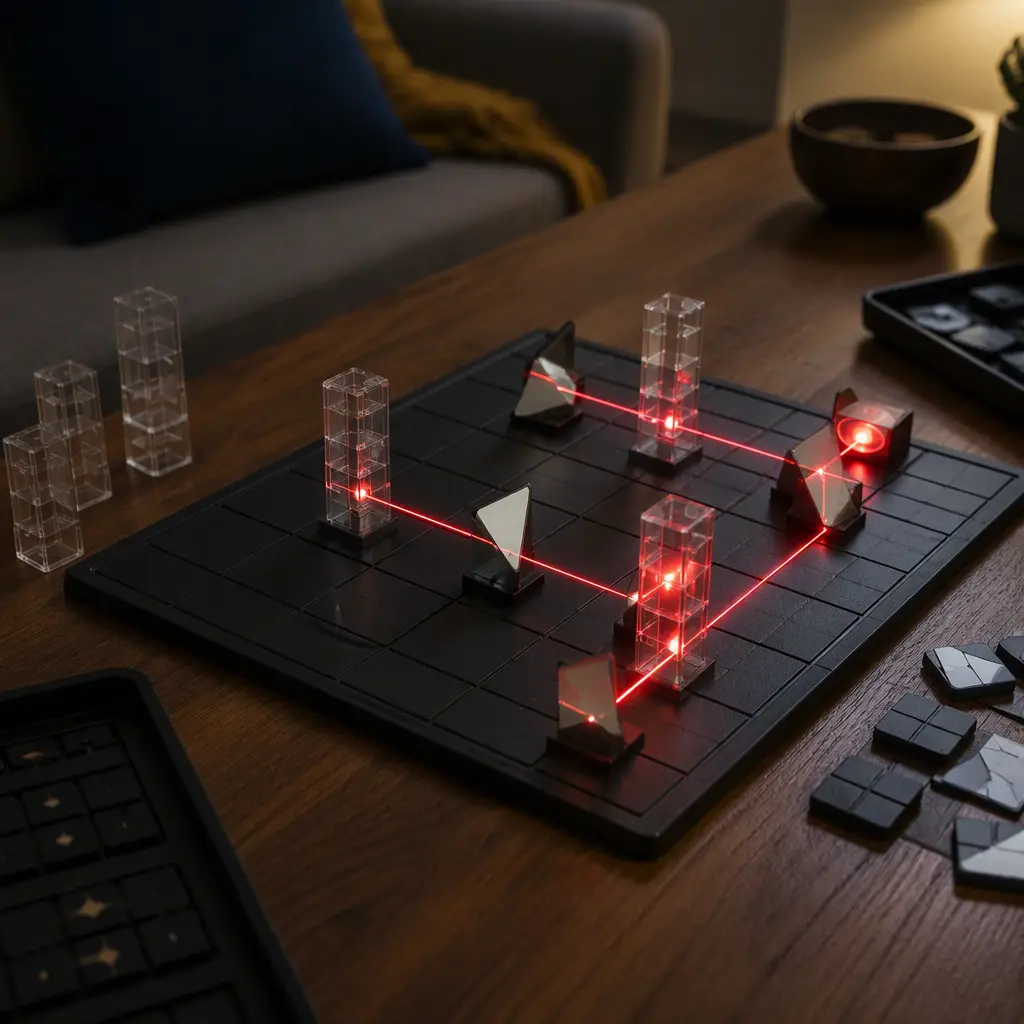
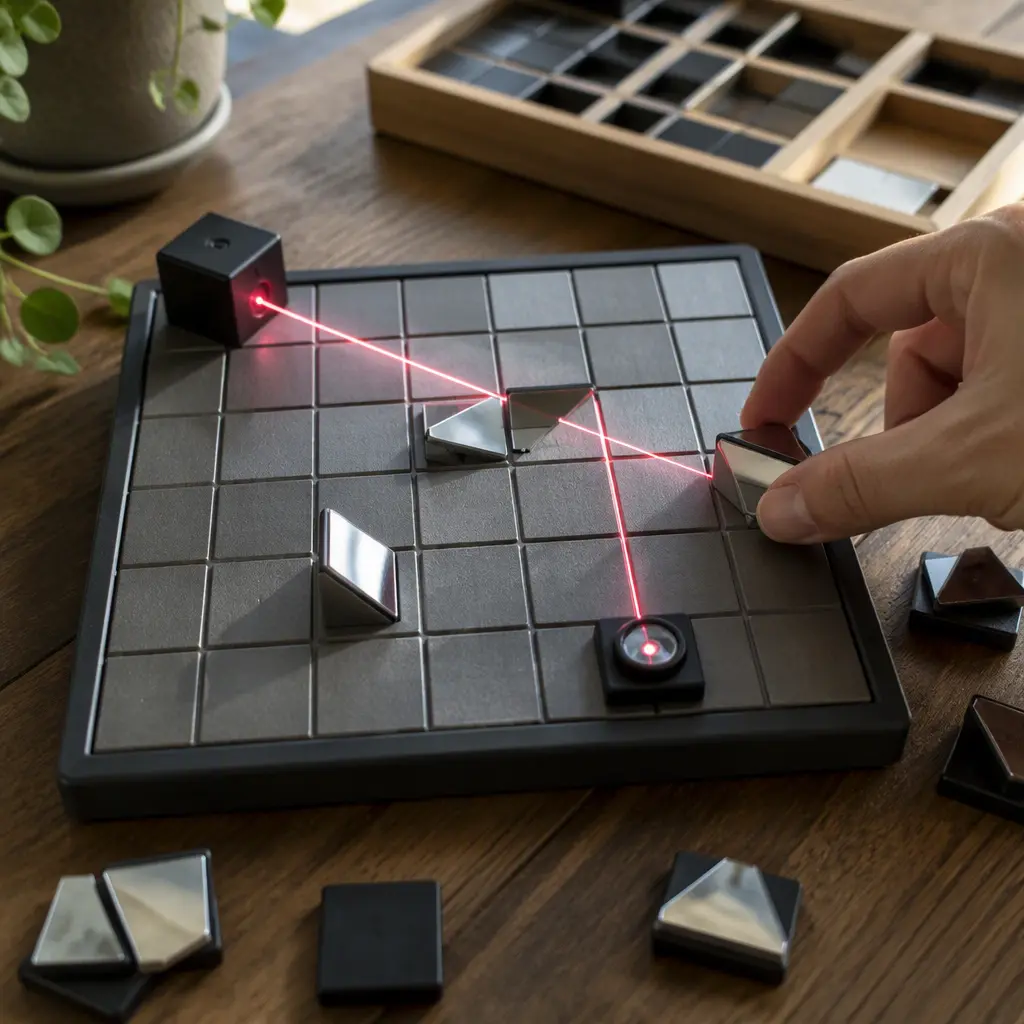
Laser Maze arrived during a period when STEM toys were beginning to move beyond classrooms and into family game cabinets. At first glance it looks almost futuristic: a tabletop grid, small mirrored pieces, and a real beam of light crossing the board. But underneath the glowing gimmick is a straightforward logic puzzle. Players place optical pieces in the correct positions so the beam reaches its target, turning ideas from physics class into a tactile challenge that feels closer to a strategy game than a lesson. The result is a puzzle family that has stayed relevant by combining satisfying cause-and-effect play with the simple appeal of making light bounce around a room.
Where it came from
Laser Maze was introduced in 2007 by ThinkFun, a company known for single-player logic games and brain teasers designed to bridge education and entertainment. The timing mattered. Parents and schools were increasingly looking for toys that encouraged problem-solving without feeling overly academic, and ThinkFun had already established a reputation for compact games built around escalating challenges. Laser Maze took that formula and added a physical light beam, giving the puzzles a dramatic payoff that earlier abstract logic games could not match.
The core idea was rooted in real optical principles. Instead of simply matching colors or shapes, players learned how reflection and beam direction worked by experimenting with mirrors, beam splitters, and targets. Importantly, the game did not require scientific knowledge to start. Early challenges introduced concepts gradually, allowing younger players to learn through trial and error. That approachable design helped Laser Maze stand out from science kits that depended on instructions or adult supervision. It felt like a puzzle first and an educational tool second.
Why it works
The lasting appeal of Laser Maze comes from how clearly actions lead to results. Every move changes the path of the beam immediately, so players can see whether a solution is getting closer or farther away. That instant feedback keeps frustration manageable, especially for younger players. The board also creates a satisfying balance between planning and experimentation. Some players mentally map the beam path before touching a piece, while others learn by physically testing arrangements and adjusting as they go.
The design also benefits from being surprisingly tactile for a logic game. The mirrored towers and beam pieces are sturdy enough to reposition repeatedly, and the glowing light creates a dramatic finish once the target is finally hit. Unlike many screen-based puzzle games, Laser Maze turns problem-solving into something visible across the room. Family members can gather around the board and follow the beam together, making it easier to turn a solo puzzle into a shared activity.
- Real light beam creates immediate visual feedback
- Progressive challenge cards ease players into harder puzzles
- Mirror and splitter pieces encourage experimentation
- Compact tabletop format works for solo or family play
- STEM concepts emerge naturally through gameplay rather than lectures
Who it's for
Laser Maze is generally approachable for school-age children who can follow spatial relationships and basic puzzle rules, though adults often end up enjoying it just as much. Younger players are usually drawn in by the glowing beam effect, while older players appreciate the increasingly complex challenge layouts. It also works well for families because turns can become collaborative without breaking the puzzle structure. One person might suggest mirror placement while another traces possible beam routes. For adults who grew up with traditional logic puzzles or mechanical brain teasers, Laser Maze offers a more physical and visual variation on the same appeal.
Variants and what to look for today
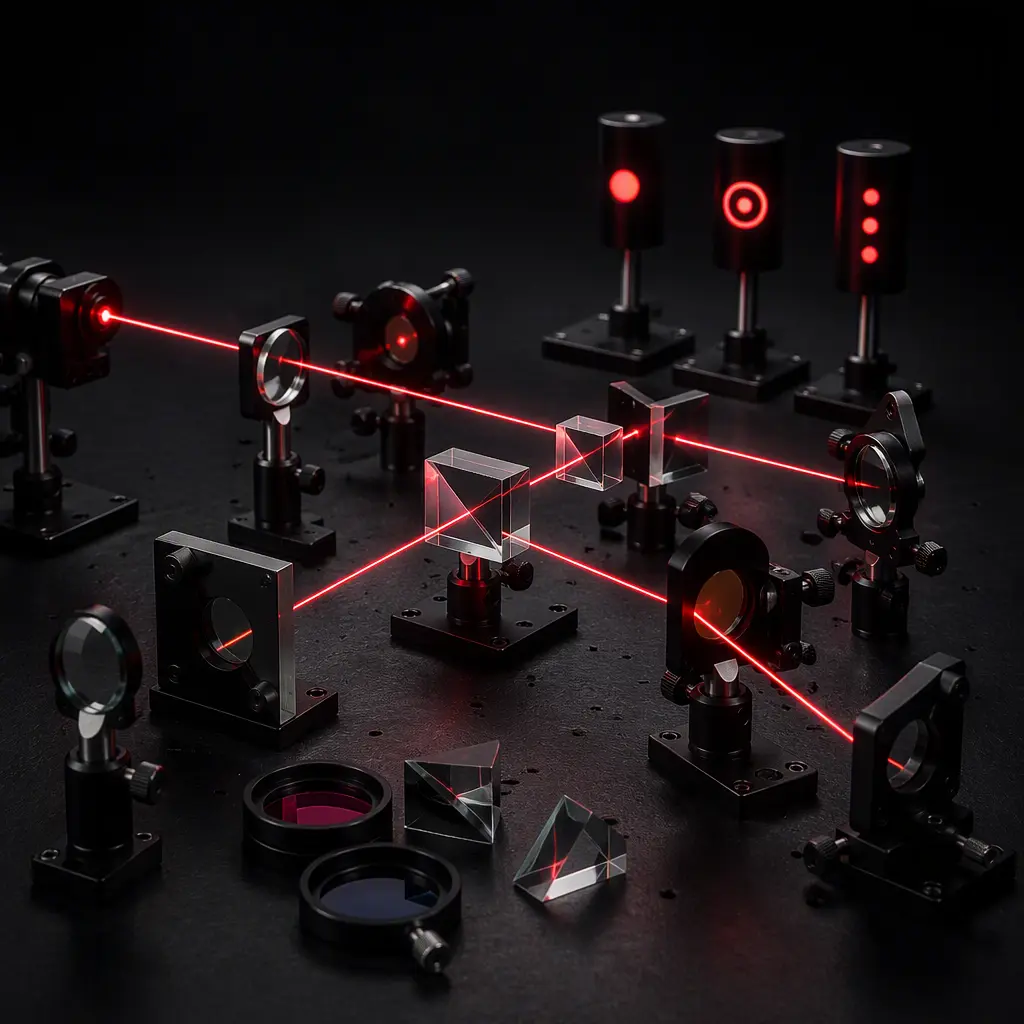
Over time, Laser Maze expanded into a broader family of optics-themed puzzles with different complexity levels and themes. Some editions simplify the challenge for younger players with fewer pieces and more direct solutions, while others introduce advanced optical elements that require careful multi-step planning. The central concept remains largely unchanged: direct a beam of light through obstacles and reflective pieces to reach a target.
For buyers today, the biggest differences usually involve difficulty and component quality. Sets with sturdier mirrored pieces tend to hold alignment better during play, which matters once puzzles become more complicated. Families shopping secondhand should check that all challenge cards and optical pieces are included, since missing components can make certain puzzles unsolvable. Generic light-beam puzzles exist as well, but build quality can vary widely, especially in how accurately mirrors reflect the beam.
- Starter-friendly editions focus on simpler beam paths and fewer components
- Advanced versions may include split beams and multi-target challenges
- Travel-sized sets trade complexity for portability
- Secondhand copies should be checked for missing mirrors or challenge cards
- Look for sturdy grid pieces that stay firmly in place during play
Frequently asked questions
Is Laser Maze more of a toy or a puzzle game?
It sits somewhere in between. The game has the structured challenge progression of a traditional logic puzzle, but the physical light beam and movable optical pieces give it the feel of a hands-on toy. That combination is a major part of its appeal.
Does it actually teach science concepts?
Yes, though indirectly. Players naturally learn about reflection, beam direction, and basic optics by experimenting with the pieces. The educational value comes from interaction rather than formal instruction, which makes the concepts easier to absorb casually.
Can younger children play without adult help?
Many children can handle the easier challenge cards independently after learning the rules. More advanced puzzles may benefit from collaborative play, especially when multiple mirrors or split beams are involved.
Why has Laser Maze stayed popular?
The game balances novelty with simplicity. The light beam still feels exciting years after its release, but the underlying rules remain easy to understand. It also avoids depending on apps or screens, which has helped it remain relevant as families look for more tactile puzzle experiences.
Nearly two decades after its debut, Laser Maze remains one of the clearest examples of how educational toys can succeed without feeling instructional. Its clever use of real light, approachable puzzle design, and family-friendly challenge structure helped transform a basic lesson in optics into an activity people genuinely wanted to revisit. In a crowded field of STEM products, Laser Maze endured because it understood something simple: seeing a beam bounce perfectly across a board is satisfying at any age.