LeapFrog LeapPad: The kid tablet that made learning feel playful
LeapFrog’s LeapPad helped children move from paper books to screens with purpose, mixing touch, sound, and curriculum-led play into a kid-safe tablet long before family iPads were common.
Compare prices and availability
Check current prices and availability for this guide on eBay.
As an eBay Partner, we may be compensated if you make a purchase.
Before tablets became household staples, parents faced a tricky choice: keep learning rooted in books and toys, or allow screens into the mix. LeapFrog’s LeapPad arrived as a compromise. It wasn’t a shrunk-down adult device. It was a purpose-built learning tool that treated technology as a bridge to reading, maths, and problem-solving rather than a distraction.
Where it came from
LeapFrog began in the 1990s with talking books and phonics toys aimed at early readers. By 1999, the brand had established a reputation for tying play to classroom skills. The LeapPad name originally appeared on interactive books that used a special pen to trigger sounds and lessons on the page. The idea was simple but powerful: combine the familiarity of a book with responsive feedback.
As touchscreen technology matured and became more affordable, LeapFrog evolved the LeapPad into a standalone tablet for children. Unlike general-purpose tablets, these devices were built around educational software, parental controls, and durability. The goal wasn’t to replace books or teachers, but to extend learning into a format kids were increasingly curious about.
Why it works
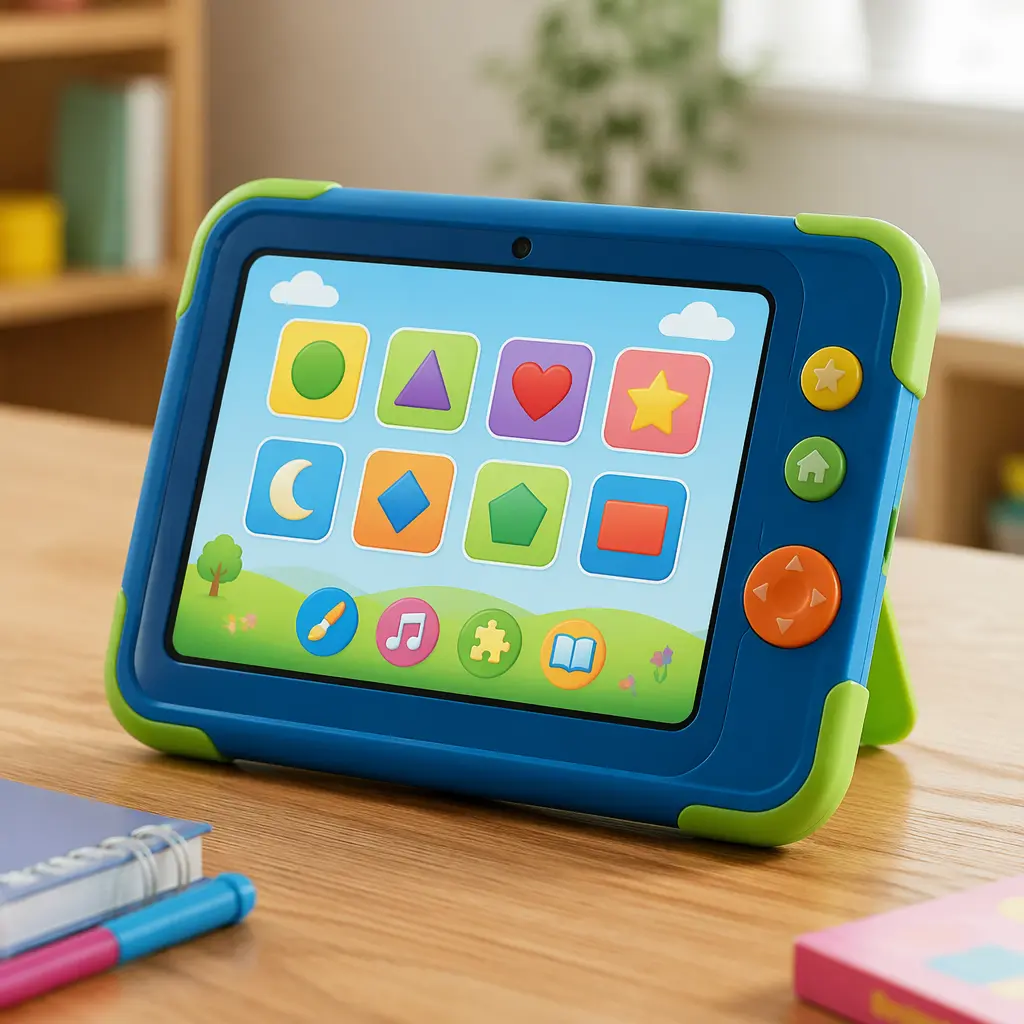
The LeapPad’s success comes from focus. Every design decision points back to learning outcomes: reading fluency, basic maths, logic, and creativity. The interface is deliberately simple, with large icons and clear audio cues, helping younger children navigate independently without frustration.
Equally important is what the LeapPad leaves out. There’s no open web browsing by default, no social feeds, and no pressure to keep up with adult tech cycles. That restraint has helped parents feel more comfortable introducing a screen at an earlier age.
- Child-sized, rugged design that survives drops and spills
- Curriculum-informed games that build skills step by step
- Touch interaction paired with audio guidance for early readers
- Strong parental controls over time limits and content access
- Offline-friendly play without constant internet use
Who it’s for
LeapPad products are generally aimed at preschool and primary school children, roughly ages three to eight. They’re especially appealing to families who want a first screen that feels intentional rather than indulgent. Many parents also find that older siblings or even adults enjoy revisiting the learning games, particularly those focused on puzzles and logic.
Variants and what to look for today
Over the years, the LeapPad family has expanded to include different sizes, performance levels, and age targets. Some versions emphasise early literacy and phonics, while others lean into maths, science, or creative play. The common thread is a closed, child-safe ecosystem built around learning apps.
If you’re considering one today, look for age-appropriate content and check how apps are delivered—some rely on downloads or companion software. Build quality matters too: thicker bezels and rubberised edges are a feature, not a flaw. Be cautious with very cheap imitations that resemble kids’ tablets but lack educational depth or reliable safety controls.
Frequently asked questions
Is a LeapPad better than a regular tablet for kids?
For younger children, many parents prefer the LeapPad’s closed environment and learning-first design. It trades flexibility for focus, which can be a positive at early ages.
Does it replace books or schoolwork?
No. The LeapPad works best as a supplement. It reinforces skills introduced through books, school, and play rather than acting as a standalone teacher.
Does it need internet access?
Many learning activities work offline once installed. Internet access is typically used for setup, updates, or adding new content.
How long do kids usually stay interested?
Interest tends to last longest when content matches a child’s current skill level. As children outgrow the activities, the LeapPad naturally gives way to more advanced tools.
The LeapPad’s lasting appeal isn’t about cutting-edge hardware. It’s about timing and trust. By respecting how children learn and how parents worry, LeapFrog created a device that made screens feel less like a gamble and more like a guided step forward.