Leapster: The learning handheld that felt like a real game system
LeapFrog’s Leapster blended educational software with the look and feel of a handheld console, turning reading, math, and problem-solving into a familiar gaming ritual for many children in the 2000s.
Compare prices and availability
Check current prices and availability for this guide on eBay.
As an eBay Partner, we may be compensated if you make a purchase.
For a generation of children growing up in the early 2000s, the Leapster occupied a unique middle ground between toy and technology. It looked and felt enough like a portable video game system to seem exciting, but its main goal was educational. Kids could play spelling games, solve math challenges, practice handwriting with a stylus, and work through reading activities while still feeling like they were using a “real” gaming device. That balance helped the Leapster become one of LeapFrog’s most recognizable products and an early introduction to handheld gaming for many families.
Where it came from
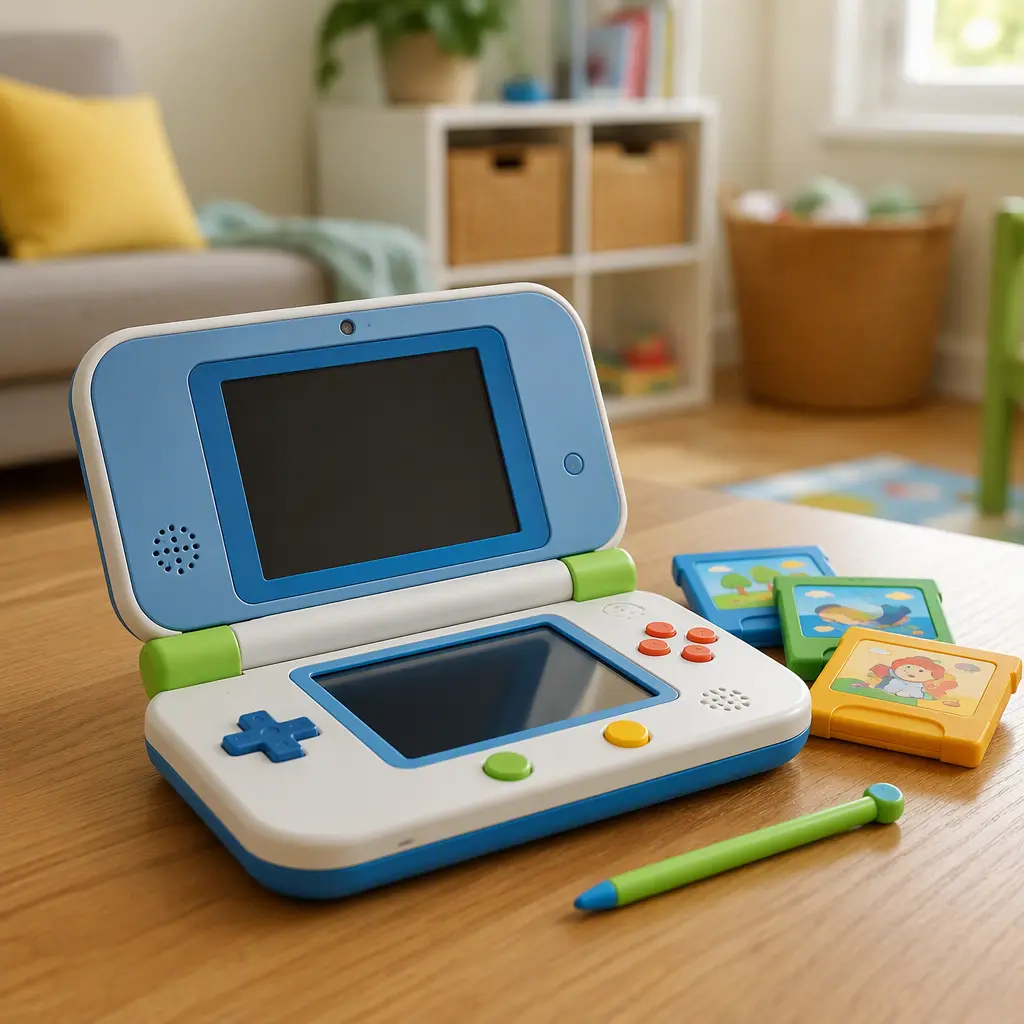
LeapFrog launched the original Leapster in 2003 during a period when educational electronics were becoming more common in homes and classrooms. The company had already found success with interactive reading systems aimed at younger children, but the Leapster was designed to appeal to kids who were increasingly aware of mainstream gaming culture. Portable game systems from Nintendo and others were highly visible at the time, and LeapFrog recognized that children often wanted the same form factor and independence associated with those devices.
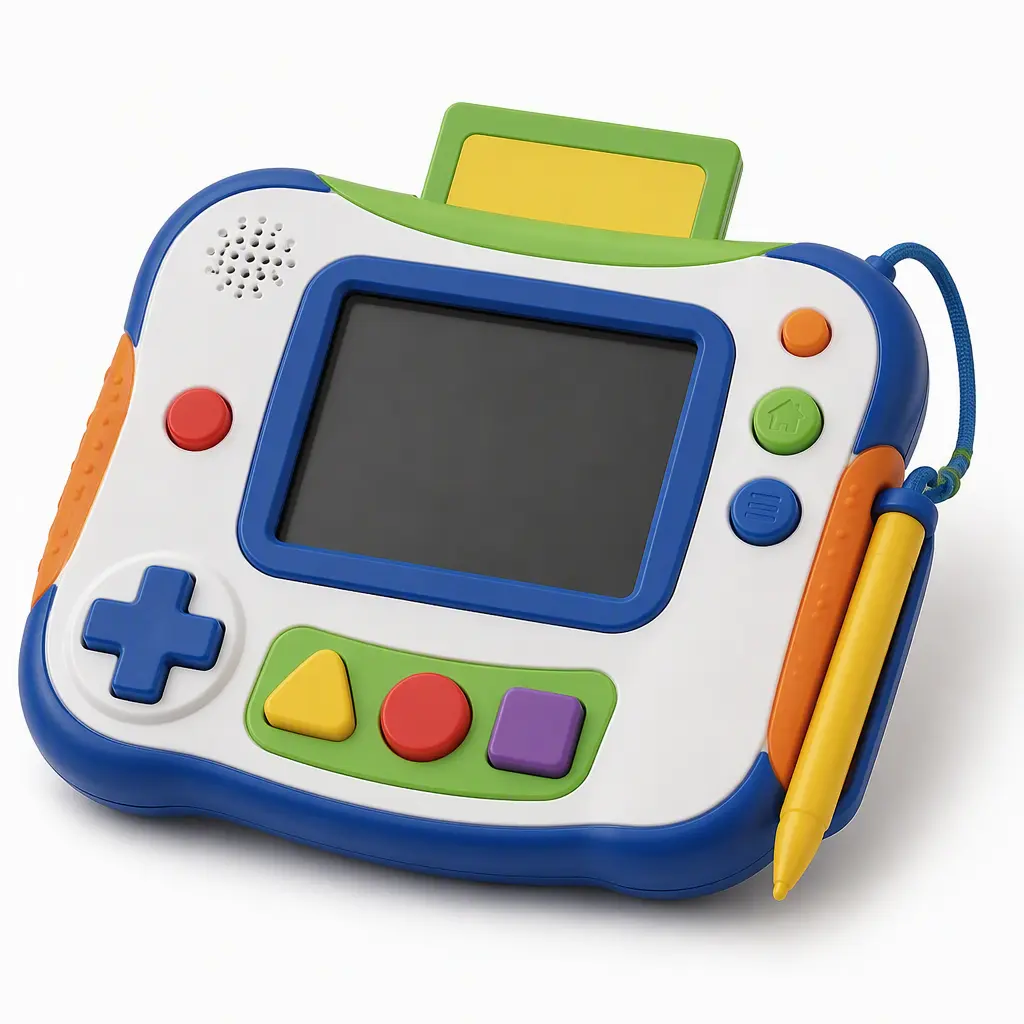
Instead of competing directly with entertainment-focused handhelds, LeapFrog created a system centered on learning activities tied to school subjects. The hardware included a directional pad, large action buttons, and a stylus-controlled touchscreen area that encouraged writing and drawing. Cartridges covered subjects like phonics, mathematics, science, and logic puzzles, often wrapped inside game-like structures with colorful animation and rewards. Parents saw it as educational screen time, while children often saw it simply as a game system of their own.
Why it works
The Leapster succeeded because it respected the rituals of gaming without requiring children to master complicated controls. Inserting a cartridge, powering on the system, navigating menus, and earning progress all mirrored the experience of larger handheld consoles. That familiarity mattered. Many children felt they were graduating from preschool learning toys into something more independent and mature.
Its design also reflected practical thinking about younger users. The shell was thick and durable, the controls were oversized, and the stylus was tethered so it would not disappear immediately into a couch cushion. Games were usually short-session friendly, allowing children to play for ten or fifteen minutes at a time without losing track of progress. Educational goals were integrated directly into gameplay loops rather than presented as quizzes between unrelated activities.
- Large buttons and simplified controls designed for younger hands
- Stylus interaction that encouraged handwriting and tracing practice
- Cartridge-based software library covering reading, math, logic, and science
- Portable format that felt similar to mainstream handheld game systems
- Durable construction aimed at travel and repeated use by children
Who it's for
The Leapster family was generally aimed at early elementary-age children, especially those who were curious about video games but not yet ready for more complex systems. Many parents appreciated that the software focused on school-related skills without feeling as rigid as traditional educational programs. The systems also developed an unexpected adult appeal over time. People who grew up with early 2000s educational technology often remember the Leapster as one of their first personal electronics devices, and retro toy collectors now view it as part of a broader era of kid-focused digital learning products.
Variants and what to look for today
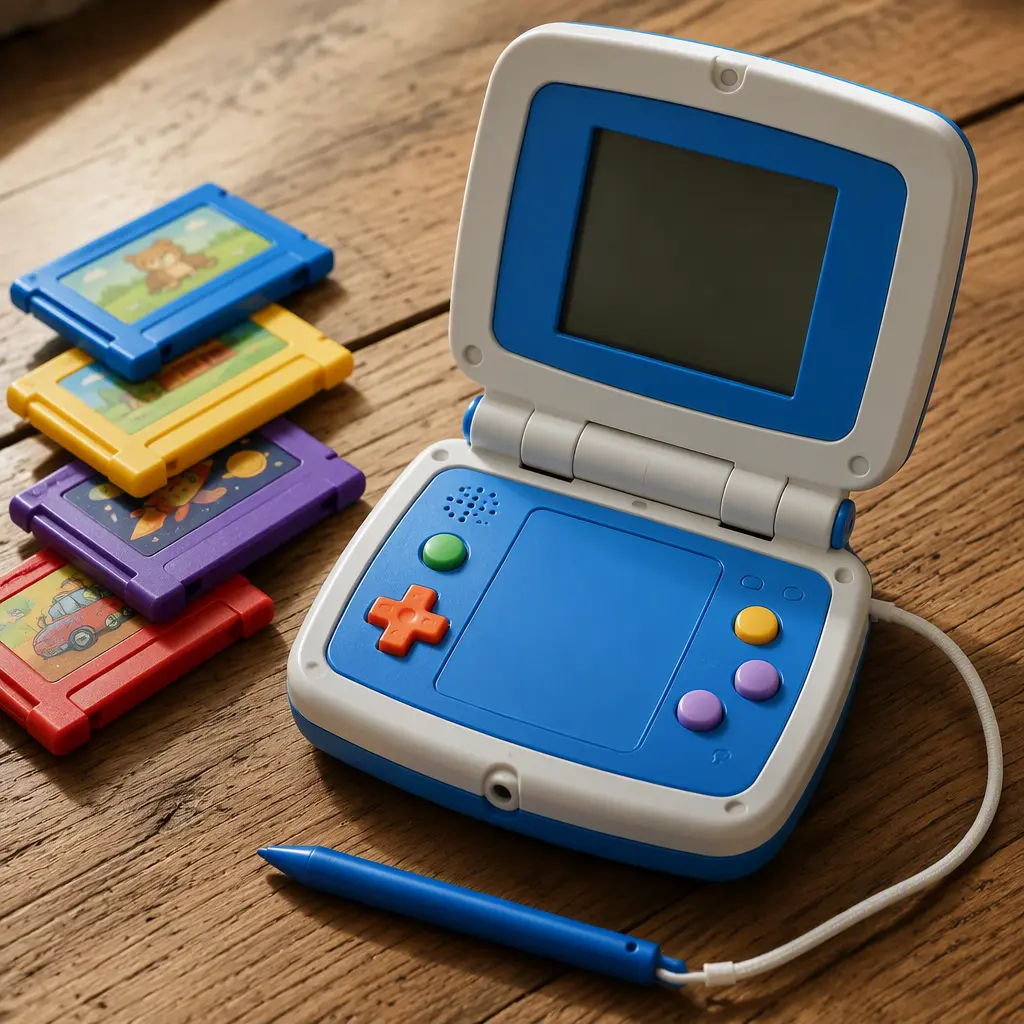
LeapFrog expanded the line significantly after the original system. Later versions introduced brighter screens, slimmer shapes, rechargeable options, and eventually camera features and downloadable content. Some models focused on younger children with simplified controls, while others attempted to keep older kids engaged with more advanced activities and multimedia functions.
For collectors or families searching secondhand today, condition matters more than rarity. Battery compartments on older electronic toys can develop corrosion if stored improperly, and styluses are often missing. Screens may also show scratches from heavy use. Because the systems were designed for children, cosmetic wear is common and usually expected.
- Look for systems with an attached or included stylus
- Check battery compartments carefully for corrosion
- Test cartridge slots if possible before buying secondhand
- Consider later models for brighter screens and improved ergonomics
- Avoid extremely cheap untested bundles with obvious storage damage
Frequently asked questions
Was the Leapster considered a real game console?
Technically it was an educational handheld platform rather than a mainstream gaming console, but many children experienced it the same way. It used cartridges, portable controls, sound effects, and progression systems similar to entertainment-focused devices.
Did Leapster games actually teach useful skills?
The educational value varied by title, but many games were designed around reading comprehension, spelling, mathematics, logic, and handwriting practice. The strongest titles tended to blend learning goals directly into gameplay instead of interrupting play with isolated quizzes.
Why do adults remember the Leapster so fondly?
For many children of the 2000s, the Leapster represented independence and ownership. It was often one of the first personal electronic devices they could carry around, choose games for, and operate without constant help from adults.
Are old Leapster systems still usable today?
Many still work if stored properly. Replacement batteries are easy to find, and cartridges often remain functional decades later. The main concerns are screen wear, damaged battery compartments, and missing accessories like styluses or battery covers.
The Leapster arrived at a moment when parents were increasingly comfortable with educational technology but still cautious about unrestricted gaming. By combining learning software with the structure and excitement of a handheld console, LeapFrog created a device that felt modern without feeling intimidating. It may not have competed directly with dedicated gaming systems, but for many children it was the first step into portable interactive entertainment — and an unusually influential one for a toy built around spelling lists and math games.