Little Green Army Men: How plastic soldiers fueled imagination
From sandboxes to movie cameos, little green army men turned cheap plastic into endless stories. Their simple poses and open-ended play explain why they’ve endured for generations.
Compare prices and availability
Check current prices and availability for this guide on eBay.
As an eBay Partner, we may be compensated if you make a purchase.
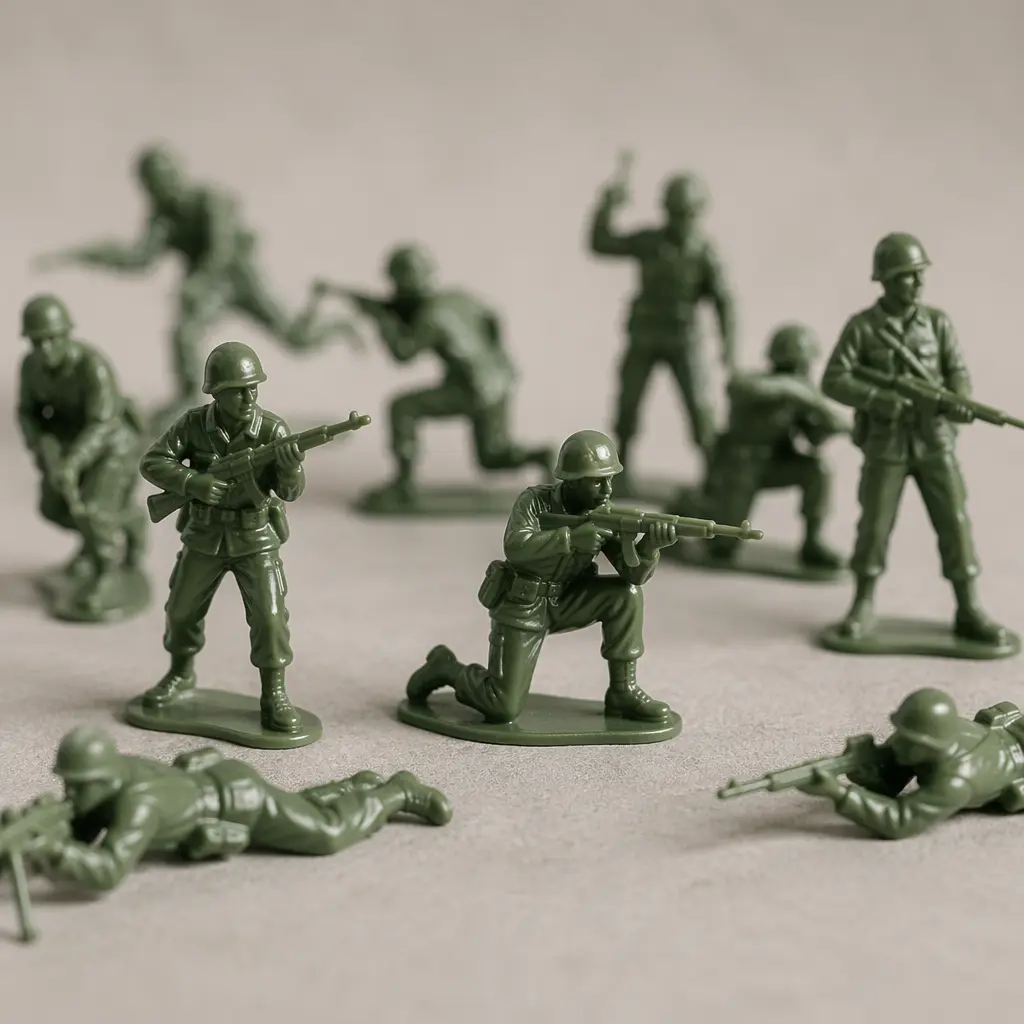
Few toys are as instantly recognisable—or as quietly influential—as little green army men. Cheap, lightweight, and often sold by the bucketful, these plastic soldiers have been a fixture of childhood play for decades. They don’t light up, talk, or come with rules. Instead, they invite kids to invent their own worlds, whether that’s an epic battlefield in the garden or a peaceful patrol across the living-room carpet.
Where it came from
Toy soldiers existed long before plastic, but little green army men as we know them trace back to the late 1930s. In 1938, manufacturers began producing soldiers made from soft plastic, a material that was cheaper and safer than metal. This shift made it possible to sell large quantities at prices families could afford, especially during and after the Second World War.
Originally inspired by real military uniforms and poses, these figures reflected the era’s fascination with modern warfare. Over time, they lost their connection to any specific conflict and became something more abstract: a general symbol of “soldier.” By the post-war boom of the 1950s and 1960s, buckets of identical green figures had become a standard toy-store staple.
Why it works
The brilliance of little green army men lies in their simplicity. Each figure is frozen in a clear, readable pose—kneeling, crawling, aiming, running. There are no moving parts to break and no prescribed storyline to follow. Kids decide who these soldiers are, what they’re doing, and why it matters.
That open-endedness encourages imaginative play in its purest form. Army men work just as well with toy trucks, building blocks, or sticks and stones from the garden. Their uniform colour reduces distraction, helping children focus on action and narrative rather than character backstory.
- Simple, durable one-piece plastic design
- Distinct action poses that suggest movement
- Uniform colour that encourages imagination
- Works across indoor and outdoor play settings
Who it's for
Traditionally aimed at school-age children, little green army men are usually recommended for ages three and up due to their small size. They appeal to kids who enjoy storytelling, building scenes, and physical play. Adults often feel the pull too, whether through nostalgia or through using them as props for games, displays, or even teaching tools.
Variants and what to look for today
While the classic image is a solid green soldier, today’s army men come in a range of styles. Some sets include multiple colours to represent opposing sides. Others add accessories like vehicles, fences, or terrain pieces. You’ll also find figures inspired by different eras, from modern troops to historical uniforms.
When buying today, look for figures made from slightly flexible plastic, which tends to be more durable and safer if stepped on. Be cautious of very brittle or sharp-edged knock-offs, especially for younger children. Simpler sets often offer better play value than highly detailed ones.
Frequently asked questions
Are little green army men still relevant today?
Yes. Despite competition from digital games, their simplicity and low cost keep them relevant. They’re often used in schools and play therapy to encourage storytelling and social play.
Do they promote violence?
Like many pretend-play toys, their impact depends on how they’re used. Many children focus on adventure, teamwork, or rescue scenarios rather than combat. Parents can guide play toward creative or cooperative stories.
Are modern versions different from vintage ones?
The core idea is the same, but modern figures may use safer plastics and smoother moulds. Vintage sets are often collected for nostalgia rather than play.
Can adults collect them?
Absolutely. Some adults collect army men for displays, dioramas, or as cultural memorabilia tied to childhood or historical themes.
Little green army men endure because they leave room for the player. In an age of scripted entertainment, these humble plastic figures still ask children to do the most important part of play themselves: imagine what happens next.