Makedo Discover Kits: Turning Cardboard Into Engineering Play
Makedo Discover Kits transformed ordinary cardboard boxes into reusable engineering projects, blending craft, construction, and problem-solving with child-safe tools designed for open-ended building.
Compare prices and availability
Check current prices and availability for this guide on eBay.
As an eBay Partner, we may be compensated if you make a purchase.
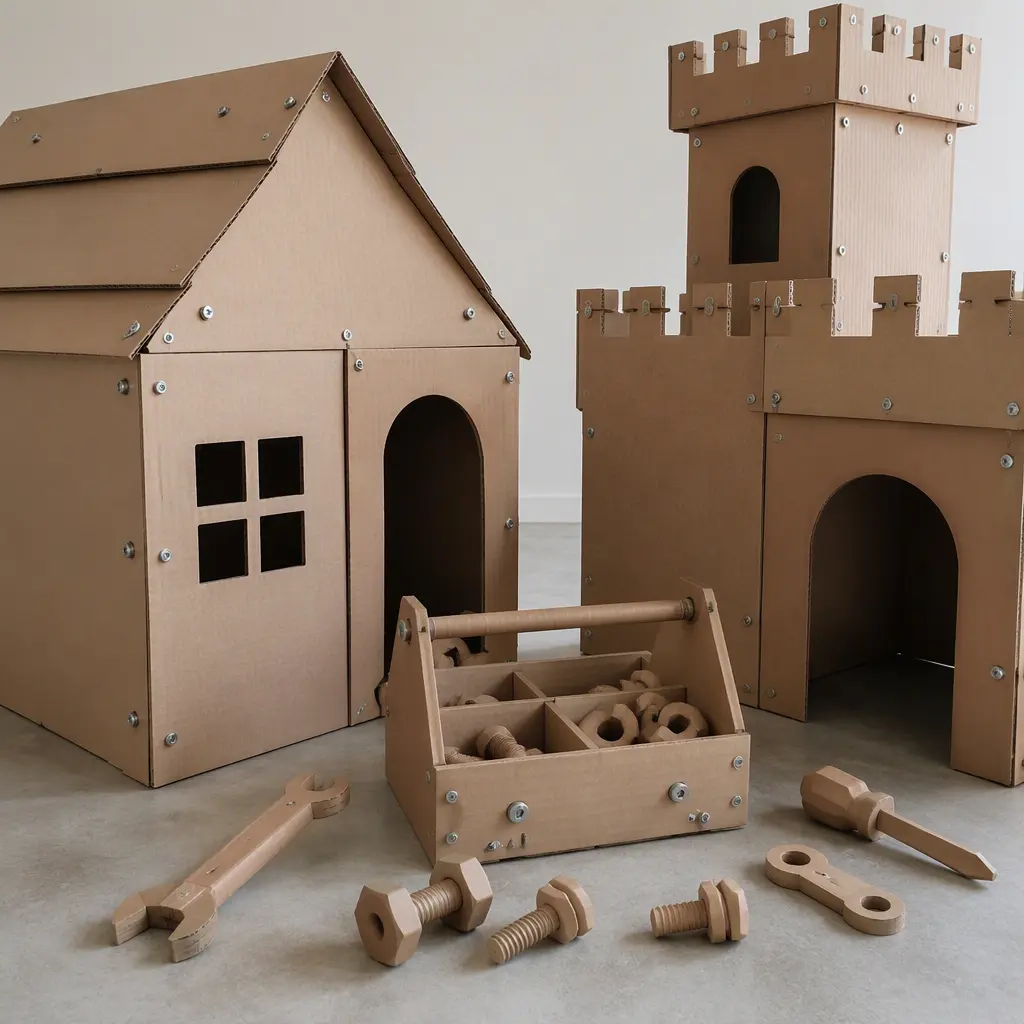
Makedo Discover Kits arrived at a moment when many families were already turning delivery boxes into forts, costumes, and homemade playhouses. What made the kits stand out was the idea that cardboard building could become something closer to engineering than simple arts and crafts. Instead of relying on tape, glue, or adult-managed tools, Makedo introduced reusable connectors, safe cutting tools, and simple construction methods that let children experiment with structure, movement, and design using the cardboard already piling up around the house. The result was a toy system that blurred the line between craft activity, STEM project, and imaginative play.
Where it came from
Makedo traces its roots to Australia, where the company focused on finding ways to encourage creative reuse through hands-on construction. The broader Makedo tool system appeared years before the Discover Kits, but the 2021-era releases reflected a growing interest in open-ended STEM toys that encouraged experimentation rather than step-by-step assembly. The timing also mattered. Families had become more aware of how much recyclable material moved through their homes, and children were spending more time building from everyday objects.
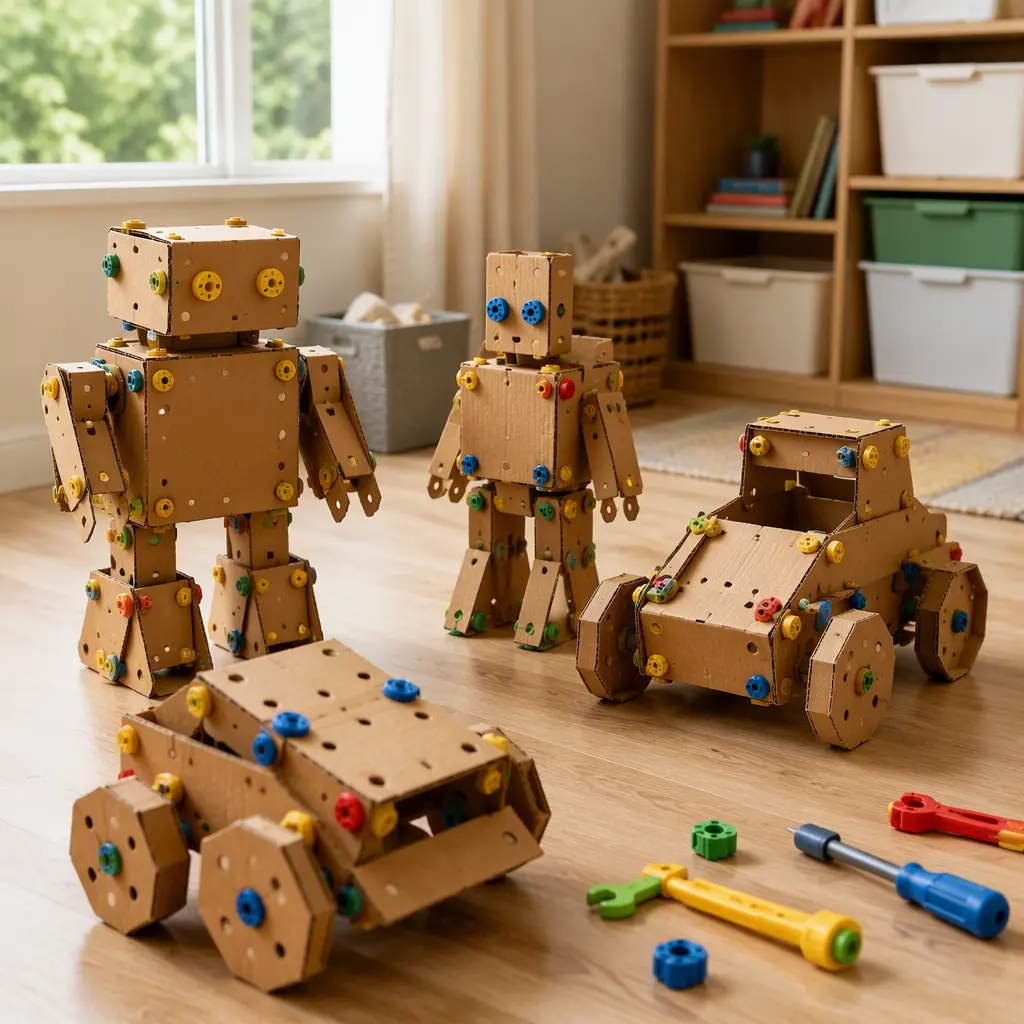
The concept behind the kits was simple but surprisingly effective. Shipping boxes, cereal cartons, and packaging inserts became raw building materials. The reusable plastic screws and locking pieces allowed children to join cardboard panels together repeatedly without destroying them, while specially designed safe saws and folding tools introduced basic construction techniques. Instead of completing one fixed model and moving on, builders could take projects apart, redesign them, and test new ideas. That flexibility became central to the toy's appeal.
Why it works
Many STEM toys lean heavily on instructions, coding, or electronic features. Makedo works differently because the cardboard itself becomes the variable. Every box has a different size, thickness, and shape, so children naturally encounter engineering problems that require adaptation. A tower that leans needs reinforcement. A cardboard creature may need joints that move smoothly. A vehicle might roll poorly unless its weight is balanced. The tools encourage trial and error in a way that feels practical rather than academic.
The physical design also helps. The connectors are large enough for children to handle independently, and the cutting tools are intentionally engineered for safer use than household blades. Because the pieces are reusable, projects can evolve over days or weeks instead of ending after a single afternoon. Parents often notice that cardboard building encourages collaboration too, since large projects naturally become group activities involving siblings or classmates.
- Reusable cardboard connectors designed for repeated building
- Child-safe cutting and folding tools
- Open-ended construction instead of single-model assembly
- Encourages engineering thinking through experimentation
- Works with common household cardboard and packaging
- Supports solo projects and collaborative builds alike
Who it's for
Makedo Discover Kits generally appeal most to children who already enjoy building, crafting, or inventing. Elementary-age kids often get the most from the system because they can independently plan structures while still embracing imaginative play. Younger children may need help with cutting and assembly, while older kids and even adults sometimes use the kits for surprisingly elaborate projects. The appeal stretches beyond traditional STEM audiences because cardboard building feels approachable and familiar. Families who are less interested in screens or battery-powered toys often appreciate the tactile, low-tech nature of the experience.
Variants and what to look for today
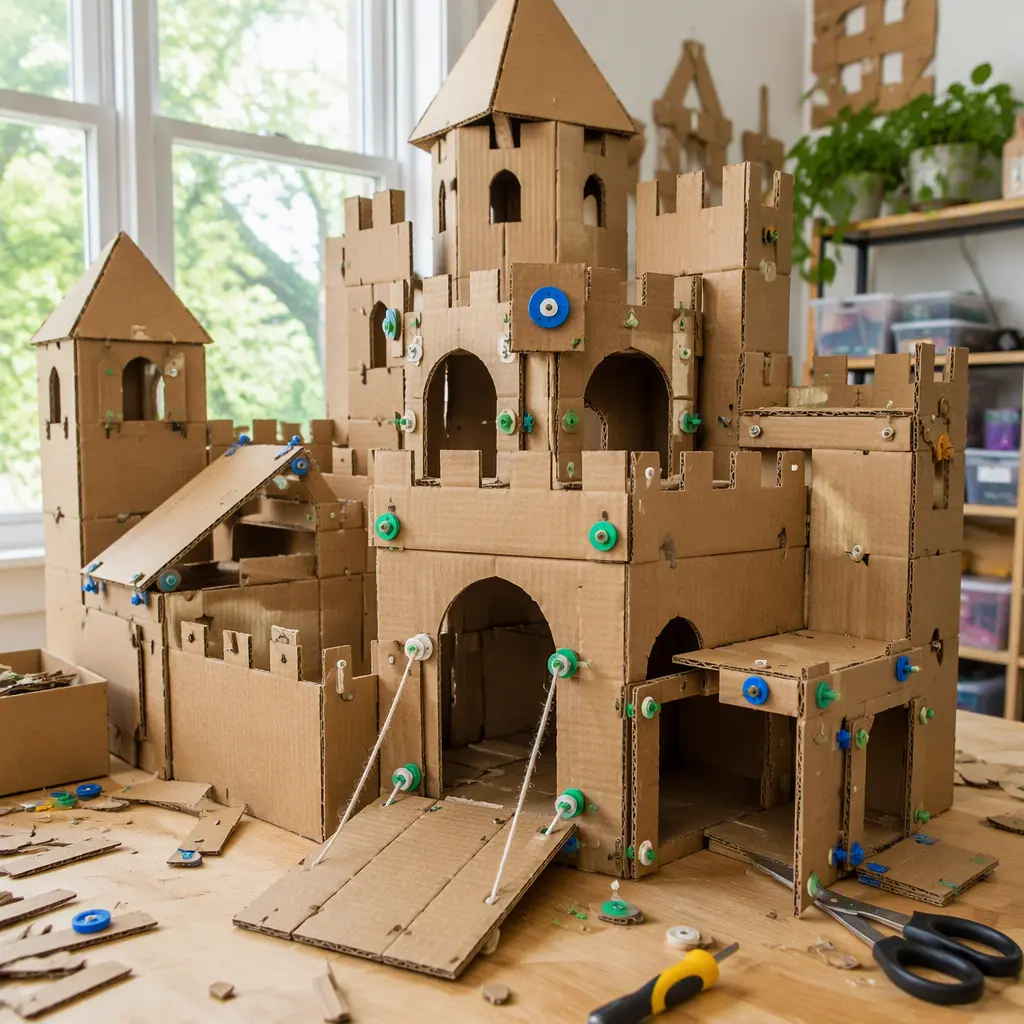
The Makedo range has expanded through different kit sizes and tool assortments rather than dramatically different themes. Smaller starter sets focus on basic connectors and beginner-friendly building, while larger collections include more advanced tools and enough parts for ambitious collaborative projects. Some classroom-oriented versions are designed for group use, reflecting the toy's popularity in schools, maker spaces, and libraries.
When shopping today, it helps to think less about collecting a specific edition and more about the kind of building experience you want. Families with younger children may prefer simpler kits with easier fastening tools, while frequent builders benefit from larger connector supplies. Durability matters too. Reusable connectors should lock securely without excessive force, and cutting tools should feel sturdy rather than flimsy. Generic cardboard construction kits exist, but lower-quality versions can crack easily or fail to hold larger structures together.
- Starter kits for casual cardboard projects
- Larger tool collections for ambitious builds
- Classroom-style sets for group activities
- Replacement connector packs for long-term use
- Look for sturdy reusable fasteners and reliable safety features
Frequently asked questions
Do Makedo kits require special cardboard?
No. Ordinary household cardboard is part of the appeal. Shipping boxes, appliance packaging, and food cartons can all become building materials, although thicker cardboard tends to hold larger projects together more effectively.
Are the tools safe for children?
The tools are designed specifically for supervised child use and are generally safer than household craft knives or scissors for cardboard construction. Younger children still benefit from adult guidance, especially during cutting activities.
Is this more of a craft toy or a STEM toy?
It comfortably sits between the two categories. Children often approach Makedo through imaginative crafting, but the building process naturally introduces engineering concepts like structural support, hinges, leverage, and iterative design.
Do the projects last?
That depends on the cardboard and how the creations are used. Some builds are temporary experiments, while others remain intact for weeks. The reusable connectors make rebuilding easy, which is part of the system's long-term value.
Makedo Discover Kits succeeded because they elevated something children already loved doing: turning empty boxes into worlds of their own. By adding reusable tools and a construction system, the kits transformed casual cardboard play into an accessible form of engineering. In an era crowded with digital gadgets and highly scripted toys, that combination of creativity, problem-solving, and hands-on experimentation gave Makedo a distinct place in contemporary toy culture.