Marble Genius Marble Runs and the Rise of At-Home Engineering Play
Marble Genius marble runs turned colorful track building into a hands-on lesson in gravity, planning, and problem-solving, helping modern STEM toys feel creative instead of classroom-like.
Compare prices and availability
Check current prices and availability for this guide on eBay.
As an eBay Partner, we may be compensated if you make a purchase.
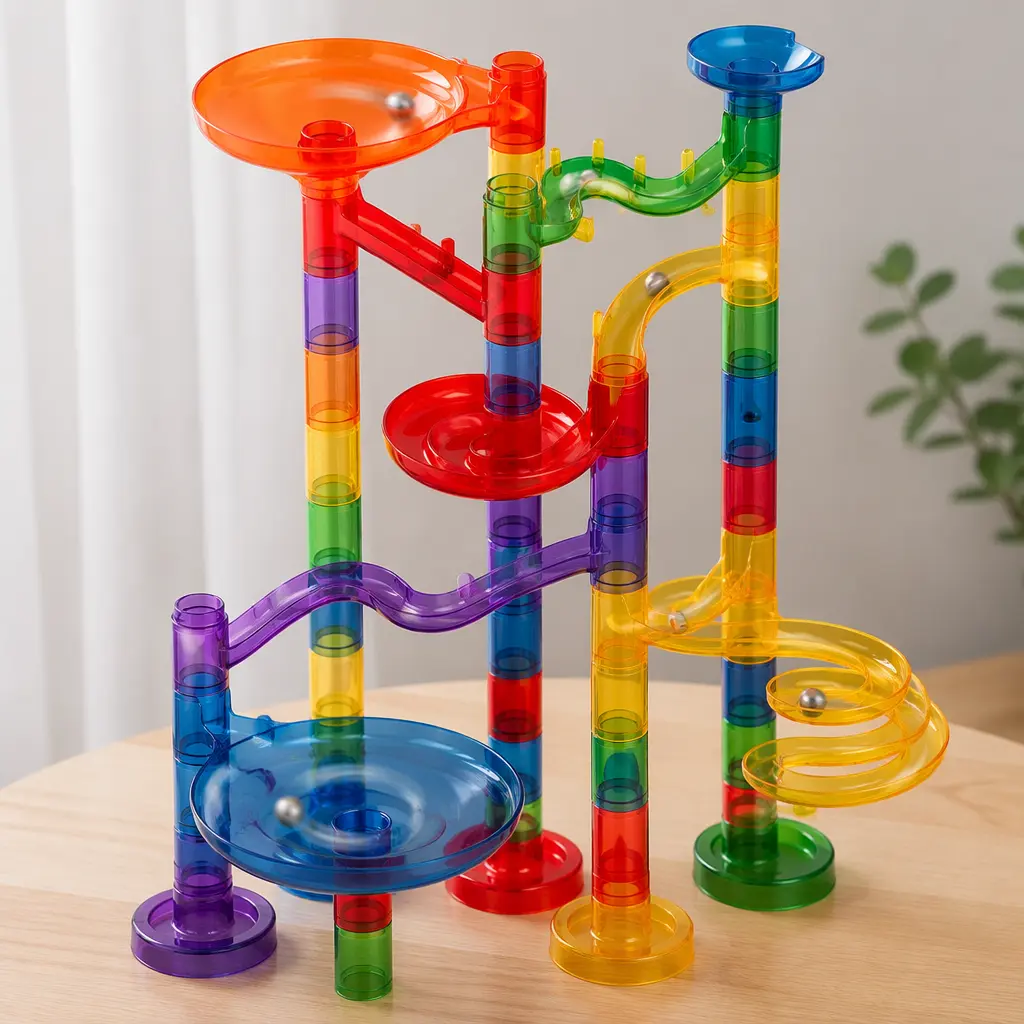
Marble runs have existed in one form or another for decades, but Marble Genius helped push the category into mainstream family play by combining bright modular pieces with an approachable STEM angle. The appeal is easy to understand after a few minutes of building: children experiment with gravity, momentum, timing, and structure while trying to keep a marble moving from the top of a tower to the bottom without interruption. Unlike many educational toys that feel tied to lessons or screens, marble runs turn engineering concepts into open-ended play that can grow more ambitious over time.
Where it came from
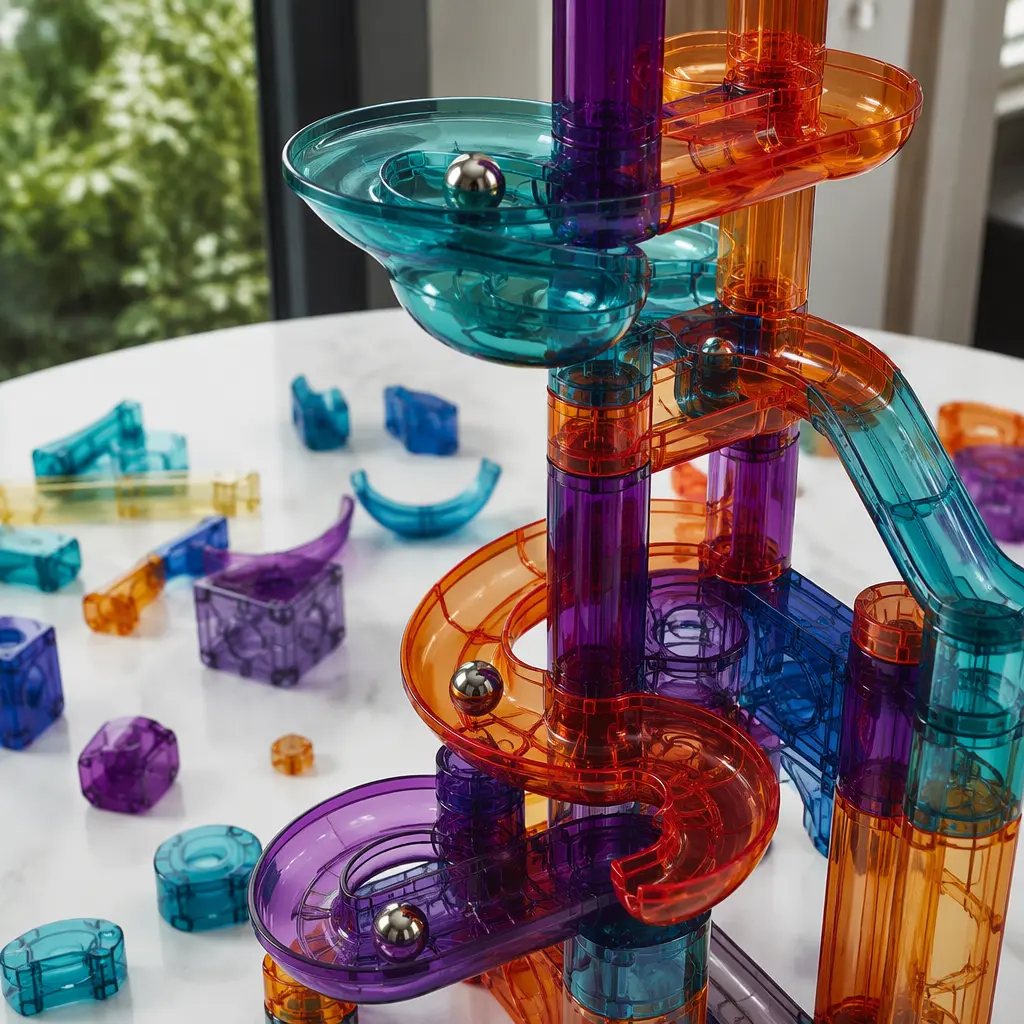
Marble runs as a toy category date back much earlier than the modern STEM movement, with wooden and plastic versions appearing throughout the twentieth century. The newer generation of marble-run brands emerged during a period when parents and educators were searching for toys that encouraged hands-on problem-solving away from screens. Marble Genius became one of the more recognizable names by focusing on colorful interchangeable parts, sturdy transparent tubes, and sets designed to scale upward as children gained confidence.
Part of the toy family's success came from timing. During the 2010s, STEM-branded products moved from specialty educational catalogs into mainstream toy aisles. Marble runs fit naturally into that trend because the learning component was visible without being overly formal. Children could build a tower, test it immediately, spot failures, redesign sections, and repeat the process. The toy rewarded experimentation in a way that felt closer to a game or puzzle than a classroom exercise.
Why it works
The core design is deceptively simple: stack supports vertically, connect pathways horizontally, and use gravity to keep marbles moving smoothly. What makes the format engaging is the constant balance between creativity and physics. A structure can look impressive but fail completely if one connection sits at the wrong angle or a support column becomes unstable. That trial-and-error loop encourages persistence without requiring detailed instructions.
Transparency also matters more than it first appears. Many Marble Genius-style sets use clear or translucent plastic so children can watch marbles travel through enclosed tubes and spirals. Seeing the full path makes cause-and-effect easier to understand and turns movement itself into part of the entertainment. The toy becomes both construction set and kinetic display.
- Modular pieces that allow many different layouts
- Visible marble movement through clear tubes and funnels
- Expandable systems that can combine multiple sets
- Fast setup compared with more technical building toys
- Open-ended challenges that encourage redesign and experimentation
Who it's for
Most marble-run systems are aimed at school-age children, especially those who enjoy building, puzzles, or construction toys. Younger children can participate with adult help, although small marbles and tall structures usually make these sets better suited to households with children old enough to handle small parts safely. The toy category also has unusual staying power with older kids and adults because increasingly elaborate builds become part engineering challenge and part creative hobby. Parents often discover that once the first simple tower is complete, the project naturally expands across tables, floors, and entire rooms.
Variants and what to look for today
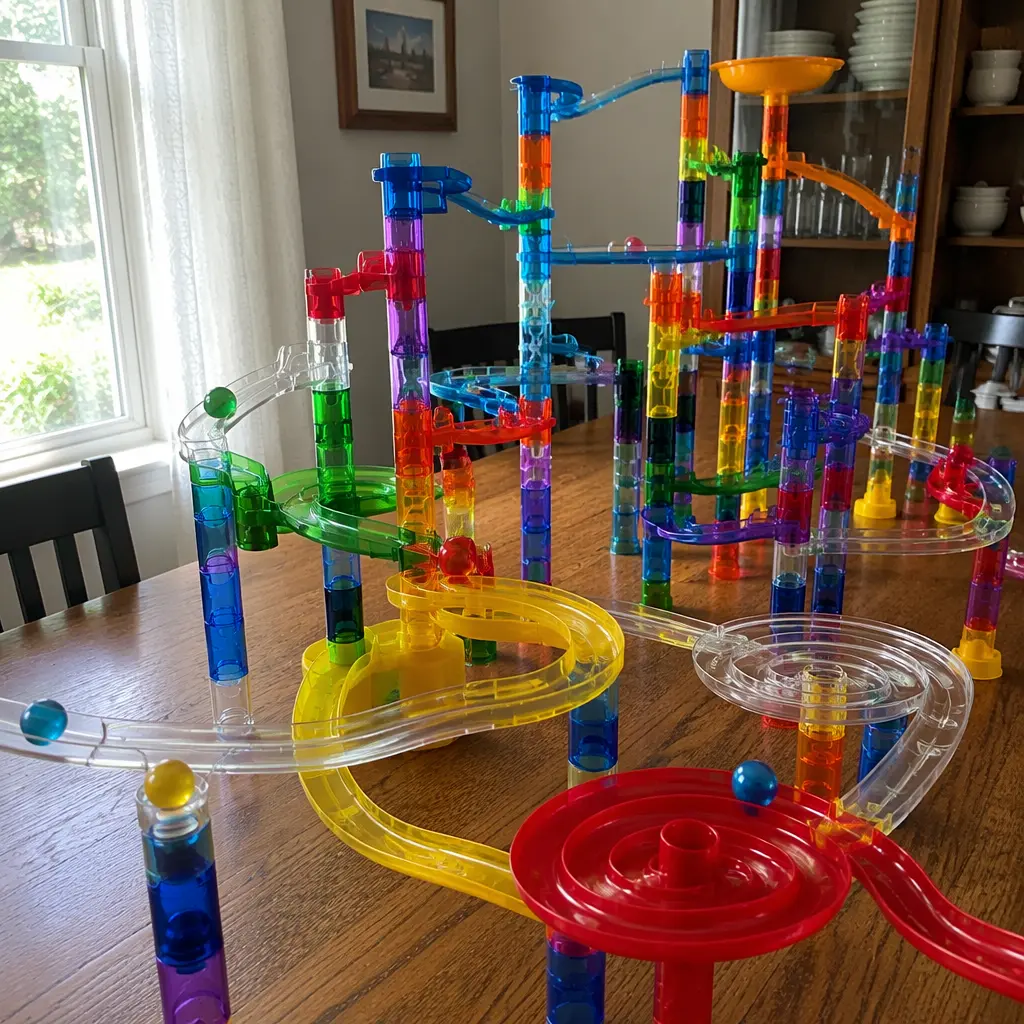
Modern marble-run sets come in several styles. Some focus on large beginner-friendly pieces with simpler connections, while others include specialized elements such as spiral lifts, jump ramps, funnels, or wheel sections. Transparent vertical tubes remain one of the category's defining features because they make the motion easy to follow and reduce frustration when troubleshooting blocked paths.
When shopping today, durability matters more than sheer piece count. Stable connectors and solid base supports generally create a better experience than oversized sets with flimsy joints. Families who expect to rebuild often may also prefer systems with standardized connectors that allow expansion over time. Generic off-brand sets can sometimes suffer from inconsistent fit, leading to tracks that separate easily or marbles that stall unexpectedly.
- Starter sets with basic ramps and funnels for younger builders
- Larger expansion-focused sets for complex multi-level builds
- Glow-in-the-dark or light-reactive translucent pieces
- Compact tabletop versions for smaller spaces
- Hybrid sets that combine marble runs with gears or motorized lifts
Frequently asked questions
Are marble runs really educational?
They can be, although the learning usually happens through experimentation rather than formal instruction. Children naturally encounter concepts such as gravity, speed, structural balance, sequencing, and problem-solving while building and testing layouts.
Do marble runs require exact instructions?
Most sets include example builds, but the main appeal comes from improvisation. Many children eventually ignore the suggested layouts and create original tracks based on trial and error or friendly competition.
How durable are modern plastic marble runs?
Quality varies by manufacturer, but better systems are designed for repeated assembly and disassembly. Thick support bases and snug-fitting connectors usually hold up better over time than lightweight clip-style designs.
Can adults enjoy marble runs too?
Yes. Marble runs have developed a strong hobbyist following because large layouts can become surprisingly complex. Some adults treat them as engineering puzzles or kinetic sculptures, especially when combining multiple sets into room-sized builds.
Marble Genius and similar marble-run systems succeeded because they turned abstract engineering ideas into something visible, noisy, and playful. A child does not need to understand physics vocabulary to recognize why a marble stopped halfway down a track or why a tower collapsed under its own weight. The toy rewards curiosity immediately, and that balance between creativity and logic explains why marble runs continue to hold attention long after many other STEM toys lose their novelty.