Meccano: The metal construction set that built young engineers
Born in 1901, Meccano turned strips, bolts, and gears into a hands-on lesson in engineering. Here’s how a metal construction set shaped generations of problem-solvers.
Compare prices and availability
Check current prices and availability for this guide on eBay.
As an eBay Partner, we may be compensated if you make a purchase.
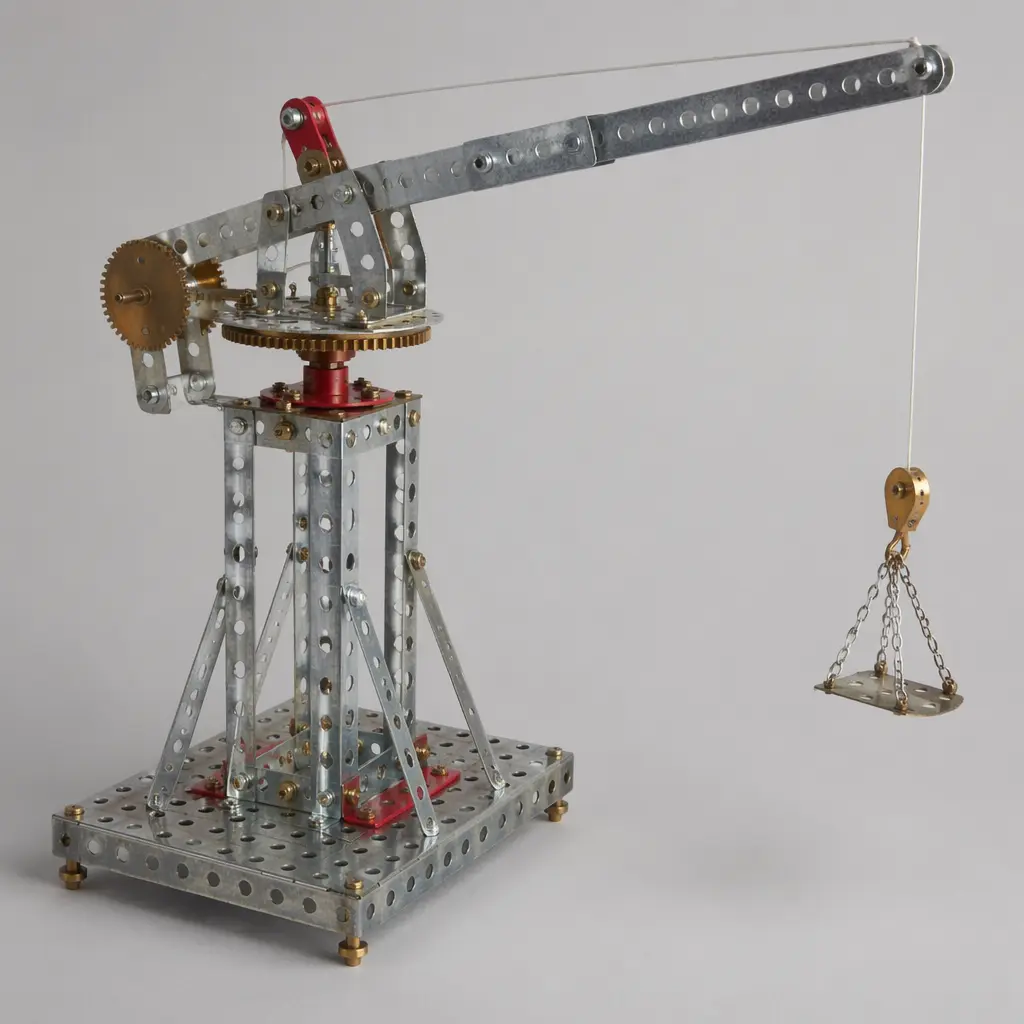
Long before STEM became a marketing term, Meccano was quietly teaching children how the mechanical world fits together. With its cold-to-the-touch metal strips, tiny nuts and bolts, and instruction books full of diagrams, it asked kids to slow down, follow plans, and think like engineers. For over a century, Meccano has stood as the thinking person’s building toy — less about instant gratification, more about understanding how things work.
Where it came from
Meccano began in 1901, created by British inventor Frank Hornby. His original idea was simple but radical: a system of reusable parts that could be bolted together to make real working models. Early sets were sold as “Mechanics Made Easy,” aimed at teaching boys (as the language of the time put it) the principles of mechanical engineering through play.
Hornby’s timing was perfect. The early 20th century was an age of railways, bridges, and machines, and Meccano mirrored the industrial world children saw around them. The sets evolved alongside technology, adding gears, pulleys, electric motors, and later plastic elements, but the core idea — metal parts joined with nuts and bolts — stayed constant.
Why it works
At its heart, Meccano works because it behaves like the real world. Pieces don’t snap together; they fasten. Structures don’t magically stand up; they need bracing and balance. That realism makes success feel earned, and failure instructive rather than frustrating.
The system encourages a particular kind of play: plan, build, test, adjust. Instruction manuals guide beginners, but the open-ended parts invite experimentation once confidence grows. Standout features include:
- Perforated metal strips and plates that allow precise spacing and alignment
- Nuts, bolts, and tools that teach real fastening techniques
- Gears, axles, and pulleys that demonstrate mechanical motion
- Modular parts that can be reused across countless builds
Who it’s for
Meccano is best suited to patient builders, typically from around 8 years old with supervision, and upwards into the teen years. It also has a strong adult following — parents revisiting childhood sets, hobbyists interested in mechanical models, and educators using it as a teaching aid. It’s less about quick play sessions and more about focused, sometimes quiet concentration.
Variants and what to look for today
Modern Meccano sets blend the classic metal system with plastic components and easier-to-use fasteners, lowering the barrier for younger builders. There are also themed sets that focus on vehicles or machines, while traditionalist sets stay close to the original all-metal experience.
If you’re shopping today, look for solid metal parts with cleanly punched holes and a generous supply of fasteners. Avoid very lightweight knock-offs where metal is thin or bends easily — stiffness matters for stable models. Instruction quality also varies, and clear diagrams make a big difference for beginners.
Frequently asked questions
Is Meccano still educational by modern standards?
Yes. While it may look old-fashioned, the principles it teaches — structural stability, gearing, and mechanical logic — are timeless and directly relevant to modern engineering.
How does it compare to plastic construction toys?
Plastic systems are often quicker and more forgiving. Meccano is slower and more demanding, but that realism is exactly what many fans value.
Are vintage sets better than modern ones?
Vintage sets are prized for nostalgia and build quality, but modern sets benefit from safer finishes and clearer instructions. Neither is strictly better — it depends on your goals.
Does Meccano work for group play?
It can, especially for collaborative projects, but it shines brightest when builders can take their time and focus without rushing.
More than a toy, Meccano is a mindset. It invites builders to see the world as something constructed, understandable, and fixable. In an era of digital play, its metal pieces and tiny bolts still quietly do what they always have: teach patience, logic, and the satisfaction of making something that truly holds together.