Why Pet Vet Kits Became a Favorite for Empathy Play
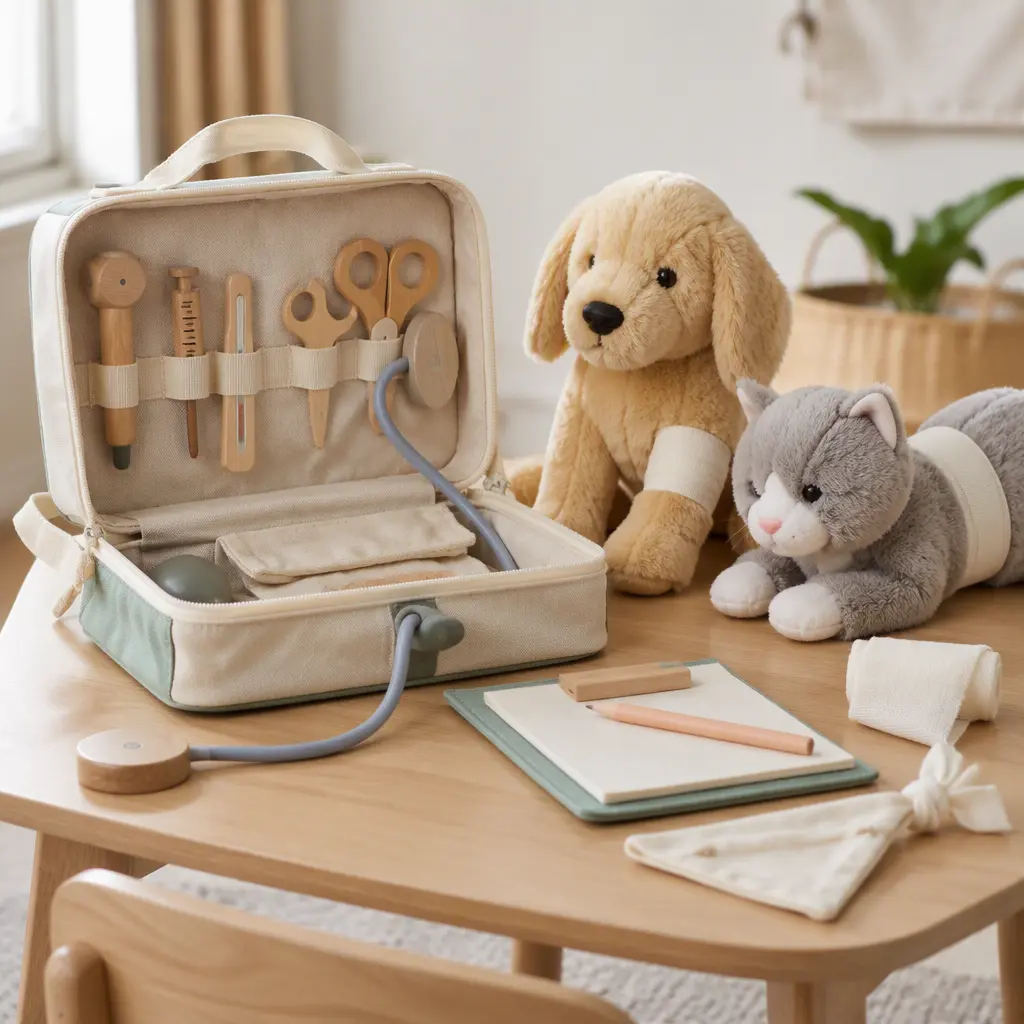
The Melissa & Doug Examine and Treat Pet Vet Play Set helped popularize gentle, empathy-focused pretend play with soft animal patients, reusable tools, and open-ended roleplay.
Compare prices and availability
Check current prices and availability for this guide on eBay.
As an eBay Partner, we may be compensated if you make a purchase.
Toy doctor kits have been around for decades, but pet vet sets carved out a slightly different role in pretend play. Instead of focusing on shots and checkups for people, these kits shift attention toward caring for animals that cannot speak for themselves. The Melissa & Doug Examine and Treat Pet Vet Play Set became one of the best-known examples of that idea, combining plush pets with simple medical tools that encourage observation, caregiving, and storytelling. For many families, it turned routine pretend play into an early lesson in empathy.
Where it came from
Melissa & Doug built its reputation on open-ended toys designed to encourage hands-on play rather than screens or batteries. Founded in the late 1980s, the company became especially well known for wooden toys, pretend play sets, puzzles, and arts-and-crafts products aimed at preschool and early elementary ages. The Examine and Treat Pet Vet Play Set arrived during a period when pretend-career toys were expanding beyond kitchens and tool benches into more emotionally focused themes.
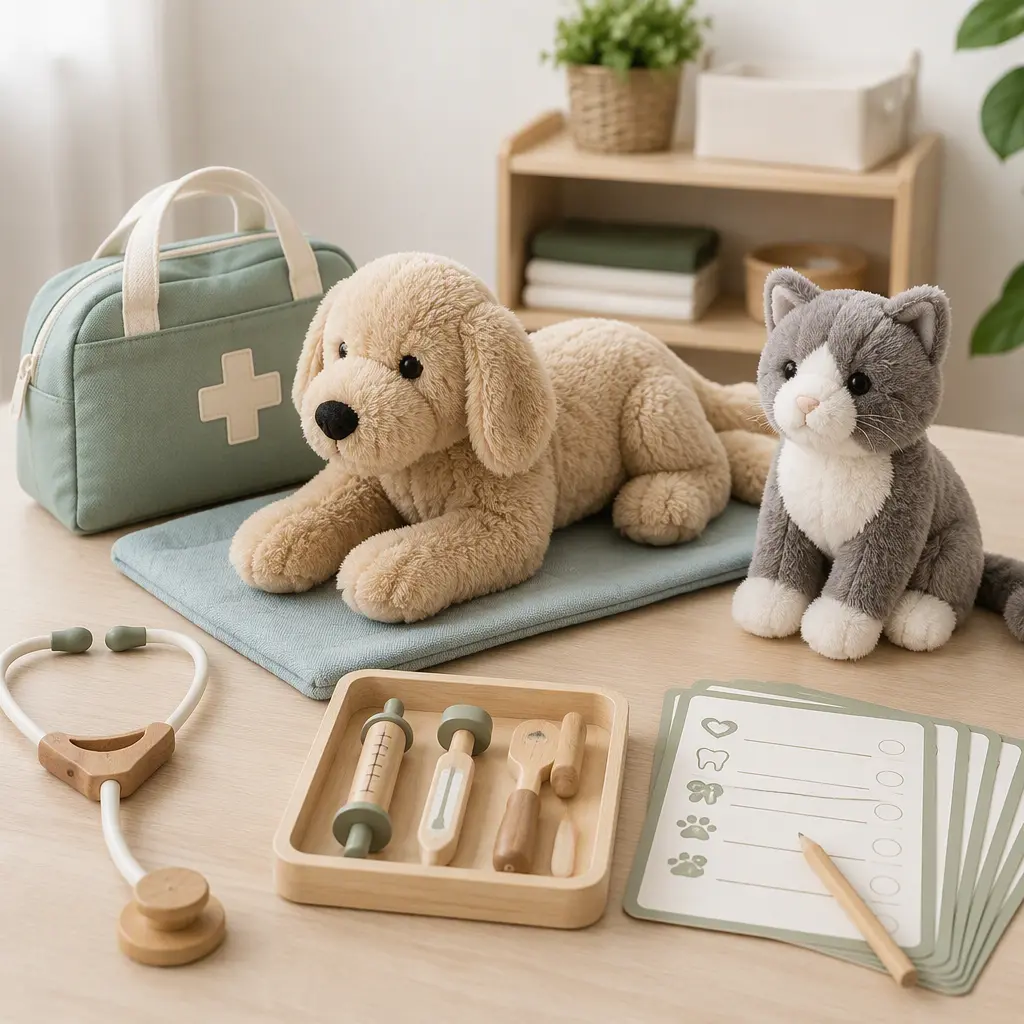
The set’s core idea was simple: give children soft animal patients and enough believable tools to act out a veterinary visit. Instead of overwhelming kids with electronic features, the design leaned on familiar routines. Children could listen to a heartbeat, check temperature, apply bandages, and fill out pretend examination cards. The pets themselves were important to the experience. A plush dog and cat immediately invited nurturing behavior in a way that hard plastic figures often do not.
Why it works
The appeal of a toy vet kit comes from the combination of structure and freedom. Children recognize the scenario because many have visited a veterinarian with a family pet, yet there is no fixed script. One play session might involve routine checkups, while another becomes an emergency rescue mission for a limping stuffed dog. That flexibility keeps the toy relevant longer than many narrowly themed playsets.
Melissa & Doug’s version also works because the pieces are tactile and intentionally approachable. The tools are simplified enough for younger children to understand but realistic enough to feel convincing. Reusable checklists and accessories create repeatable rituals, which is a big part of why pretend-care toys often become comfort toys during preschool years.
- Soft plush animal patients encourage nurturing play
- Reusable examination cards create simple routines and storytelling prompts
- Chunky pretend medical tools are easy for younger children to handle
- Open-ended roleplay supports solo play and group play
- Veterinary themes can reduce anxiety around real doctor or vet visits
Who it's for
Most toy vet kits are designed for preschool and early elementary children, especially ages three to seven, when pretend-care play tends to peak. Younger children often focus on feeding, comforting, and bandaging the animals, while older kids may invent more elaborate clinic scenarios complete with waiting rooms and patient records. The set also appeals to adults looking for toys that encourage conversation and cooperation rather than competition. Parents and educators frequently use pretend medical play to help children process unfamiliar experiences, including pet illness, checkups, or even nervousness about their own appointments.
Variants and what to look for today
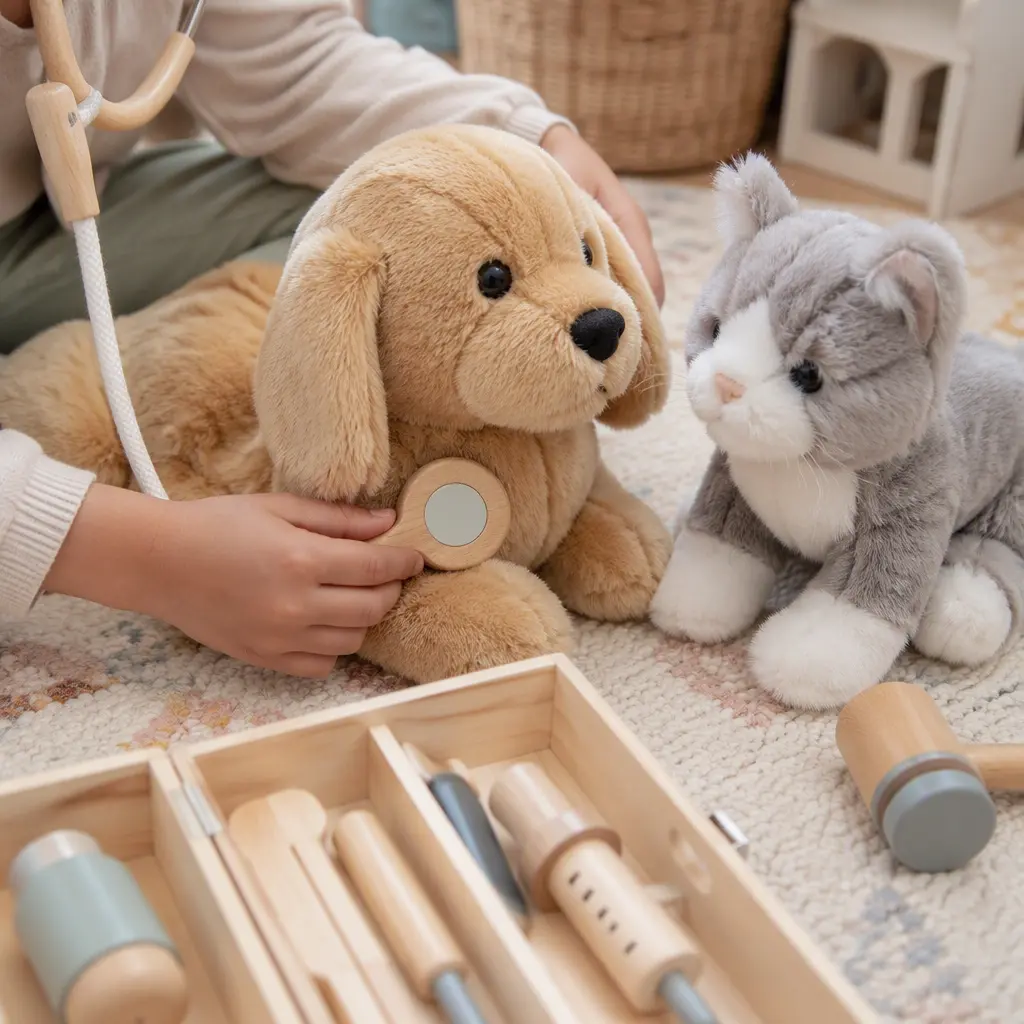
The broader toy vet category has expanded significantly in recent years. Some modern sets include electronic sounds, light-up tools, rolling pet carriers, or larger clinic stations. Others stay intentionally simple with fabric accessories and wooden instruments. Melissa & Doug remains associated with the lower-tech, imagination-first side of the category, which continues to appeal to families trying to limit battery-powered toys.
When shopping for a vet play set today, it helps to pay attention to durability and the balance between realism and simplicity. Very small accessories can disappear quickly in busy playrooms, while highly electronic sets sometimes narrow the range of imaginative play by guiding children toward preset actions. Plush animal quality also matters more than many buyers expect because the pets often become standalone comfort toys long after the medical roleplay fades.
- Look for washable or easy-clean plush materials
- Check that accessories are sized appropriately for younger children
- Wooden or fabric tools often hold up better than thin plastic pieces
- Reusable charts or exam cards can extend long-term play value
- Avoid generic knock-offs with fragile hinges or sharp molded edges
Frequently asked questions
Why do children enjoy veterinarian roleplay so much?
Animal-care scenarios naturally encourage nurturing behavior. Children often find it easier to project feelings onto a plush pet, which makes vet roleplay comforting as well as imaginative. The mix of caregiving and problem-solving also keeps the play active rather than repetitive.
Can toy vet kits help with anxiety about doctor visits?
Many parents and educators use pretend medical toys to make checkups feel more familiar. Children can practice routines like taking temperature or listening to a heartbeat in a low-pressure setting. That sense of control can make real appointments seem less intimidating.
Are wooden pretend-play toys still popular?
Yes. Even as electronic toys have become more common, many families continue to prefer wooden and fabric play sets because they tend to be quieter, more durable, and more open-ended. Simpler toys often leave more room for imagination-driven play.
What makes a good pretend vet set?
The strongest sets usually balance realism with accessibility. Children need recognizable tools and appealing animal patients, but they also benefit from accessories that are sturdy, easy to handle, and flexible enough for many kinds of stories and play patterns.
The Melissa & Doug Examine and Treat Pet Vet Play Set reflects a larger shift in modern toys toward emotional learning through play. Its popularity comes less from flashy features and more from the familiar act of caring for something small and vulnerable. That combination of storytelling, comfort, and hands-on interaction helps explain why toy vet kits continue to hold a place in playrooms long after many novelty toys disappear.