Nintendo Game Boy: How play learned to travel
Launched in 1989, the Nintendo Game Boy proved games didn’t need colour or power to be magical. Its sturdy design and pick‑up‑and‑play charm turned waiting rooms and car trips into playtime.
Compare prices and availability
Check current prices and availability for this guide on eBay.
As an eBay Partner, we may be compensated if you make a purchase.
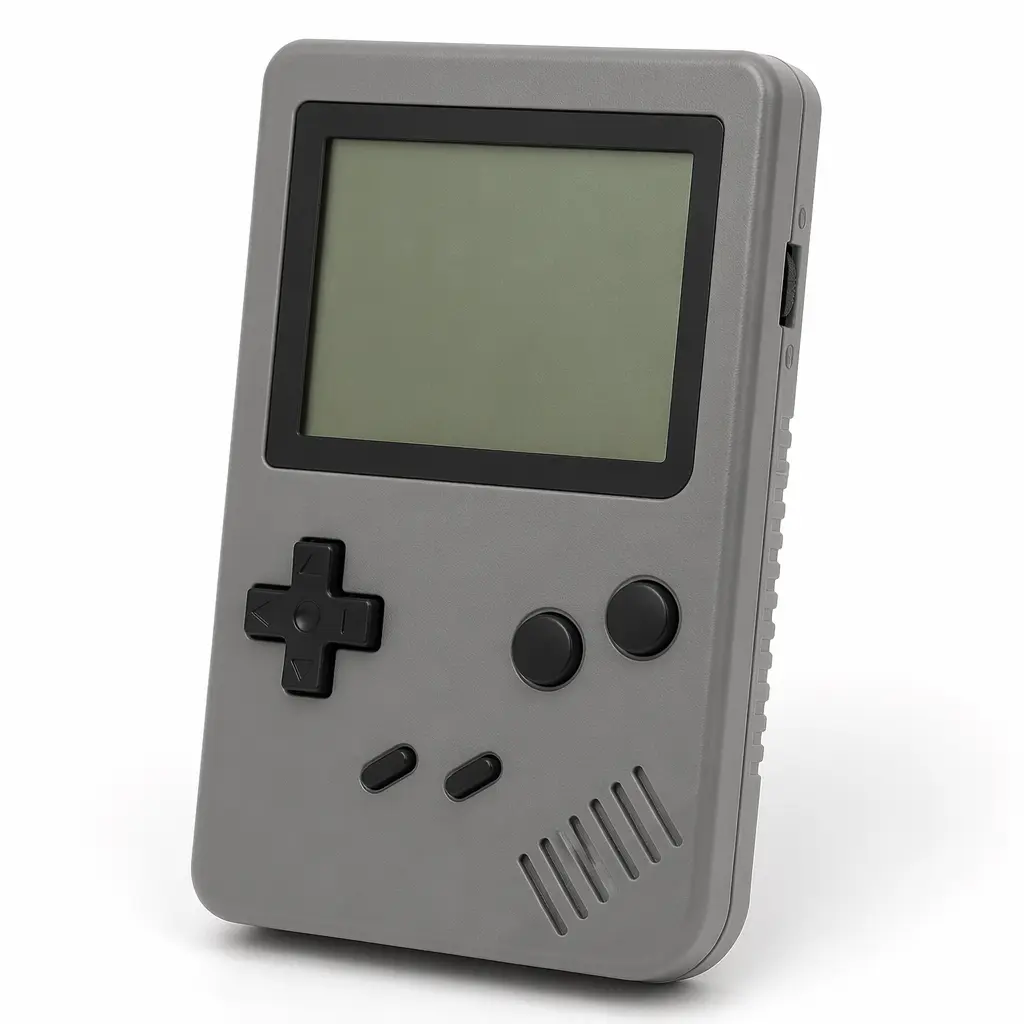
Before phones lived in pockets and screens were everywhere, the Nintendo Game Boy taught a generation that play could go anywhere. It was a chunky gray rectangle with a greenish screen, hardly futuristic even in its own time. Yet for kids in the late 1980s and 1990s, it felt like a small miracle: a full video game system you could slip into a backpack and take on the bus, to school, or under the covers after lights‑out.
Where it came from
The Game Boy launched in 1989, arriving from a company already known for home consoles and inventive toys. Its chief designer, Gunpei Yokoi, believed in what he called “lateral thinking with withered technology” — using mature, affordable components in clever ways. Instead of chasing cutting‑edge graphics, the Game Boy focused on reliability, long battery life, and games that were easy to learn but hard to put down.
Originally conceived as a portable extension of console gaming, the Game Boy quickly became its own platform. It wasn’t just a way to pass time between TV sessions; for many children it was their first personal gaming device, one that didn’t have to be shared with siblings or scheduled around family routines.
Why it works
On paper, the Game Boy’s specifications looked modest even at launch. The screen showed shades of green instead of colour, and the sound was simple. But those limitations shaped games that were readable at a glance and satisfying in short bursts — perfect for portable play.
The physical design mattered just as much. The case was thick and sturdy, buttons were generously sized, and the cartridge slot clicked reassuringly into place. It felt like something made to be used by kids, not tiptoed around.
- Long battery life using standard AA batteries
- Clear, high‑contrast screen for its time
- Simple controls that suited quick play sessions
- A huge library of pick‑up‑and‑play games
Who it’s for
Originally, the Game Boy was aimed squarely at children and teenagers, but its appeal quickly widened. Adults found themselves sneaking in a few minutes during commutes or lunch breaks, and today it attracts nostalgic parents as well as curious kids. While very young children may need supervision with small cartridges and batteries, school‑age kids can enjoy the system’s straightforward controls, and adults often appreciate its slower, more thoughtful pace compared with modern games.
Variants and what to look for today
Over its long life, the Game Boy family expanded into slimmer and more colourful versions, some with improved screens and smaller footprints. While the original gray model remains the most iconic, later versions addressed common complaints like screen blur and bulk without changing the core idea.
If you’re looking for one today, condition matters more than version. Screens should be clear and responsive, buttons springy, and battery compartments free from corrosion. Many modern reproductions and look‑alikes exist; some are fine for casual nostalgia, while others cut corners on build quality. Sticking with well‑reviewed options helps avoid frustration.
Frequently asked questions
Was the Game Boy really that popular?
Yes. Across its various versions, the Game Boy line sold in the tens of millions worldwide. It became a shared cultural reference point, especially in the 1990s.
Why didn’t it use a colour screen at first?
Colour screens at the time drained batteries quickly and were expensive. The monochrome display allowed for longer play sessions and a lower price, which proved to be a winning trade‑off.
Is it suitable for kids today?
For school‑age children, yes — especially as a supervised introduction to video games. The games tend to be simpler and less overstimulating than many modern titles.
Do you need original cartridges to enjoy it?
Original cartridges are part of the charm, but there are modern alternatives that let you access multiple games more conveniently. Preferences vary between collectors and casual players.
The Nintendo Game Boy endures because it nailed a simple promise: games that fit into everyday life. Its design choices, once seen as compromises, turned out to be strengths. Decades later, that gray brick still reminds us that great play doesn’t need to shout — it just needs to be there when you want it.