PicassoTiles: The magnetic tiles that scaled up family building
PicassoTiles helped bring large-scale magnetic building into more homes, pairing bright, sturdy tiles with accessible pricing and an open-ended play style that works for kids and parents alike.
Compare prices and availability
Check current prices and availability for this guide on eBay.
As an eBay Partner, we may be compensated if you make a purchase.
Magnetic tiles have become a modern playroom staple, but not long ago they were a premium niche. PicassoTiles entered that space with a clear pitch: make large, satisfying builds possible without the premium price barrier. The result is a magnetic tile brand many families now treat as their default building set—one that grows with kids from simple shapes on the floor to elaborate forts, tracks, and cities.
Where it came from
PicassoTiles launched in the mid-2010s, a period when magnetic construction toys were gaining attention for their blend of creativity and early STEM learning. Founded as a family-focused brand, PicassoTiles positioned itself as an alternative to higher-priced magnetic tile systems, emphasizing compatibility, safety, and value.
The original idea was simple: offer durable, colorful tiles with strong magnets that could scale. Rather than focusing on licensed themes or characters, the brand leaned into open-ended geometry. That decision made the sets appealing to parents who wanted toys that encouraged problem-solving and free play—and it helped the tiles fit easily into classrooms and therapy settings as well as homes.
Why it works
At its core, PicassoTiles succeeds because magnetic tiles remove friction from building. Pieces snap together easily, hold their shape, and come apart without frustration. Kids can focus on ideas instead of mechanics, which leads to longer, more ambitious play sessions.
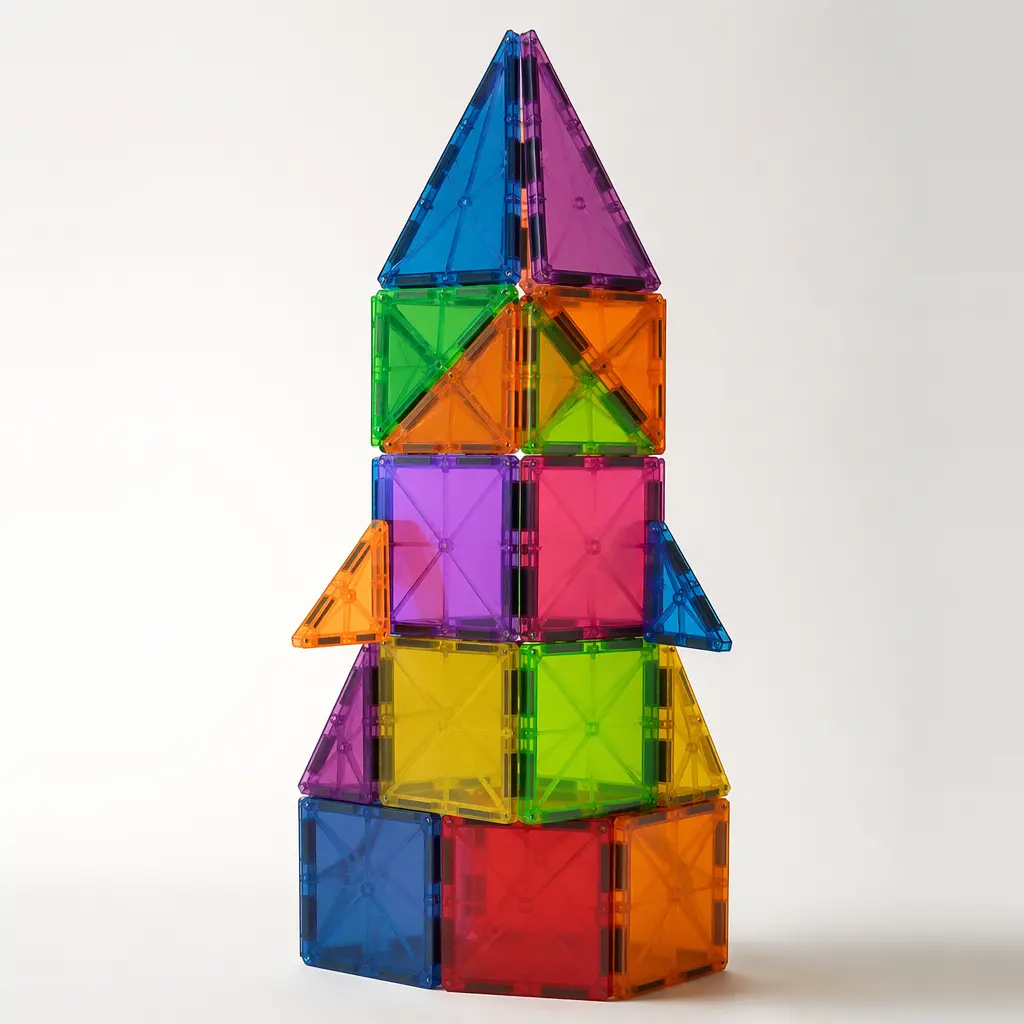
The tiles themselves are lightweight but rigid, with bright translucent colors that make finished builds feel architectural rather than toy-like. The magnet strength is tuned to allow tall or wide structures without requiring adult-level force to separate pieces.
- Simple geometric shapes that combine in many ways
- Strong internal magnets for stable, larger builds
- Translucent colors that highlight structure and symmetry
- Open-ended design with no set "right" outcome
Who it’s for
PicassoTiles are typically recommended for preschoolers and up, but their real strength is how long they stay relevant. Younger children start by stacking flat shapes or making simple houses. As kids grow, the same tiles become tools for experimenting with balance, patterns, and even basic engineering concepts. Adults often find themselves joining in—helping plan a bridge or stabilize a tower—making this a genuinely shared play experience.
Variants and what to look for today
Over time, PicassoTiles expanded beyond basic squares and triangles. Modern sets may include ramps, bases, or specialty shapes designed to support marble runs or vehicle play. The key appeal is compatibility: most sets within the brand work together, allowing families to start small and expand gradually.
When shopping today, look for sets that emphasize tile count and shape variety rather than gimmicks. Be cautious with very cheap magnetic tiles from unknown brands, as magnet strength and sealing quality can vary. Well-made tiles should feel solid, with magnets fully enclosed and no rattling.
Frequently asked questions
Are PicassoTiles compatible with other magnetic tiles?
They are generally designed to work with many standard magnetic tile systems, especially basic square and triangle formats. Magnet strength may differ slightly, but most families mix sets without issue.
Do they support STEM learning?
Yes, in an informal way. Kids naturally explore geometry, balance, and cause-and-effect while building. The tiles also support collaborative problem-solving, which is a key part of early STEM development.
Are magnetic tiles safe?
They are intended for young children, but supervision is still important. Choose sets with fully enclosed magnets and avoid damaged tiles. Magnetic toys should always be kept away from babies and toddlers who might mouth pieces.
How many tiles do you really need?
Small sets work for basic play, but the appeal of PicassoTiles shines with larger collections. More tiles mean bigger builds, shared play, and fewer structural limits.
PicassoTiles didn’t invent magnetic construction, but it helped normalize it as an everyday family toy rather than a luxury item. By focusing on scale, compatibility, and open-ended play, the brand earned a place in playrooms where creativity matters more than instructions—and where a simple square can become almost anything.