Punch and Judy Puppets: A centuries-old toy for bold storytelling
From seaside booths to living rooms, Punch and Judy puppets show how a simple glove puppet set has carried slapstick humour and storytelling across centuries—and why kids still love taking control of the show.
Compare prices and availability
Check current prices and availability for this guide on eBay.
As an eBay Partner, we may be compensated if you make a purchase.
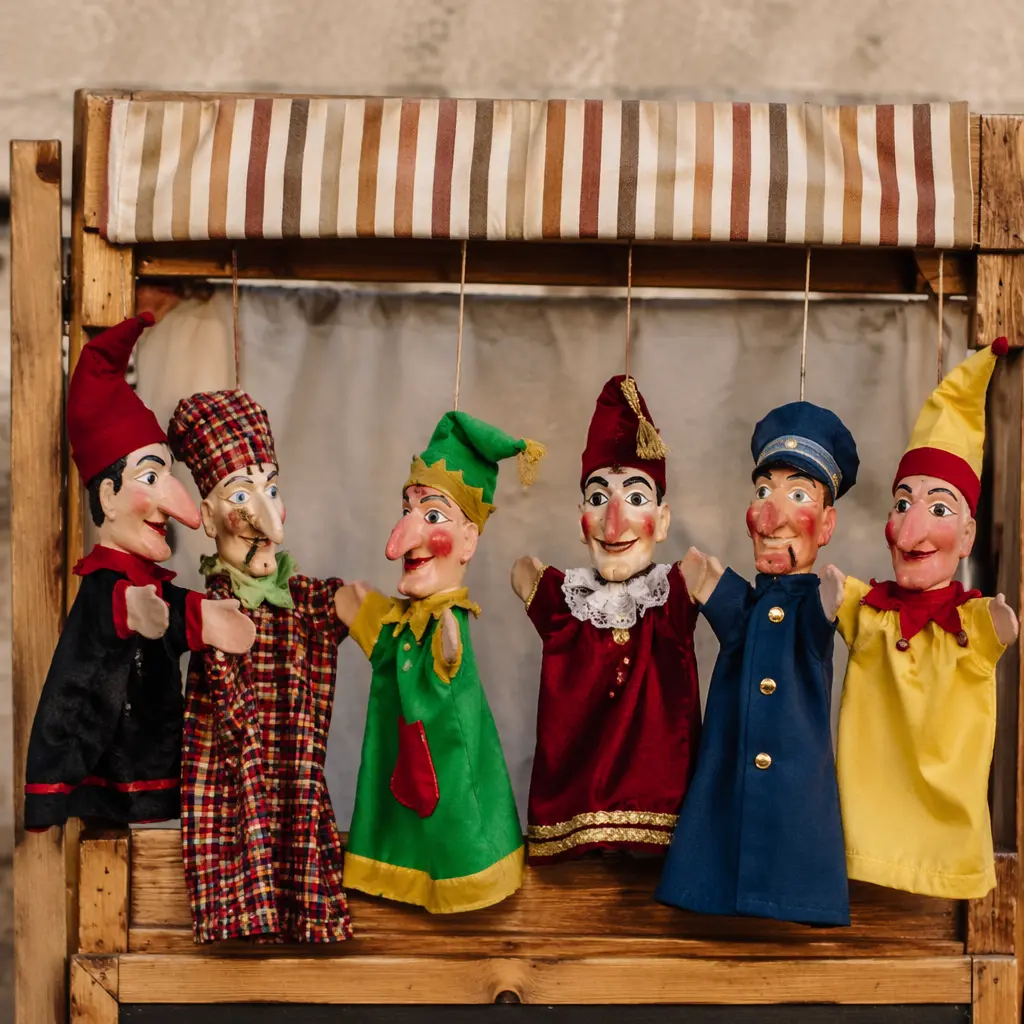
Punch and Judy puppets are more than old-fashioned toys—they’re a portable theatre. With a few cloth-and-wood characters and a willing audience, children can stage stories that are noisy, silly, and completely their own. That hands-on control is why this centuries-old puppet tradition still shows up in toy chests, classrooms, and drama corners today.
Where it came from
The Punch and Judy tradition traces back to European street theatre, with roots in Italian commedia dell’arte. By the 17th century, the character of Punch—loud, impulsive, and instantly recognisable—had become a fixture of travelling puppet shows, especially in Britain. Performers used glove puppets and a small booth to create fast-paced comic scenes that could be staged almost anywhere.
Over time, these shows moved from public squares to seaside promenades and, eventually, into the home as toys. Puppet makers adapted the characters into durable glove puppets for children, toning down the darker satire while keeping the broad humour and simple storytelling structure. What began as popular entertainment became a tool for imaginative play.
Why it works
At heart, Punch and Judy puppets work because they put kids in charge of the action. A glove puppet responds instantly to movement and voice, making it easy for even young children to bring a character to life. There’s no setup beyond slipping a hand inside, which lowers the barrier to play.
The traditional characters are bold and exaggerated, encouraging expressive voices and physical comedy. That exaggeration gives children permission to experiment with emotions, conflict, and resolution in a safe, playful way.
- Simple glove-puppet design that’s easy to control
- Exaggerated features that read clearly from a distance
- Open-ended stories with no fixed script
- Supports language development and confidence
- Works solo or with a group audience
Who it’s for
Punch and Judy puppets generally suit children from around age three and up, when imaginative role-play and basic storytelling start to click. Younger children enjoy the movement and voices, while older kids can build longer narratives or perform for friends. Adults often find themselves drawn in too—whether for nostalgia, classroom use, or as a low-tech way to encourage creativity without screens.
Variants and what to look for today
Modern Punch and Judy sets range from traditional fabric-and-wood puppets to softer, plush versions designed for younger hands. Some sets include a simple collapsible booth, while others focus just on the characters themselves. You’ll also find contemporary spins that add new characters or update costumes while keeping the classic glove format.
When choosing a set today, look for sturdy stitching, comfortable hand openings, and materials that can handle enthusiastic play. Very cheap sets may use thin fabrics or glued features that don’t last. A slightly better-made puppet tends to move more smoothly—and survive repeated performances.
Frequently asked questions
Are Punch and Judy puppets still appropriate for children?
Yes, when used as toys rather than strict reenactments of historic shows. Modern play focuses on humour, imagination, and storytelling, and parents can easily guide the tone to suit their child’s age.
Do you need a puppet booth?
A booth adds theatre-style fun, but it’s not essential. A sofa back, table edge, or doorway can work just as well for home performances.
What skills do puppet toys help develop?
Puppet play supports language skills, confidence, fine motor control, and social understanding. It’s also a gentle way for children to explore problem-solving and emotional expression.
Are these puppets only for traditional stories?
Not at all. Many children use the characters as starting points for entirely new stories, mixing them with other toys or inventing original adventures.
Punch and Judy puppets have endured because they’re simple, flexible, and powered by imagination rather than batteries. As a classic toy, they remind us that storytelling doesn’t need much—just a hand, a voice, and a willing audience.