Rainbow Pebbles: The balancing toy built for open-ended play
Rainbow Pebbles turned simple balancing and stacking into a flexible creative activity, blending construction play, color sorting, and problem-solving for kids and adults alike.

Compare prices and availability
Check current prices and availability for this guide on eBay.
As an eBay Partner, we may be compensated if you make a purchase.
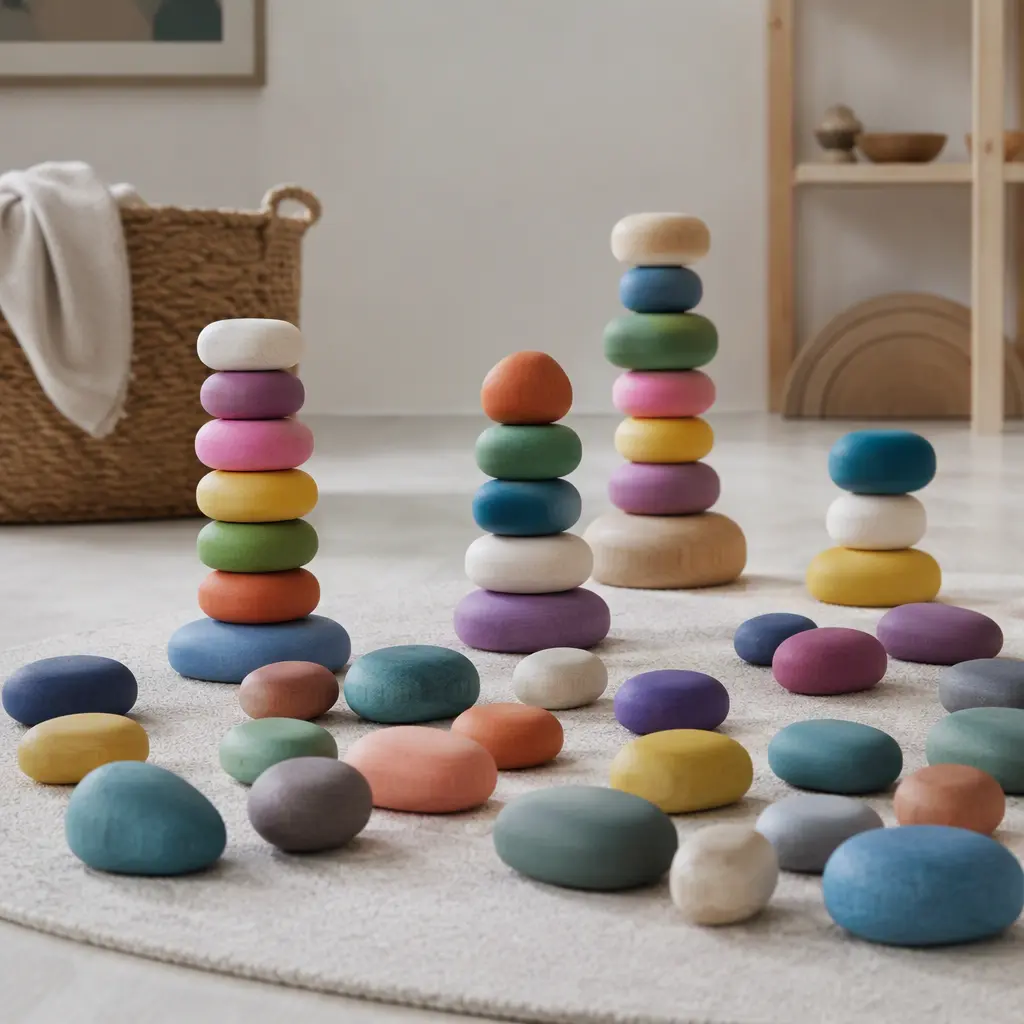
Rainbow Pebbles arrived during a period when parents and educators were looking for toys that could do more than one thing at a time. At first glance, the pieces look simple: smooth, rounded shapes in bright colors that resemble river stones. Yet that simplicity is exactly what gave the toy family staying power. Children can stack them into towers, sort them by color or size, build abstract sculptures, or use them in loose construction play. The challenge comes from balance. The uneven curves force kids to think about weight, angles, and stability without turning the activity into a rigid lesson. That blend of creativity and quiet problem-solving helped Rainbow Pebbles become one of the standout contemporary toys in the open-ended construction category.
Where it came from
Rainbow Pebbles emerged in the early 2020s as part of a wider shift toward open-ended educational toys. Many toy makers were revisiting classic ideas like balancing stones, Montessori-inspired sorting materials, and tactile construction sets, then adapting them into modern designs with safer materials and brighter visual appeal. The toy family quickly gained attention through classrooms, therapy settings, and social media demonstrations where children built surprisingly tall structures from pieces that looked impossible to balance.
Unlike traditional building bricks that rely on connectors or fixed shapes, Rainbow Pebbles leaned into unpredictability. Each piece is rounded and slightly irregular, which means no two stacking attempts feel exactly the same. That design encourages experimentation rather than rule-following. Children naturally test ideas, rebuild after collapses, and discover how different shapes interact. Parents often noticed that the toy held attention longer than expected because there was no single “correct” result to aim for.
Why it works
The appeal of Rainbow Pebbles comes from the balance between freedom and challenge. The toy is approachable for younger children because the pieces are easy to grasp and visually inviting, but the balancing mechanic introduces enough difficulty to keep older kids interested. Towers wobble, shapes shift, and structures collapse in ways that feel playful rather than frustrating. That feedback loop turns trial and error into part of the entertainment.
The toy also crosses categories in a way many construction sets do not. It can function as a building activity, a puzzle, a sensory toy, or even a decorative desk object for adults. Occupational therapists and early-learning educators often appreciate toys like this because they support fine motor skills, spatial reasoning, and patience without feeling overtly educational.
- Rounded shapes encourage creative stacking instead of fixed building patterns
- Bright colors support sorting, matching, and visual learning activities
- Smooth tactile surfaces make the pieces easy for younger children to handle
- Balancing mechanics naturally introduce problem-solving and spatial reasoning
- Open-ended design allows solo play, cooperative building, or quiet sensory play
Who it's for
Rainbow Pebbles are generally aimed at preschool and early elementary ages, but the play pattern has broader appeal than the packaging often suggests. Younger children enjoy the sensory experience and color exploration, while older kids can experiment with more ambitious balancing structures. Adults frequently use the pieces as desk toys, mindfulness tools, or decorative play objects in shared family spaces. Because the toy does not depend on batteries, screens, or complicated instructions, it tends to work well across mixed-age households where different children want to interact with the same set in different ways.

Variants and what to look for today
Modern Rainbow Pebbles sets vary widely in size, material, and intended age range. Some are made from lightweight plastic with vivid colors designed for younger children, while others use wood or denser materials that create a more challenging balancing experience. Larger sets may include dozens of shapes in graduated sizes, encouraging more elaborate construction projects. Smaller travel-friendly versions focus on simple stacking and portability.
When shopping today, the most important difference is usually material quality and finish. Well-made sets have smooth edges, consistent weight distribution, and durable surfaces that can withstand repeated drops. Lower-quality versions sometimes use overly slippery finishes or uneven molding that makes balancing frustrating rather than engaging. It is also worth checking the size of the pieces for younger children, since tiny balancing stones can become a choking hazard in sets aimed at older ages.
- Look for smooth, evenly finished pieces that stack predictably
- Wooden versions often feel heavier and more tactile than lightweight plastic sets
- Larger mixed-size sets provide more creative building options
- Travel sets are useful for quiet play in restaurants or waiting rooms
- Avoid poorly finished knock-offs with sharp edges or unstable construction
Frequently asked questions
Are Rainbow Pebbles educational toys?
They are often used in educational settings because they support fine motor development, color recognition, balance, and spatial reasoning. Most children simply experience them as creative play rather than structured learning.
Do they work better as solo or group toys?
Both styles work well. Solo players often focus on concentration and tower-building challenges, while groups naturally turn the toy into cooperative construction or friendly balancing competitions.
What materials are most common?
Plastic and wood are the most common options. Plastic sets are usually lighter and easier for younger children to manage, while wooden sets provide more weight and a slightly more demanding balancing experience.
Why do adults buy them too?
The balancing mechanic has a calming, tactile quality that appeals beyond childhood. Many adults enjoy the toy as a desk activity, stress-relief object, or minimalist design piece that can still be played with casually.
Rainbow Pebbles succeeded because they embraced a deceptively simple idea: balancing objects is satisfying at almost any age. By combining tactile play, construction challenges, and open-ended creativity, the toy family found a place in classrooms, living rooms, and playrooms alike. In an era crowded with highly scripted toys and app-connected gadgets, their quiet flexibility became part of the appeal.