Stapelstein Balance Stones: Minimalist play in motion
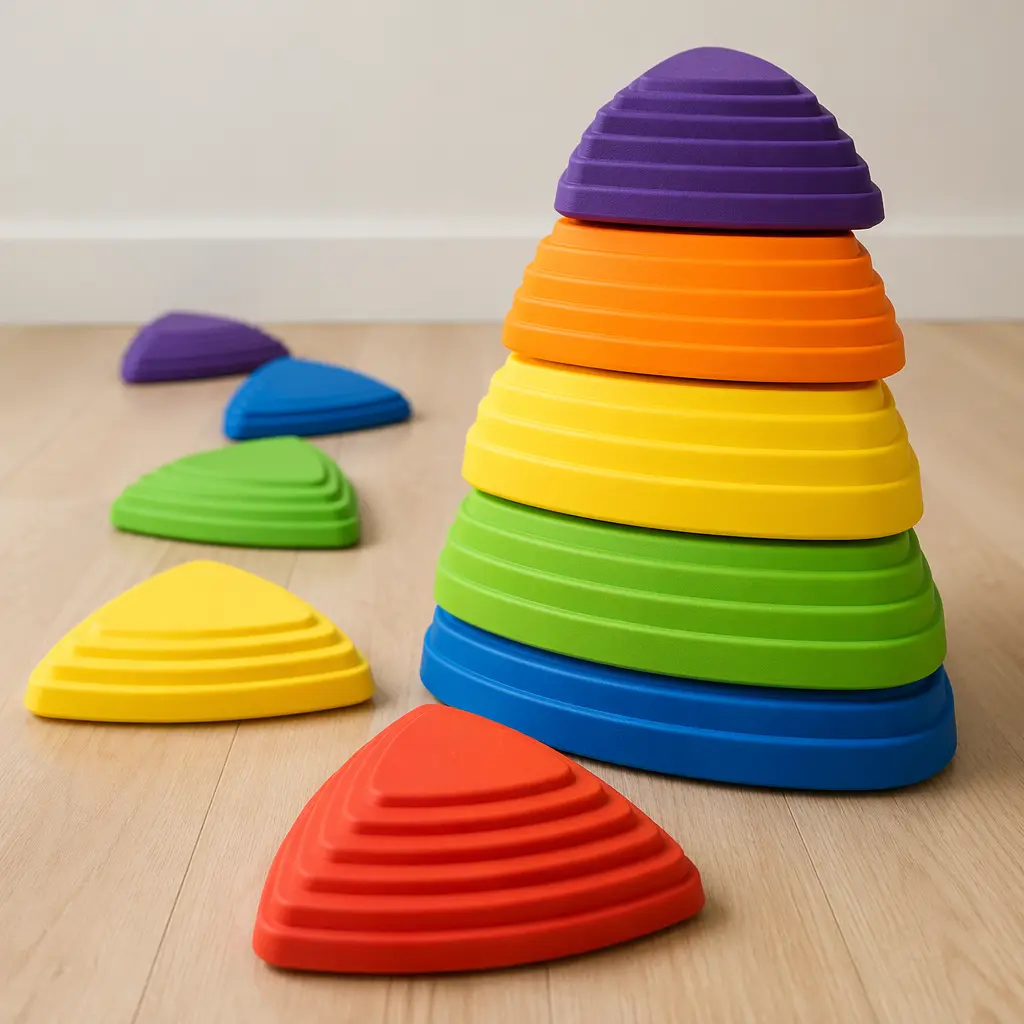
Bright, stackable balance stones that invite kids to move, build and invent games. Stapelstein turned simple stepping shapes into a modern, open-ended way to play indoors or out.
Compare prices and availability
Check current prices and availability for this guide on eBay.
As an eBay Partner, we may be compensated if you make a purchase.
At first glance, Stapelstein Balance Stones look almost too simple to be a toy at all: smooth, brightly colored domes that stack, nest, and scatter across the floor. Yet in homes, classrooms, and therapy spaces, these stones have become a quiet staple. They don’t beep, roll, or instruct. Instead, they invite children to move — to step, balance, build, tip, spin, and invent games that change from minute to minute.
Where it came from
Stapelstein emerged in Germany in the late 2010s, with its first sets appearing around 2018. The idea grew from a mix of movement education, minimalist design, and a growing interest in open-ended play. Rather than creating a toy with a single purpose, the designers focused on a basic form that could support balance, coordination, and imaginative use across many ages.
The original purpose wasn’t entertainment alone. These stones were shaped to encourage physical movement in everyday spaces — living rooms, classrooms, and therapy settings — without the need for bulky gym equipment. Lightweight, stackable, and visually calm, they reflected a modern European approach to children’s design: fewer parts, better materials, and room for creativity rather than instruction.
Why it works
The appeal of Stapelstein Balance Stones lies in what they don’t do. There are no rules printed on the box and no “right” way to use them. One day they’re stepping stones across a pretend river; the next they’re stools, drums, sorting bowls, or a wobbling tower. The curved shape challenges balance just enough to be interesting, without feeling unsafe or overwhelming.
Their design supports a natural play pattern: movement first, imagination second. Children test their bodies — hopping, balancing, turning — and then layer stories and games on top. Because the stones are light but sturdy, kids can rearrange them independently, which reinforces confidence and autonomy.
- Lightweight, stackable design that’s easy for children to move
- Rounded shape that gently challenges balance and coordination
- Durable material suitable for indoor and outdoor use
- Open-ended form that supports imaginative and physical play
- Bright but simple colors that don’t overwhelm a space
Who it’s for
Stapelstein Balance Stones are typically marketed for preschool and early primary ages, but their reach is wider. Toddlers enjoy sitting, tipping, and climbing with supervision, while older children turn them into obstacle courses or competitive balance games. Adults often end up using them too — as casual seating, foot rests, or tools for stretching and movement breaks. Their quiet, design-forward look also makes them appealing to parents who want active play without turning their home into a play gym.
Variants and what to look for today
Today, Stapelstein-style balance stones are sold in sets of varying sizes and color palettes. Some collections focus on bright, primary colors, while others lean toward muted or pastel tones that blend into modern interiors. You’ll also see companion pieces like flat boards or connectors designed to expand balancing possibilities.
When shopping, it’s worth paying attention to material quality and weight limits rather than just price. Well-made stones should feel sturdy underfoot without being heavy, and the edges should be smooth and comfortable to grip. Generic balance stones can offer similar play value, but very thin or brittle versions may crack or slide more easily, especially outdoors.
Frequently asked questions
Are Stapelstein Balance Stones safe for indoor use?
Yes, they’re designed with indoor spaces in mind. Using them on carpets, rugs, or mats helps prevent slipping and softens any tumbles during energetic play.
Can they be used outdoors?
They’re suitable for outdoor play on grass, patios, or playground surfaces. Like most toys, they’ll last longer if stored indoors rather than left outside full-time.
Do kids get bored of them?
Because there’s no fixed game, interest tends to come in waves. Children may leave them untouched for a while, then return with new ideas as their skills and imagination grow.
Are they only for physical play?
Not at all. Many families use them for sorting, color games, seating, or pretend play, especially when space is limited.
In a toy world crowded with features and instructions, Stapelstein Balance Stones stand out by doing less. Their success comes from trusting children to move, explore, and invent on their own terms. It’s a modern reminder that sometimes the most engaging play starts with a simple shape and an open floor.