Twister: How a floor mat turned balance into family chaos
Since 1966, Twister has turned living rooms into laugh-filled obstacle courses. With nothing but a mat, dots, and balance, it redefined what a board game could be.
Compare prices and availability
Check current prices and availability for this guide on eBay.
As an eBay Partner, we may be compensated if you make a purchase.
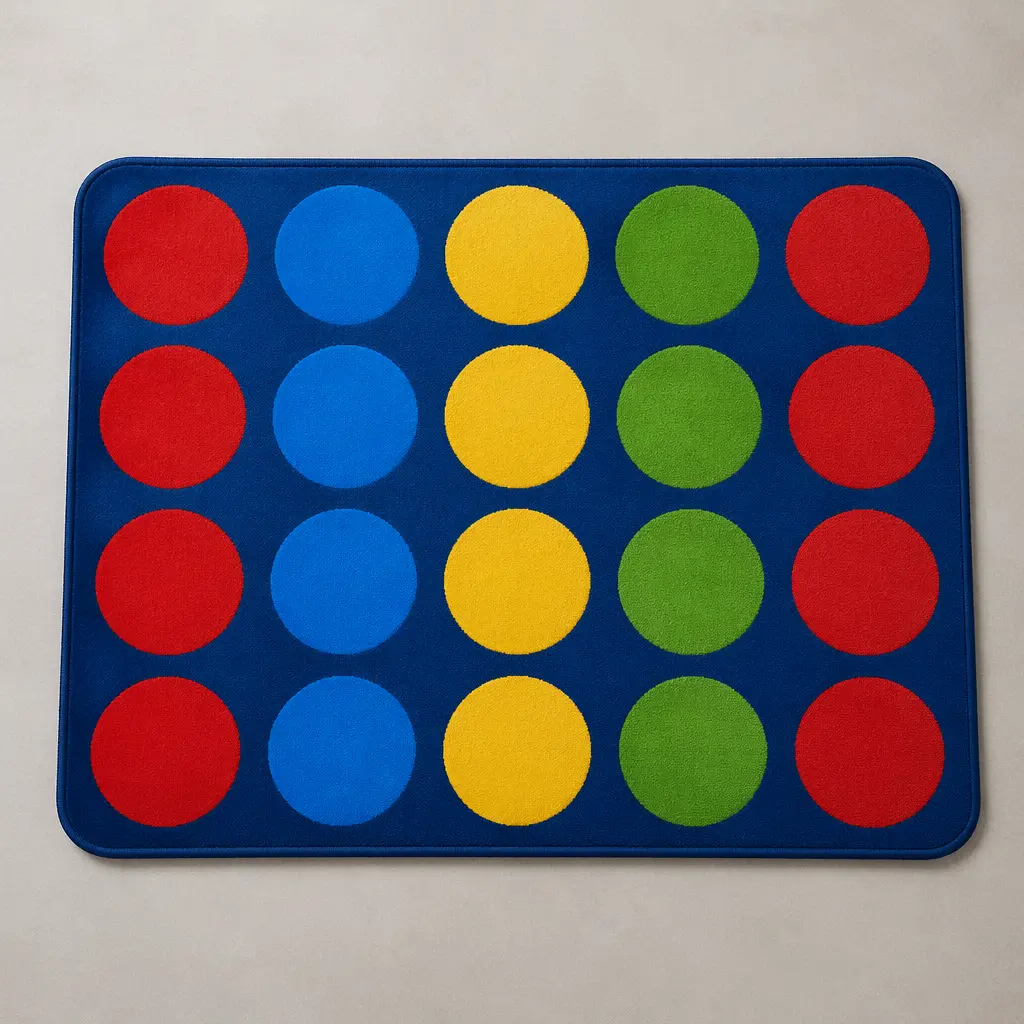
Twister doesn’t look like much at first glance: a vinyl mat, a handful of colored circles, and a spinner. Yet for nearly six decades, it has had an outsized impact on family game nights. Instead of sitting around a table, players step into the game, using their own bodies as pieces. The result is a mix of laughter, awkward poses, and the kind of shared chaos that people remember long after the mat is rolled up.
Where it came from
Twister was introduced in 1966 by Milton Bradley, during a period when most board games were still firmly tabletop affairs. Its roots trace back to a design experiment that combined a floor-based play surface with physical movement—something closer to playground play than traditional board gaming.
The game made headlines soon after release when it appeared on a popular American television show, instantly propelling it into public conversation. At a time when family entertainment was changing, Twister stood out by being a little silly, a little physical, and refreshingly different. It didn’t rely on trivia or strategy alone; it relied on people being willing to tip over, laugh, and try again.
Why it works
At its core, Twister is a balance and positioning game. The spinner dictates which limb goes to which color, and players must adapt in real time. There’s no memory advantage, no reading level required, and very little setup. The tension comes from the human body itself—how long can you hold that stretch, and what happens when someone else needs the same space?
The design succeeds because it turns limitations into fun. The mat is small enough to force interaction, and the rules are simple enough that everyone understands them within minutes. Standout features include:
- A large, shared play surface that pulls everyone into the same space
- Randomized instructions that keep rounds unpredictable
- No scorekeeping, allowing the focus to stay on laughter and movement
- A physical challenge that changes depending on who’s playing
Who it's for
Twister is typically recommended for children aged six and up, but its appeal stretches well beyond that. Kids enjoy the bright colors and physical challenge, while teens and adults often lean into the social and comedic side. It works best for groups comfortable with light physical contact and a bit of silliness. Because it’s low on rules and high on movement, it’s also a common pick for parties, classrooms, and mixed-age gatherings.
Variants and what to look for today
Over the years, Twister has seen updates that tweak materials, add extra moves, or change the way the spinner works. Modern versions often use thicker mats that resist tearing and slipping, which matters when the game gets energetic. Some editions add team play or extra color options, but the core experience remains unchanged.
If you’re shopping today, focus on durability and size. A mat that lies flat and grips the floor will make the game safer and more enjoyable. Be cautious of very thin knock-off mats that crease easily or have slippery surfaces—they can undermine the fun and increase the risk of falls.
Frequently asked questions
How long does a typical game last?
A single round of Twister often lasts 10–20 minutes, depending on the number of players and how competitive they are. Many groups play multiple short rounds rather than one long session.
Is Twister safe for younger children?
With supervision, most children aged six and up can play safely. The main considerations are balance and flexibility, so it’s best to let kids take breaks and avoid forcing uncomfortable positions.
Can adults really enjoy it, or is it just for kids?
Adults often enjoy Twister just as much, if not more. The humor of the game scales with the players, and it’s frequently used as an icebreaker at parties because it lowers inhibitions and gets people moving.
Does it require any special setup?
Setup is minimal. You unroll the mat on a flat surface and make sure it’s secure. That simplicity is part of why Twister has remained popular for decades.
Twister endures because it understands something fundamental about play: sometimes the best games are the ones that get us off the couch. With almost no barriers to entry and a design that invites laughter, it continues to earn its place at family gatherings and parties, proving that a few dots on a mat can go a very long way.