Tileblox: The magnetic tile newcomer focused on bigger builds
Tileblox entered the crowded magnetic construction category with a simple pitch: larger pieces, sturdy connections, and open-ended building that favors long play sessions over flashy electronics.
Compare prices and availability
Check current prices and availability for this guide on eBay.
As an eBay Partner, we may be compensated if you make a purchase.
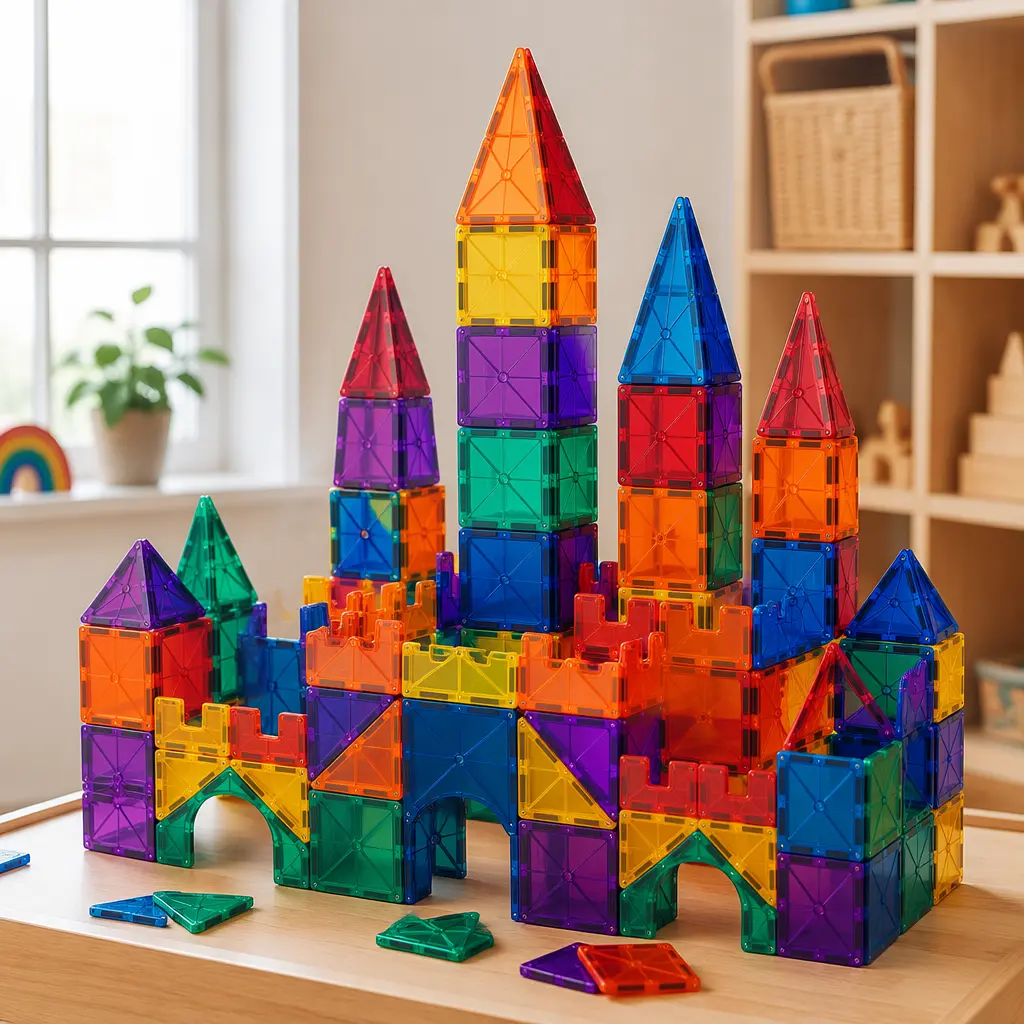
Tileblox arrived during a period when magnetic construction toys were already a familiar sight in playrooms and classrooms. Instead of trying to reinvent the category with screens, motors, or branded tie-ins, the line leaned into a simpler idea: make magnetic tiles that encourage larger, more stable builds and keep the focus on open-ended creativity. That pitch helped Tileblox stand out with families looking for toys that could hold a child’s attention beyond a quick novelty phase. The appeal is easy to understand once the tiles hit the floor. Children can snap together walls, ramps, towers, tunnels, and abstract sculptures in minutes, while older kids often turn the same pieces into ambitious engineering experiments.
Where it came from
Tileblox launched in 2021, entering a category that had already proven popular with parents, educators, and occupational therapists. Magnetic tiles themselves are part construction toy and part early geometry lesson, combining colorful translucent shapes with embedded magnets that let children experiment with balance, symmetry, and spatial reasoning. Earlier brands established the basic formula years before, but newer entrants like Tileblox recognized that demand for open-ended STEM-oriented toys was still growing rapidly.
The company’s approach emphasized scale and durability rather than complicated accessories. Many contemporary toy launches rely on apps, character licenses, or collectible gimmicks to compete for attention. Tileblox instead positioned itself around bigger building sessions and compatibility with familiar magnetic-tile-style play patterns. That strategy appealed to households that wanted a toy capable of growing alongside children instead of being tied to a narrow age range or a single prescribed activity.
Why it works
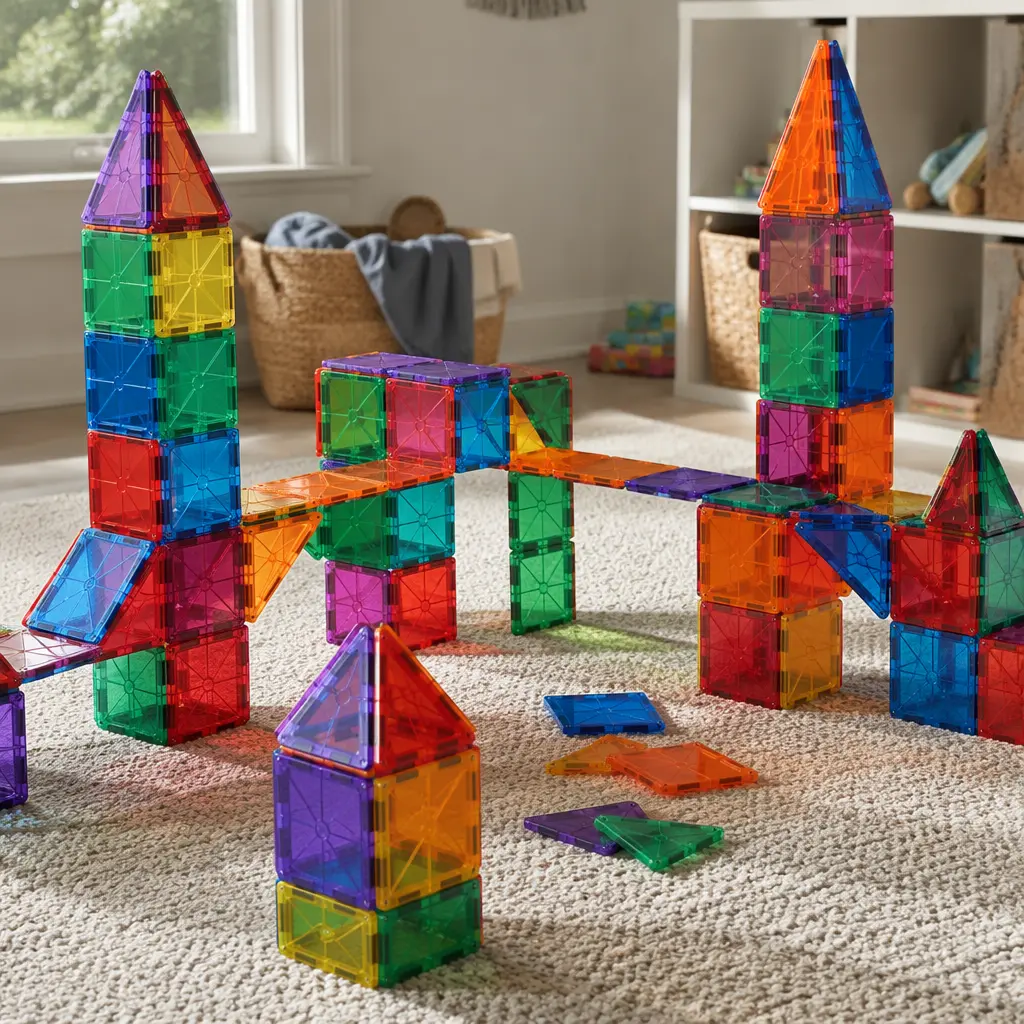
The core mechanic behind Tileblox is immediately understandable. Flat geometric pieces contain enclosed magnets along the edges, allowing structures to click together with very little frustration. Younger children enjoy the instant success of snapping shapes into place, while older kids naturally begin testing stronger towers, moving parts, and more complex layouts. Because there are no fixed instructions required for basic play, the toy encourages experimentation in a way that many traditional kits do not.
Scale is a major part of the appeal. Larger structures change the rhythm of play from tabletop tinkering to room-sized construction. Children often collaborate on forts, roads, marble-run-style tracks, or pretend-play environments. Parents also tend to appreciate that magnetic tiles can be packed away quickly compared with many brick-based systems that involve hundreds of tiny connectors. The translucent plastic adds another layer of interest, especially near windows or under soft lighting where colors overlap and create stained-glass-like effects.
- Strong magnetic connections designed for taller or wider builds
- Open-ended construction with no required storyline or character tie-in
- Translucent pieces that interact well with natural light
- Easy entry point for younger builders with room for advanced creativity
- Play patterns that encourage collaboration between siblings or classmates
Who it's for
Tileblox is generally aimed at preschool and elementary-age children, though magnetic tile sets often remain popular far beyond the suggested age range. Younger children enjoy simple stacking and shape recognition, while older kids may begin exploring engineering concepts like weight distribution and structural support. Adults frequently join in because the toy naturally lends itself to cooperative building. In classrooms and family spaces, the broad appeal matters as much as the toy itself. It is one of the few contemporary construction categories that comfortably supports solo play, sibling collaboration, and parent participation without needing separate rule systems or skill levels.
Variants and what to look for today
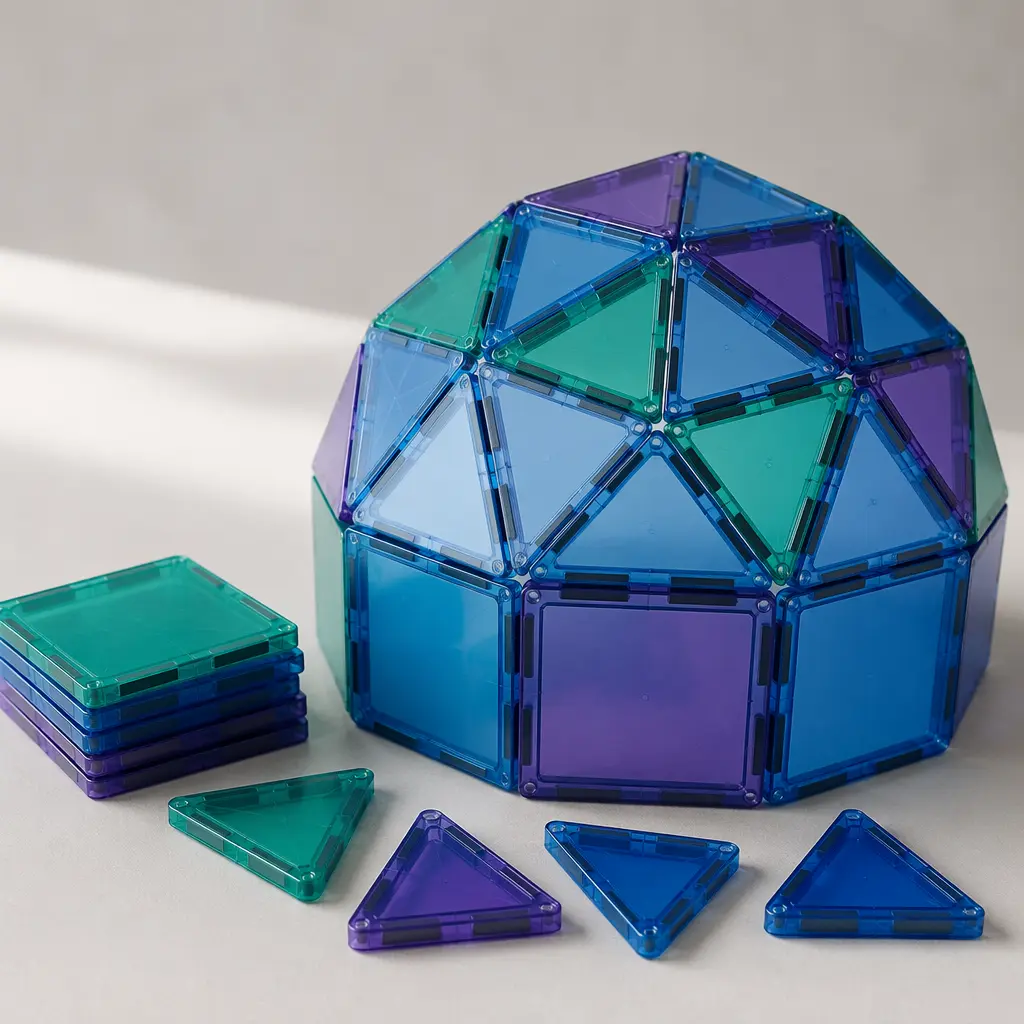
Like many modern construction brands, Tileblox has expanded beyond basic square-and-triangle starter sets. Current offerings in the broader magnetic tile market often include wheels, ramps, windows, ball-run components, and larger structural pieces designed for dramatic builds. Families shopping today should think less about collecting every possible accessory and more about the type of play they want to encourage. Large mixed-shape sets typically provide the best long-term flexibility because children can redesign creations repeatedly without running into the same structural limitations.
Compatibility is another consideration. Many magnetic tile systems follow similar sizing standards, but connection strength and plastic thickness can vary between manufacturers. Parents often prefer sturdier pieces with securely enclosed magnets and smooth edges. Very inexpensive imitation sets may use weaker magnets or thinner plastic that affects stability during taller builds. For younger children especially, durable construction matters more than decorative extras.
- Starter sets work well for first-time builders and smaller spaces
- Large mixed-piece collections support more ambitious structures
- Ball-run and motion accessories add engineering-focused play
- Check for enclosed magnets and durable edge construction
- Storage bins or carrying cases can make cleanup easier
Frequently asked questions
Are magnetic tiles mainly educational toys?
They are often marketed with STEM language, but the strongest appeal is usually creative play. Children naturally explore geometry, balance, and problem-solving while building, though most simply experience it as imaginative construction.
Do larger magnetic tiles make a difference?
Larger pieces can support wider walls and taller structures with fewer connections, which changes the style of play considerably. Kids often move from small tabletop designs to immersive forts, tunnels, and collaborative room-sized projects.
How durable are magnetic construction toys?
Quality varies by manufacturer, but well-made sets are designed to handle repeated snapping, stacking, and dropping. Parents should periodically inspect tiles for cracks or damage, especially after rough play or accidental stepping.
Can adults enjoy Tileblox too?
Yes. Many adults find magnetic construction toys surprisingly relaxing because they combine quick tactile feedback with open-ended design. Cooperative family builds are a major reason the category continues expanding beyond traditional preschool audiences.
Tileblox reflects a broader shift in contemporary toys toward flexible, replayable systems that reward imagination instead of scripted interaction. The brand entered a crowded market, but its emphasis on larger builds and straightforward creative play helped it carve out a place among families looking for durable construction toys without heavy digital distractions. In an era filled with short-lived trends, magnetic tiles continue proving that simple mechanics and open possibilities still have lasting power.