Troll Dolls: How a quirky good-luck charm became a pop survivor
Born in Denmark in 1959, Troll Dolls have bounced from good-luck trinkets to global craze to pop-culture punchline—and back again. Here’s how the wild-haired dolls endured across generations.
Compare prices and availability
Check current prices and availability for this guide on eBay.
As an eBay Partner, we may be compensated if you make a purchase.
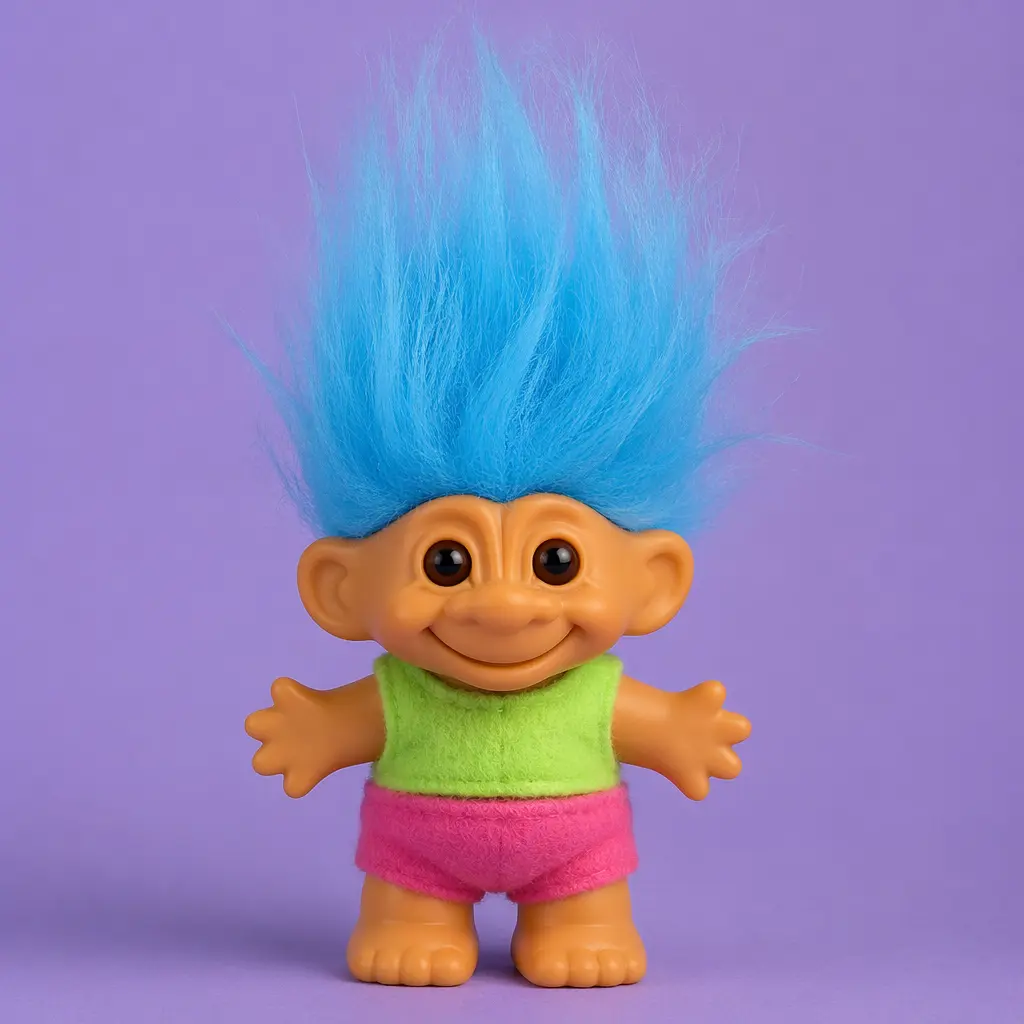
Troll Dolls are hard to forget. With their shock of upright hair, wide grins, and stubby bodies, they look like something from a fairy tale filtered through mid-century whimsy. Love them or find them a little odd, these small dolls have proven remarkably durable, popping up in toy boxes, keychains, and pop culture for more than six decades.
Where it came from
The Troll Doll story begins in Denmark in 1959, when woodcutter Thomas Dam carved a small troll figure for his daughter. Inspired by Scandinavian folklore, Dam’s troll was meant as a friendly good-luck charm rather than a monster. When neighbors began asking for their own, Dam started producing them for sale, and the dolls quickly found an audience beyond Denmark.
By the early 1960s, Troll Dolls had become an international craze. Their timing helped: post-war families were drawn to toys that felt cheerful, affordable, and a little magical. Over the years, different manufacturers produced their own versions, sometimes leading to legal battles over design rights, but the basic idea—a squat figure with wild hair and a smiling face—proved hard to contain.
Why it works
At heart, Troll Dolls succeed because they are simple and expressive. They don’t rely on a backstory you need to memorize or accessories you must collect. Instead, they invite projection. Children can imagine them as lucky charms, tiny friends, or fantasy creatures, while adults often see them as symbols of nostalgia or playful kitsch.
- Instant visual impact from tall, brightly coloured hair
- Compact size that makes them easy to carry or display
- Friendly expressions that soften their folkloric roots
- Minimal rules or instructions—pure open-ended play
Their design also encourages customization. Hair can be brushed, styled, or swapped, and outfits can be added or changed. This hands-on element helped Troll Dolls move from being simple figurines to personal keepsakes.
Who it’s for
Traditionally, Troll Dolls have appealed to young children, roughly ages 3 and up, thanks to their sturdy bodies and friendly looks. At the same time, they’ve always had strong adult appeal. Collectors, retro-toy fans, and anyone with childhood memories tied to the 1960s, 70s, or 90s often seek them out as display pieces rather than playthings.
Variants and what to look for today
Over the decades, Troll Dolls have appeared in countless forms. Early versions were often made from rubber or vinyl with real or synthetic hair, while later waves introduced themed outfits, keychain sizes, and softer materials. Some modern interpretations lean into bright fashion colours, while others echo the more natural tones of the original Scandinavian designs.
If you’re shopping today, you’ll find everything from budget-friendly novelty trolls to higher-quality collectible-style dolls. Look for solid construction, securely attached hair, and smooth finishes. Generic knock-offs are common, so it’s worth checking reviews and photos to ensure the doll matches the look and durability you expect.
Frequently asked questions
Are Troll Dolls meant to be good-luck charms?
Originally, yes. The first Troll Dolls were inspired by folklore and sold as friendly figures that could bring good luck. While many people now see them mainly as toys or collectibles, that lucky reputation still lingers.
What ages are Troll Dolls safe for?
Most are suitable for children aged 3 and up, but always check for small parts if buying for younger kids. Some collectible versions are designed for display rather than play.
Why did Troll Dolls come back so many times?
Their simple design makes them easy to reinvent. Each generation seems to rediscover them, whether through fashion trends, nostalgia, or pop-culture references that spark renewed interest.
Are older Troll Dolls valuable?
Some early examples are sought after by collectors, especially if they’re in good condition. Value varies widely based on age, condition, and provenance, so research is key.
Few toys have had a life as cyclical as Troll Dolls. From a father’s handmade gift to a global phenomenon, they’ve survived shifts in taste by staying unapologetically themselves. That mix of charm, oddness, and nostalgia continues to keep them upright—wild hair and all.