The Water Ring Toss Game: Patience, Not Speed, Wins
The pocket-sized water ring toss game turns a simple squeeze-and-release into a lesson in patience, focus, and quiet satisfaction—no batteries, no rush, just calm play.
Compare prices and availability
Check current prices and availability for this guide on eBay.
As an eBay Partner, we may be compensated if you make a purchase.
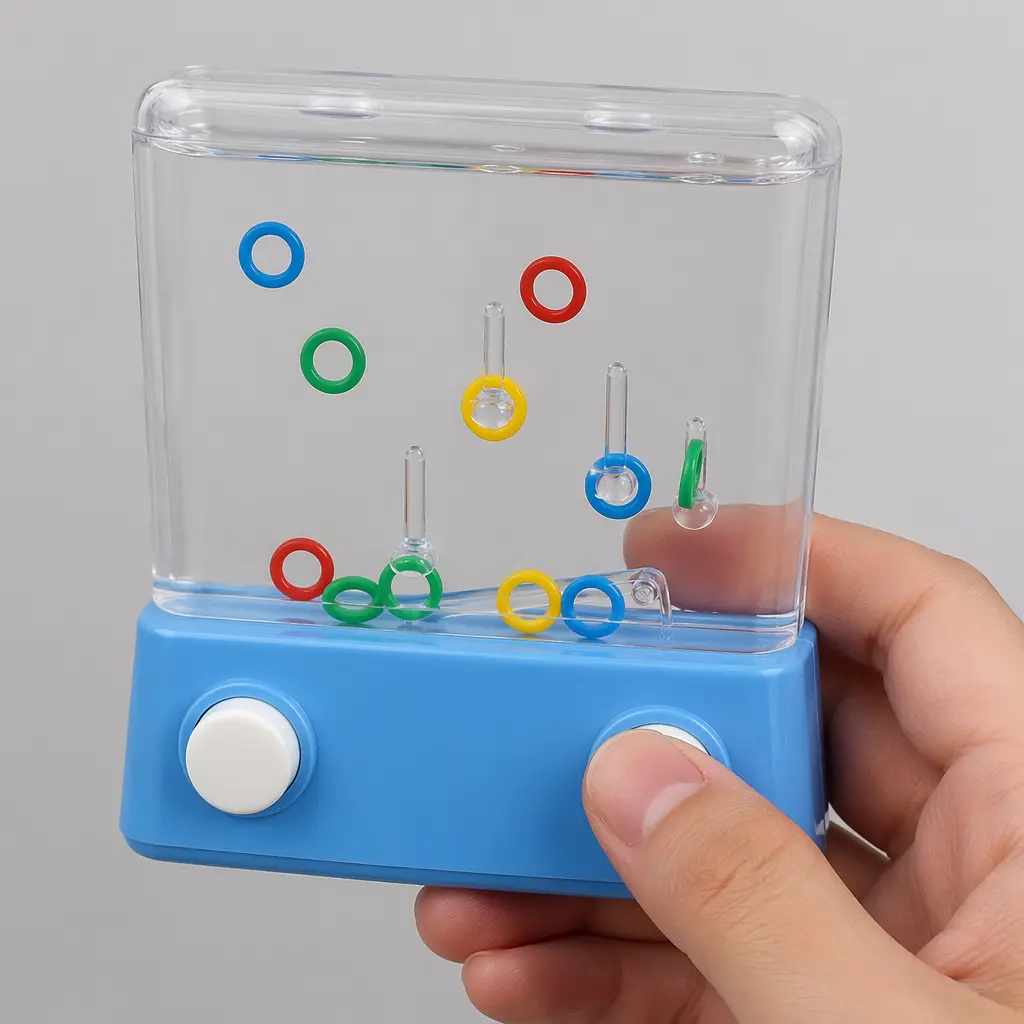
The water ring toss game is one of those toys you don’t remember learning, only remembering. A clear plastic pocket filled with water, a couple of soft buttons, and a handful of floating rings—yet it has a way of stopping time. Unlike most games, it doesn’t reward fast thumbs or flashy moves. It asks you to slow down, watch the currents, and wait for the right moment. That quiet challenge is exactly why it has endured.
Where it came from
Water ring toss games appeared in the late 1970s and early 1980s, a period that produced many self-contained, portable amusements. The idea was straightforward: create a toy that could travel anywhere, cost little to make, and work without batteries. Early versions were often sold as impulse buys—at seaside shops, museum gift counters, and toy stores looking for a small add-on at the till.
There’s no single inventor attached to the category. Instead, it grew out of a broader trend toward liquid-based novelty toys, where water and air replaced springs and electronics. The original purpose wasn’t competitive play or high scores. It was something closer to a fidget before the word existed: a pocket-sized distraction that could occupy a few minutes, then slip back into a bag.
Why it works
At heart, the water ring toss game is a lesson in physics and restraint. Pressing the buttons sends small jets of water upward, lifting the rings. Letting go allows gravity to take over. Success comes from learning the rhythm—how much pressure to apply, when to stop, and how to let the water settle before trying again. There’s no penalty for failure, just another gentle reset.
Its appeal lies in how little it demands. There are no instructions to memorise and no levels to unlock. The design does the teaching for you, encouraging repeated, mindful attempts. Standout features include:
- Clear casing that makes the water movement visible
- Simple button controls that rely on pressure, not speed
- Loose rings that respond differently each attempt
- Silent, battery-free operation
Who it’s for
Children can enjoy water ring toss games from around age three, once small parts are no longer a concern. For younger players, it builds hand control and patience. For adults, it often works as a stress reliever—a desk toy that offers a momentary mental break. Its cross-generational appeal is part of its charm; it’s just as likely to be picked up by a grandparent as by a child.
Variants and what to look for today
Modern water ring toss games stick closely to the original formula, but there are small variations. You’ll see different shapes, from classic rectangles to rounded handheld forms, and different internal targets such as pegs or posts. Some versions use brighter colours or thicker plastic to improve durability.
When choosing one today, look for solid seals around the edges to prevent leaks and buttons that spring back smoothly. Very cheap knock-offs can feel stiff or under-filled, making play frustrating rather than calming. Simpler is usually better; the best versions feel responsive without requiring force.
Frequently asked questions
Does it ever run out of water?
A well-made water ring toss game is sealed and shouldn’t lose water under normal use. If you notice air bubbles growing over time, it may indicate a weak seal.
Is there a trick to winning?
There’s no guaranteed method, but gentle, controlled presses tend to work better than rapid pumping. Patience is part of the game’s design.
Are these toys safe for travel?
Yes. They’re compact, silent, and contain no electronics, making them popular for car trips and waiting rooms.
Why do adults still enjoy them?
Many adults find the slow, repetitive motion relaxing. It offers a brief mental pause without the stimulation of screens.
In a toy landscape crowded with noise and novelty, the water ring toss game stands out by doing less. Its quiet challenge proves that fun doesn’t always come from speed or spectacle. Sometimes, it comes from waiting for the water to settle and trying one more time.