Wedgits: The geometric stacking toy built around balance
Introduced in the early 1990s, Wedgits turned simple geometric forms into an open-ended building toy that rewards symmetry, balance, and experimentation across age groups.
Compare prices and availability
Check current prices and availability for this guide on eBay.
As an eBay Partner, we may be compensated if you make a purchase.
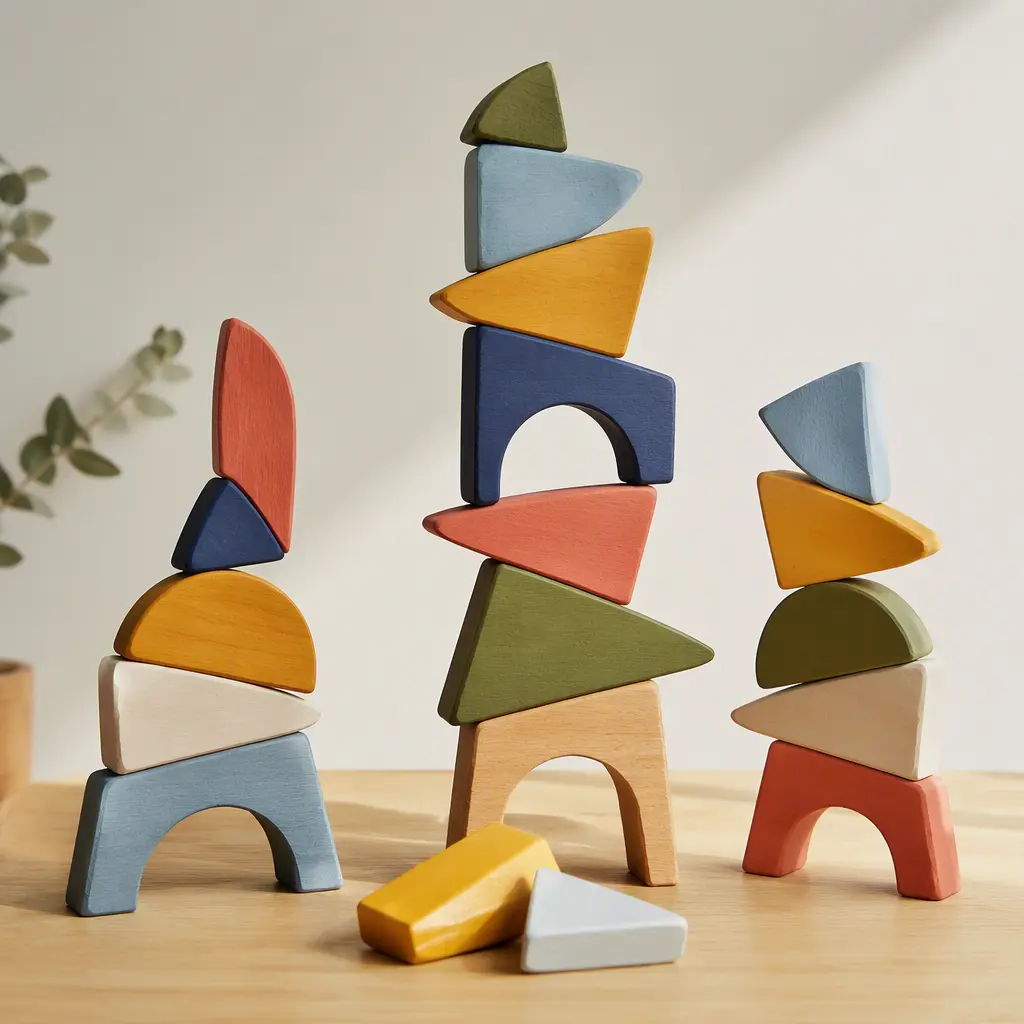
Wedgits arrived during a period when many construction toys were becoming increasingly specialized, branded, or tied to licensed entertainment. Instead of following that trend, this unusual geometric building set focused on something simpler: shape, balance, and spatial experimentation. The pieces looked abstract at first glance, somewhere between puzzle components and architectural models, but the appeal quickly became obvious once children started stacking, rotating, and balancing them into surprisingly stable structures. What made Wedgits stand out was the way the toy encouraged creativity without needing instructions, characters, or electronics. It rewarded curiosity in a quiet but satisfying way.
Where it came from
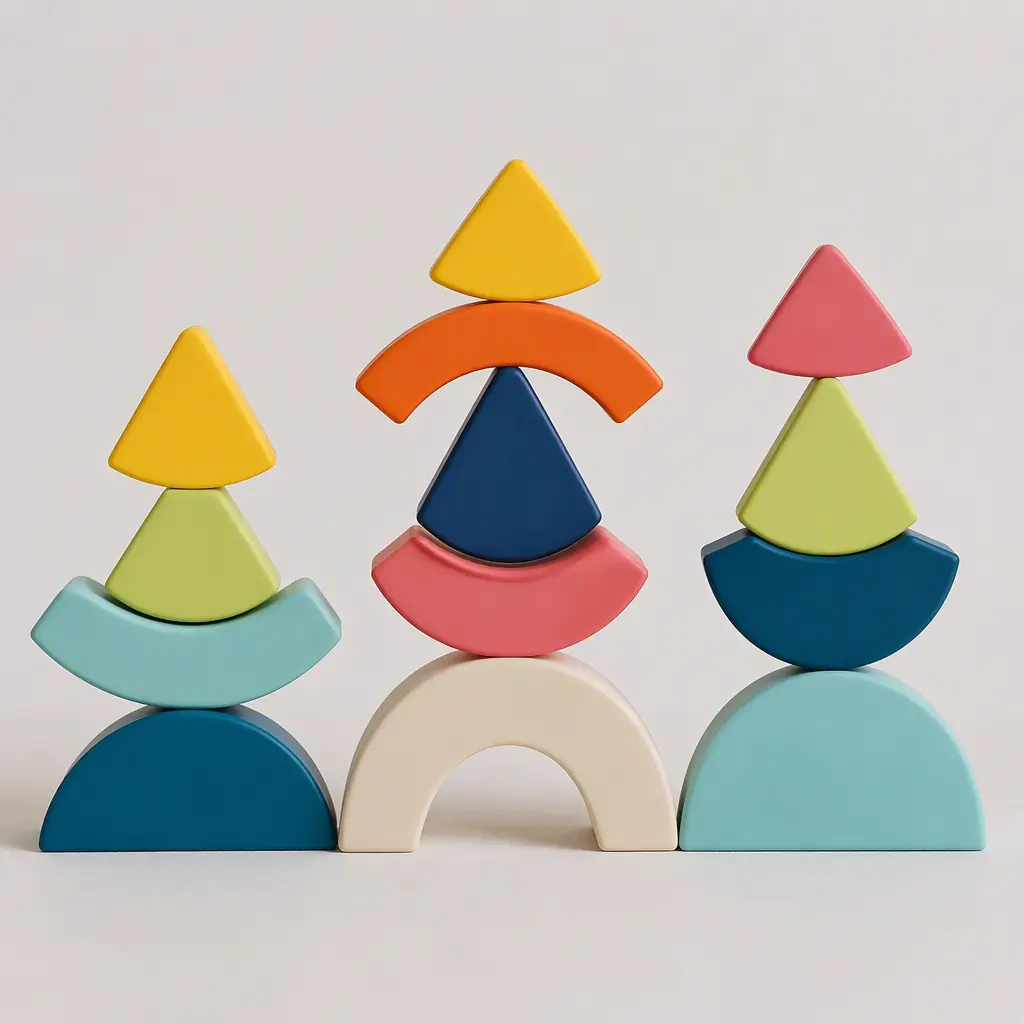
Wedgits first appeared in 1992, created around the idea that a small number of carefully designed shapes could produce a huge variety of structures. The toy family was built from repeating geometric forms that nested together in different orientations, allowing builders to create vertical towers, wide bridges, balanced sculptures, and symmetrical patterns using the same components. Unlike brick systems that depend on studs or connectors, Wedgits relied heavily on gravity, proportion, and shape relationships.
Part of the toy's educational reputation came from how naturally it introduced concepts linked to geometry and engineering. Children could explore symmetry, weight distribution, sequencing, and visual problem-solving simply by playing. Teachers and therapists also took interest because the pieces were approachable for different ages and skill levels. Younger children could stack them intuitively, while older builders experimented with intricate balancing tricks or highly organized color patterns. The toy managed to feel both structured and open-ended at the same time.
Why it works
The core appeal of Wedgits comes from the relationship between the pieces. Each shape is simple on its own, but the dimensions are carefully coordinated so the parts can stack, interlock loosely, and balance in multiple directions. Some pieces form stable foundations while others create overhangs, arches, or suspended-looking structures. That tension between stability and instability keeps the toy engaging because every build becomes part experiment and part sculpture.
Unlike many construction systems that guide players toward specific outcomes, Wedgits leaves room for interpretation. One child might build a tall symmetrical tower while another creates abstract patterns spread across the floor. Adults often find the toy unexpectedly calming because the repetitive balancing process feels tactile and meditative. The bright colors and clean geometric forms also give the pieces a design quality that stands out even when the toy is not in use.
- Stackable geometric shapes designed around proportion and balance
- Open-ended construction without fixed instructions or characters
- Strong emphasis on symmetry and spatial reasoning
- Pieces sized for both free play and structured educational activities
- Simple rules that still support advanced building challenges
Who it's for
Wedgits works across a surprisingly broad age range. Younger children can begin with basic stacking and sorting, learning about size relationships and balance through trial and error. School-age children often become interested in building taller or more complex arrangements, especially once they discover how rotating a single piece changes the stability of a structure. Adults are part of the audience too, particularly parents, educators, designers, and puzzle enthusiasts who appreciate toys that encourage hands-on experimentation without screens or complicated setup. Because there are no electronics or small moving mechanisms, the play experience tends to feel durable and timeless.
Variants and what to look for today
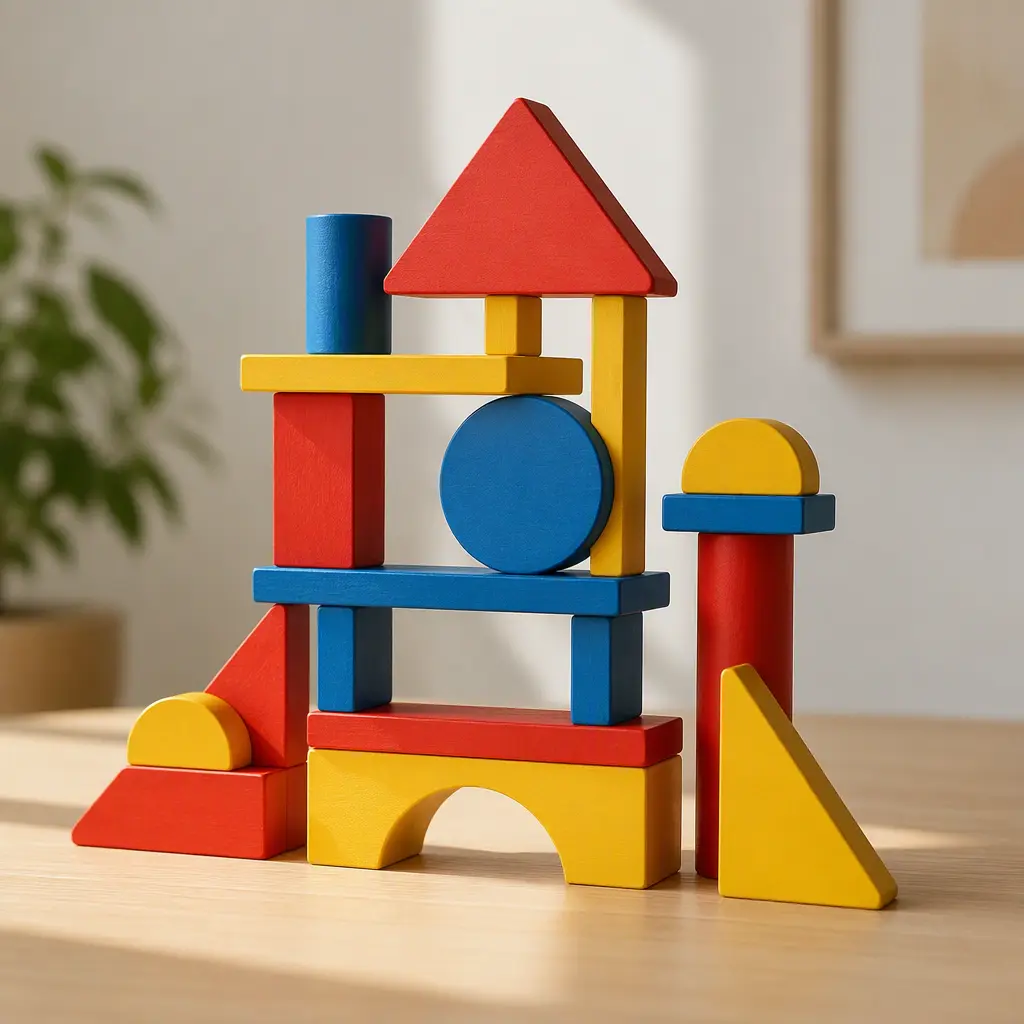
Over the years, Wedgits sets appeared in several sizes and configurations, from introductory collections with fewer pieces to larger classroom-style assortments intended for collaborative building. Some versions emphasized travel-friendly storage while others included oversized pieces for younger children or group play settings. The core design language remained consistent: clean geometric forms that could combine freely without mechanical connectors.
For buyers today, condition matters more than rarity. Since the toy depends on balanced stacking, warped or damaged pieces can affect how structures stand. Complete sets are often more satisfying because the repeated shapes are central to the building experience. Many secondhand examples still circulate because the pieces are durable and do not rely on batteries or fragile electronics. Generic geometric stacking toys can offer a similar feel, but some lack the carefully matched proportions that made the original concept work so well.
- Look for sets with multiple repeating shapes rather than novelty add-ons
- Smooth edges and consistent proportions help towers balance correctly
- Larger assortments allow more complex symmetrical builds
- Storage tubs or trays are useful because the pieces nest efficiently
- Avoid heavily worn sets with bent or cracked balancing pieces
Frequently asked questions
Is Wedgits more of a puzzle or a building toy?
It sits somewhere between the two categories. The toy encourages freeform construction like a building set, but many players naturally turn stacking into balance challenges or symmetry puzzles.
Why do adults often enjoy Wedgits too?
The balancing process is tactile and visually satisfying, and the geometric forms lend themselves to decorative or architectural-looking arrangements. Many adults treat the toy almost like a desk sculpture or hands-on brain teaser.
Does the toy have educational value?
Yes. Wedgits is frequently associated with spatial reasoning, geometry, sequencing, pattern recognition, and fine motor development. Much of that learning happens naturally through experimentation rather than formal instruction.
Are modern geometric stacking toys similar?
Many contemporary toys borrow ideas from open-ended balancing systems, but Wedgits remains distinctive because of its specific proportions and the way the pieces relate to one another. The original design focused heavily on symmetry and multi-directional balance.
More than three decades after its introduction, Wedgits still feels refreshingly different from many modern toys. Its appeal comes from restraint rather than complexity: a handful of shapes, a broad range of possibilities, and enough physical challenge to keep builders experimenting. In an era filled with connected gadgets and heavily scripted play experiences, the toy remains memorable precisely because it asks children and adults to supply the imagination themselves.