Wooden Alphabet Blocks: The quiet genius of lettered cubes
From nurseries to classrooms, wooden alphabet blocks have helped generations stack, spell, and imagine—proof that simple design can teach language, balance, and creativity all at once.
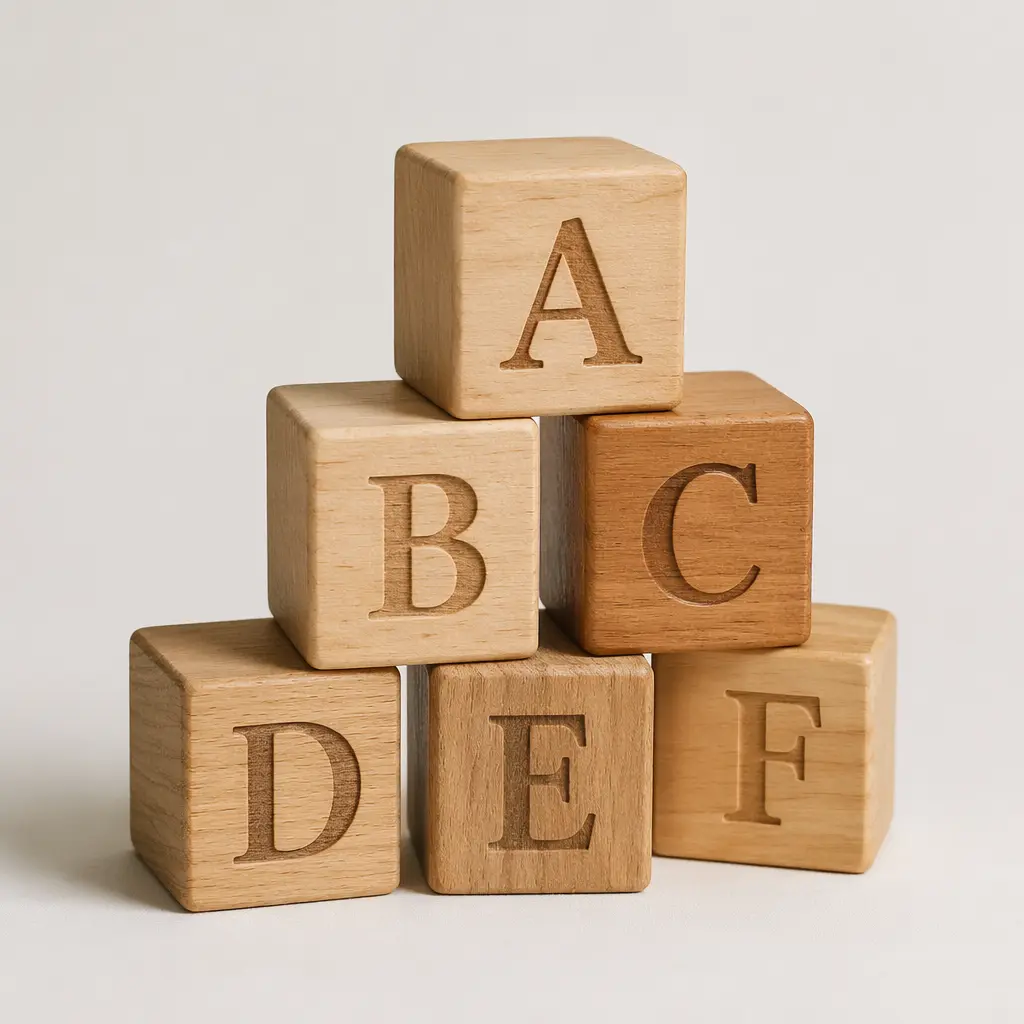
Compare prices and availability
Check current prices and availability for this guide on eBay.
As an eBay Partner, we may be compensated if you make a purchase.
Wooden alphabet blocks are so familiar that it’s easy to overlook how much work they do. At first glance they’re just small wooden cubes, lightly decorated with letters or pictures. But for more than a century, these blocks have quietly introduced children to balance, language, problem‑solving, and imaginative play—all without batteries, instructions, or screens.
They sit at the intersection of toy and teaching tool. A toddler might mouth them, knock them over, or stack them as high as possible. A preschooler starts to recognise letters, match sounds, and spell names. Older children turn them into towers, towns, or story prompts. Few toys adapt so naturally to a child’s changing abilities.
Where it came from
Alphabet blocks emerged in the 19th century alongside broader ideas about early childhood education. As literacy became a social priority, educators and toymakers looked for ways to introduce letters before formal schooling. Wooden blocks—already common as simple building toys—were a natural canvas for letters, numbers, and small illustrations.
By the early 20th century, lettered wooden blocks were a nursery staple in Europe and North America. They reflected educational thinking of the time: learning through play, repetition, and hands‑on exploration. Their durability made them practical for homes and classrooms alike, and their neutrality meant they could be passed down through siblings and generations.
Why it works
The enduring success of wooden alphabet blocks comes from their openness. There is no single correct way to play. Children discover what the blocks do by handling them—stacking, lining up, knocking down, and eventually reading what’s printed on each face. This kind of self‑directed play builds confidence as well as skills.
The physical qualities matter too. Wood has weight and texture; blocks don’t slide or bounce the way plastic can. When a tower falls, it falls decisively, teaching cause and effect. Letters printed or engraved on flat faces invite tracing with fingers, reinforcing visual and tactile learning at the same time.
- Six-sided cubes that encourage rotation and spatial thinking
- Clear, high-contrast letters that support early literacy
- Stackable shapes that build fine motor control
- Open-ended play with no fixed rules or outcomes
Who it’s for
Alphabet blocks typically span a wide age range. Very young children benefit from grasping and stacking, while older preschoolers begin to recognise letters and sounds. Even adults find value in them—as teaching aids, decorative nostalgia pieces, or simple desk toys. Their appeal isn’t flashy, but it’s remarkably broad.
Variants and what to look for today
Modern alphabet blocks come in many variations, but the fundamentals remain the same. Some sets stick closely to tradition with natural wood and engraved letters. Others add colours, pictures, or multilingual alphabets. You’ll also find larger blocks for younger children and smaller, more detailed sets aimed at older preschoolers.
When choosing a set today, it’s worth paying attention to materials and finish. Solid wood tends to last longer than composite materials, and smooth edges matter for safety and comfort. Letter clarity is key: fonts should be simple and easy to recognise, not decorative. Avoid sets where paint flakes easily or letters are hard to distinguish.
Frequently asked questions
Are wooden alphabet blocks still useful in a digital age?
Yes. Their value lies in physical interaction. Handling real objects supports motor development and spatial reasoning in ways screens can’t replicate, especially for younger children.
Do children need to know letters to enjoy them?
Not at all. Many children start using alphabet blocks purely as building toys. Letter recognition often comes later, once curiosity catches up with play.
How many blocks are enough?
A basic set of 20–30 blocks supports stacking and simple spelling. Larger sets allow for more complex building and word play, but even a small collection can be effective.
Are vintage blocks better than new ones?
Vintage sets can be charming and well-made, but modern blocks often meet higher safety standards. For play, new is usually the safer choice; vintage works better as display or keepsakes.
Wooden alphabet blocks endure because they don’t rush children. They wait patiently to be picked up, stacked, read, or reinvented. In a world of fast-changing toys, their steady presence reminds us that some of the best learning happens one small cube at a time.