Zingo!: How a fast-paced bingo game became a preschool staple
Since 2002, Zingo! has turned picture matching into a fast, energetic group game that works at home and in classrooms alike. Its simple pace and tactile tile dispenser helped it become a modern preschool favorite.
Compare prices and availability
Check current prices and availability for this guide on eBay.
As an eBay Partner, we may be compensated if you make a purchase.
Some children's games survive because they are loud, chaotic, or tied to a major entertainment brand. Zingo! took a quieter path. Since its release in 2002, the rapid-fire matching game has become a familiar sight in preschools, speech therapy rooms, family game cabinets, and kindergarten classrooms. Its appeal comes from a combination that sounds simple on paper but is surprisingly difficult to get right: fast turns, easy rules, tactile pieces, and enough structure to help young children feel successful quickly.
Where it came from
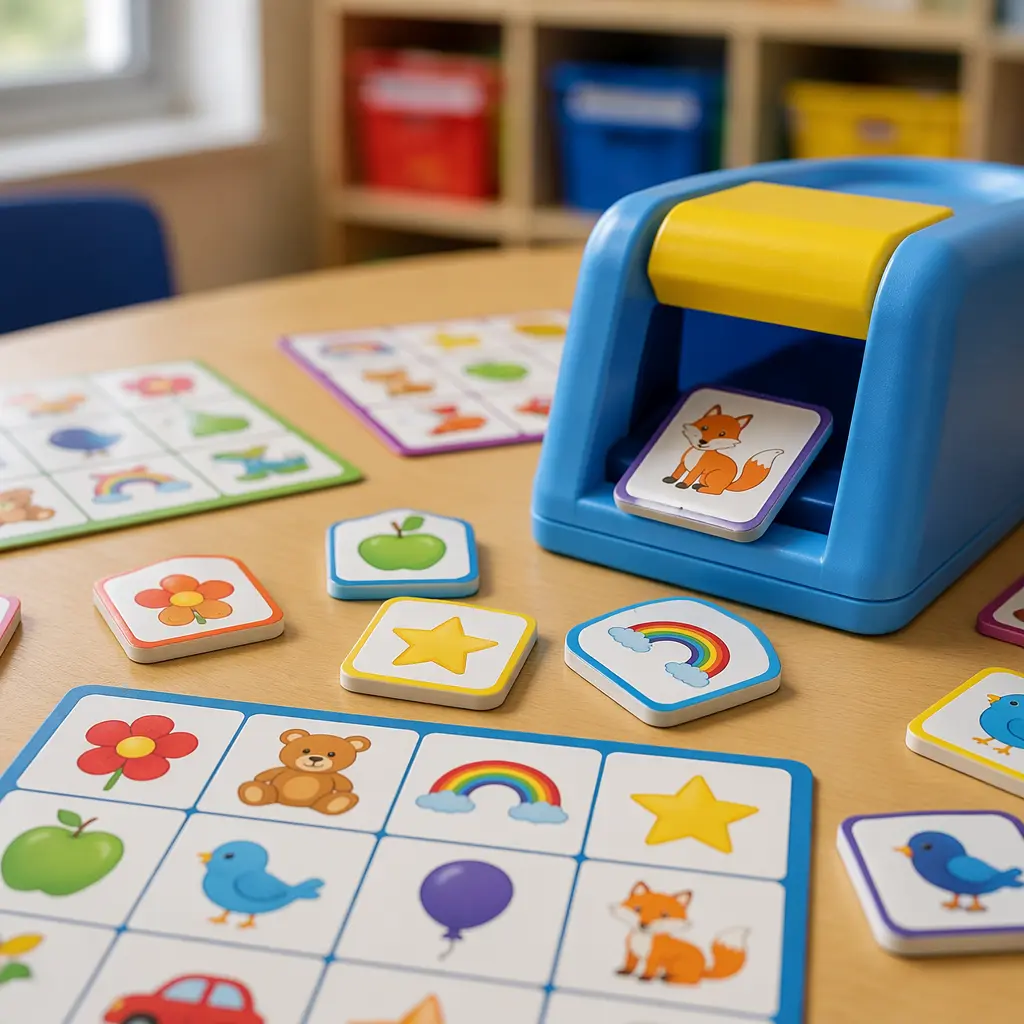
Zingo! was introduced by educational toy company ThinkFun in 2002, during a period when family games were increasingly being designed around shorter attention spans and younger players. Traditional bingo had long been a classroom standby because it encouraged listening, recognition, and turn-taking. Zingo! reshaped that formula into something faster and more tactile by replacing drawn numbers with illustrated tiles dispensed from a chunky plastic slider.
The game's core audience was preschool and early elementary children, but its design reflected broader trends in educational play. Parents and teachers were looking for games that could teach vocabulary, visual recognition, and social skills without feeling like formal instruction. Zingo! fit neatly into that space. It required almost no reading ability, could be explained in minutes, and kept multiple children engaged at the same time instead of waiting through long individual turns.
Why it works
The key to Zingo!'s staying power is pacing. Many games for young children slow down because adults have to manage every turn or explain every rule repeatedly. Zingo! avoids that problem through visual matching and a central tile dispenser that creates a sense of anticipation. Children slide the device, reveal two tiles, and quickly search their cards for matching images. The action repeats rapidly enough that even hesitant players stay involved.
The physical design also matters more than it first appears. The tile dispenser gives the game a toy-like quality that separates it from ordinary card games. Young children often enjoy the mechanism itself before they fully understand the rules. At the same time, the large tiles and clear illustrations make the game accessible for mixed-age groups, classrooms, and children still developing fine motor skills.
- Fast rounds that usually finish before younger players lose interest
- Picture matching that works before children become confident readers
- Large tiles and chunky components that are easy for small hands to manage
- Built-in opportunities for turn-taking, patience, and social interaction
- Flexible enough for classrooms, therapy settings, and family game nights
Who it's for
Zingo! is primarily aimed at preschool and early elementary children, especially ages four to seven, though younger children often participate with some help. The game works particularly well for mixed developmental stages because success depends more on observation and attention than reading speed or strategy. Teachers and therapists have also embraced it as a low-pressure tool for vocabulary practice, memory building, and group participation. Adults may not treat it as a deep strategy game, but many appreciate how quickly it gets children engaged without requiring long setup times or complicated supervision.
Variants and what to look for today
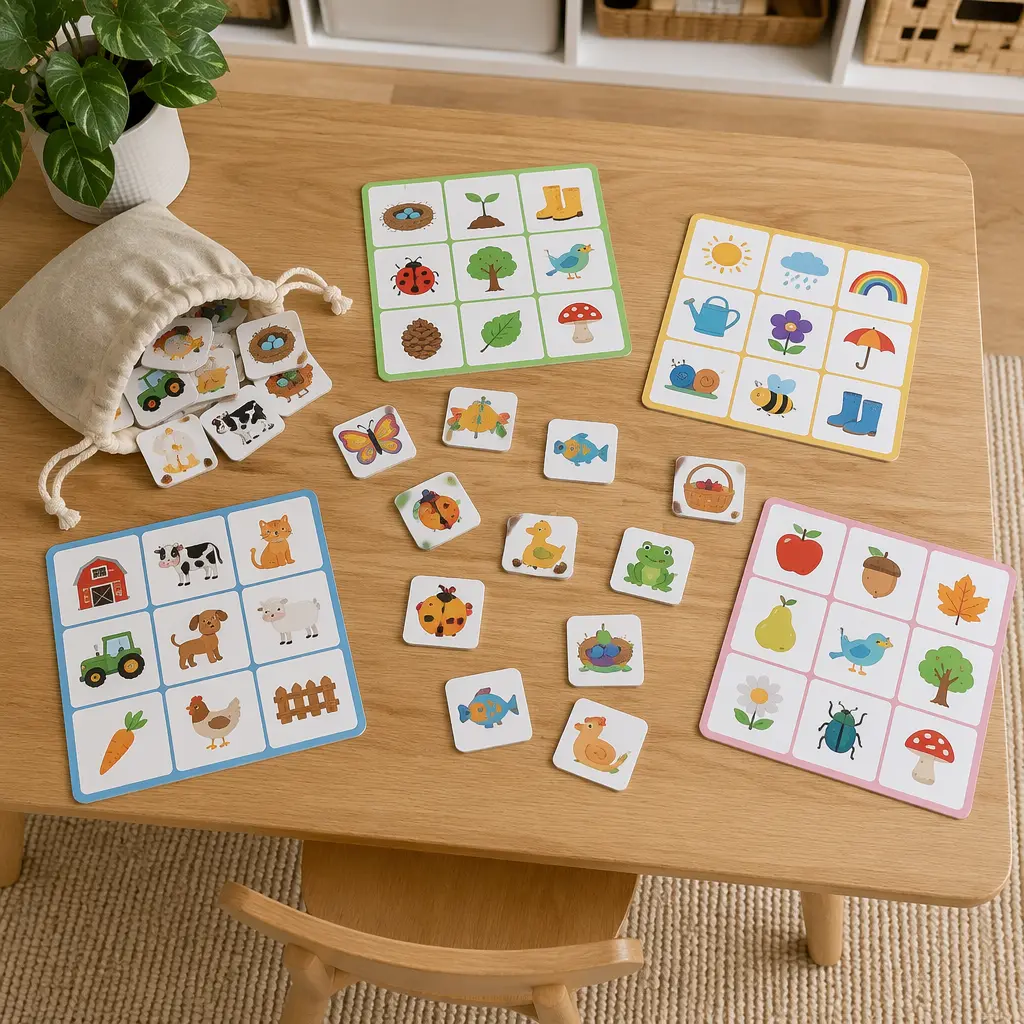
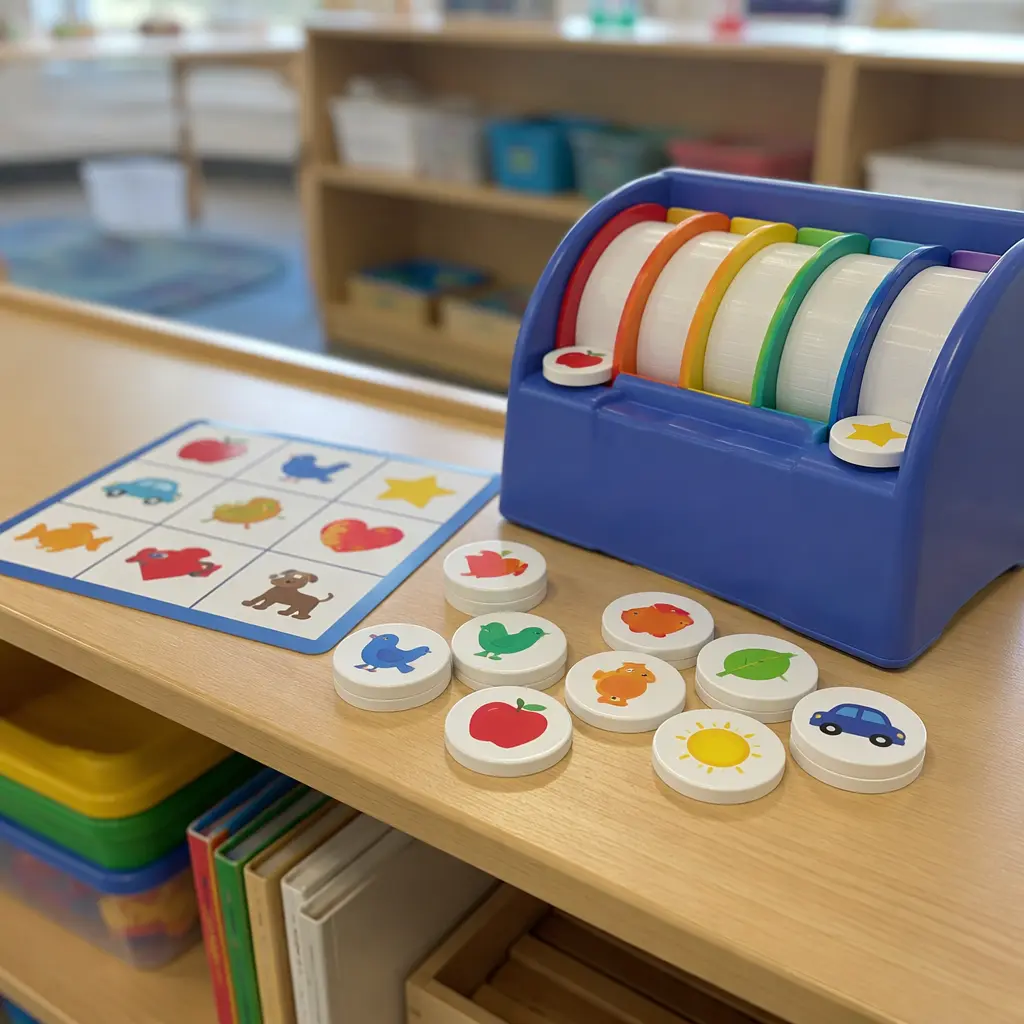
As Zingo! grew in popularity, the concept expanded into themed and skill-focused versions. Some editions emphasize sight words, while others focus on numbers, bilingual vocabulary, or simplified play for younger children. The core gameplay remains largely unchanged across versions: reveal tiles, match images or words, and fill a card before the other players do.
For parents shopping today, the main differences usually come down to learning focus and component durability. Classroom-oriented versions often use thicker cards or slightly sturdier pieces because they are designed for repeated group use. Families buying secondhand copies should check that the tile dispenser slides smoothly and that all matching tiles are included, since missing pieces can make rounds uneven.
- Choose picture-focused versions for younger preschoolers
- Word and sight-word editions are better suited for early readers
- Check that the tile dispenser moves smoothly without sticking
- Avoid heavily worn sets with missing tiles or bent cards
- Consider travel-sized editions if storage space is limited
Frequently asked questions
Is Zingo! educational or mainly entertainment?
It works as both. The game reinforces image recognition, vocabulary, listening, attention, and turn-taking, but it succeeds largely because children experience it as play rather than a lesson.
Can children who cannot read still play?
Yes. The standard version relies on picture matching instead of reading, which is one reason it became popular in preschool classrooms and family settings with younger children.
Why do teachers and therapists use it so often?
The game creates repeated opportunities for communication and attention without requiring complicated rules. Adults can easily adapt pacing, vocabulary prompts, or cooperative play styles for different developmental needs.
Does Zingo! still hold up compared with newer children's games?
For many families, yes. Its straightforward mechanics and durable tactile pieces continue to stand out in a market crowded with app-connected or heavily branded games. The design remains approachable and easy to replay.
More than two decades after its release, Zingo! remains a strong example of how thoughtful simplicity can outlast trends. It borrowed the familiar structure of bingo, added tactile interaction and quicker pacing, and created a game that young children could genuinely manage on their own. That combination helped it move beyond toy shelves and into classrooms, therapy spaces, and family routines where easy-to-learn group play still matters.