Zometool: The geometry kit that escaped the classroom
Zometool turned abstract geometry into something people could hold, building a following among teachers, museum educators, designers, and space-minded hobbyists since the early 1990s.
Compare prices and availability
Check current prices and availability for this guide on eBay.
As an eBay Partner, we may be compensated if you make a purchase.
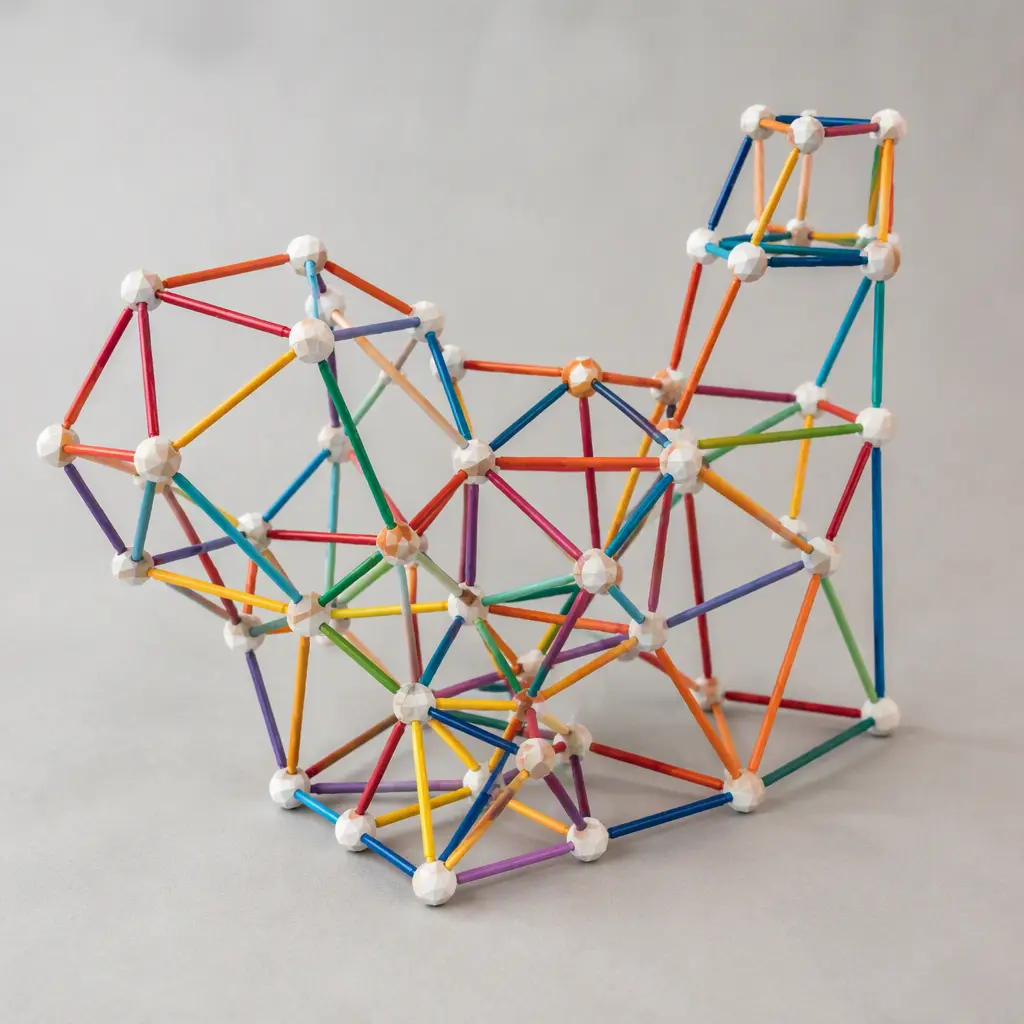
Zometool occupies a very specific corner of the toy world: part construction set, part math model, part design tool. Unlike brick systems that focus on buildings or action play, Zometool is built around geometry itself. With plastic nodes and color-coded struts that connect at precise angles, the system allows children, teachers, artists, and engineers to create everything from simple polygons to intricate molecular structures and giant domes. Since its arrival in the early 1990s, it has developed a loyal following well beyond toy stores, appearing in classrooms, science museums, maker spaces, and even conversations around architecture and aerospace design.
Where it came from
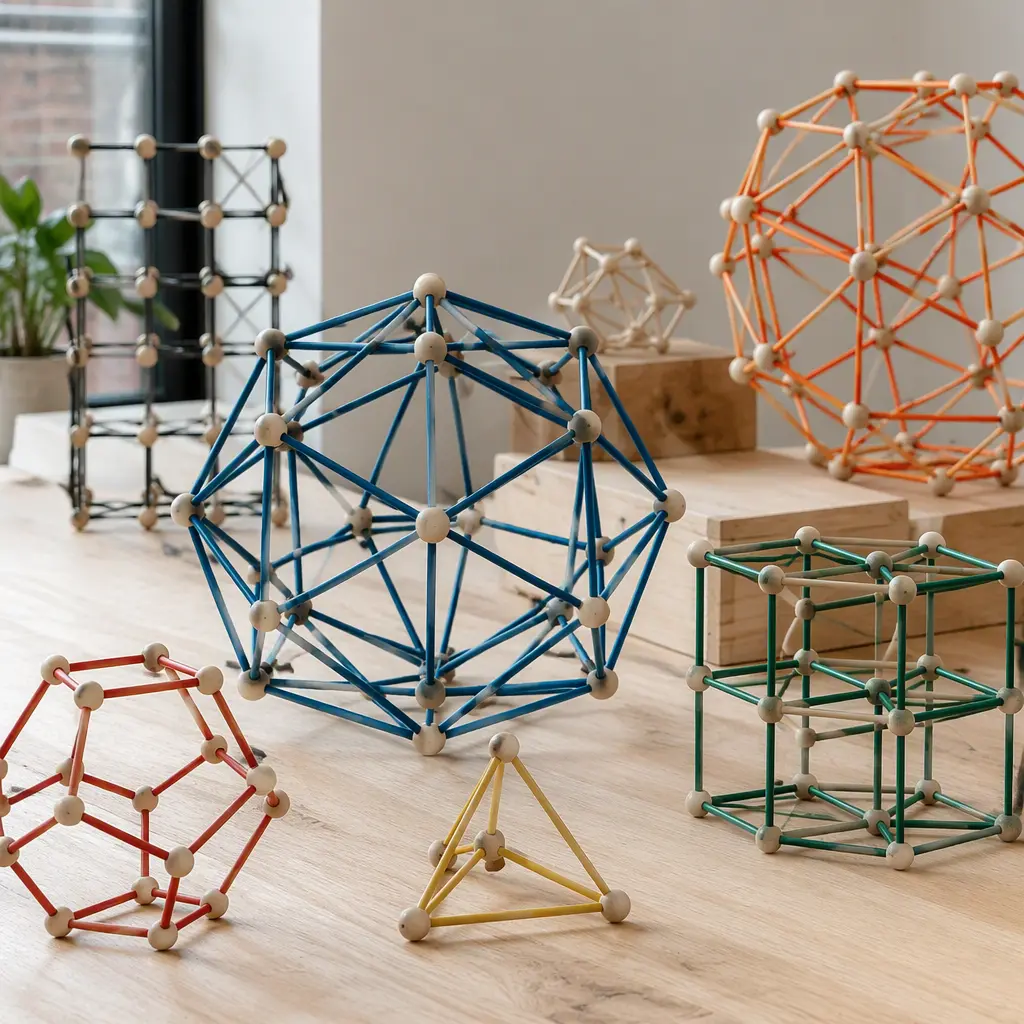
Zometool traces its roots to mathematical exploration rather than traditional toy design. The system emerged from work connected to geometry educator and artist Steve Baer, whose experiments with spatial structures inspired a construction approach based on symmetry, proportion, and modular design. The commercial toy system arrived in 1992, drawing attention because it translated complicated geometric ideas into something tactile and surprisingly approachable.
The toy's timing mattered. During the 1990s, schools and science centers were placing greater emphasis on hands-on STEM learning, and Zometool fit neatly into that movement. Museums used it to demonstrate symmetry and molecular forms. Teachers adopted it for geometry lessons that went beyond flat diagrams. Hobbyists discovered that the same parts could produce sculptures, tensegrity structures, and mathematically accurate models that would be difficult to sketch on paper alone. Its reputation gradually spread into engineering and design circles, where the system's precision and scalability became part of its appeal.
Why it works
At first glance, Zometool looks simple: nodes with openings, plus rods in different colors and lengths. The cleverness lies in the geometry hidden inside those parts. Each color corresponds to a family of angles and proportions, allowing builders to create structures that remain consistent and mathematically accurate. Instead of forcing pieces together through trial and error, the system guides users toward patterns found in crystals, architecture, biology, and polyhedra.
That balance between freedom and structure is what gives the toy unusual staying power. Younger children can experiment with shapes and balance without needing formal math knowledge, while older builders can construct highly technical models. Because the parts are lightweight and reusable, large projects remain manageable. The toy also rewards curiosity: many users start by making simple stars or cubes and eventually move into domes, fractals, and elaborate suspended forms.
- Color-coded rods represent different geometric relationships and lengths
- Connector nodes allow precise angles without complicated instructions
- Models can scale from handheld shapes to room-sized structures
- Useful for both freeform creativity and formal STEM learning
- Appeals to artists, educators, engineers, and puzzle-minded builders alike
Who it's for
Zometool is generally best suited to older children who enjoy patient, open-ended building rather than fast action play. Many starter sets are approachable for elementary-age kids with adult guidance, but the system truly opens up for middle-school and teen builders who can appreciate patterns, symmetry, and experimentation. Adults are a major part of the audience as well. Architects, science educators, math enthusiasts, and makers often treat it less like a toy and more like a creative toolkit. That broad age range helps explain why the system has endured despite never becoming a mainstream mass-market brand.
Variants and what to look for today
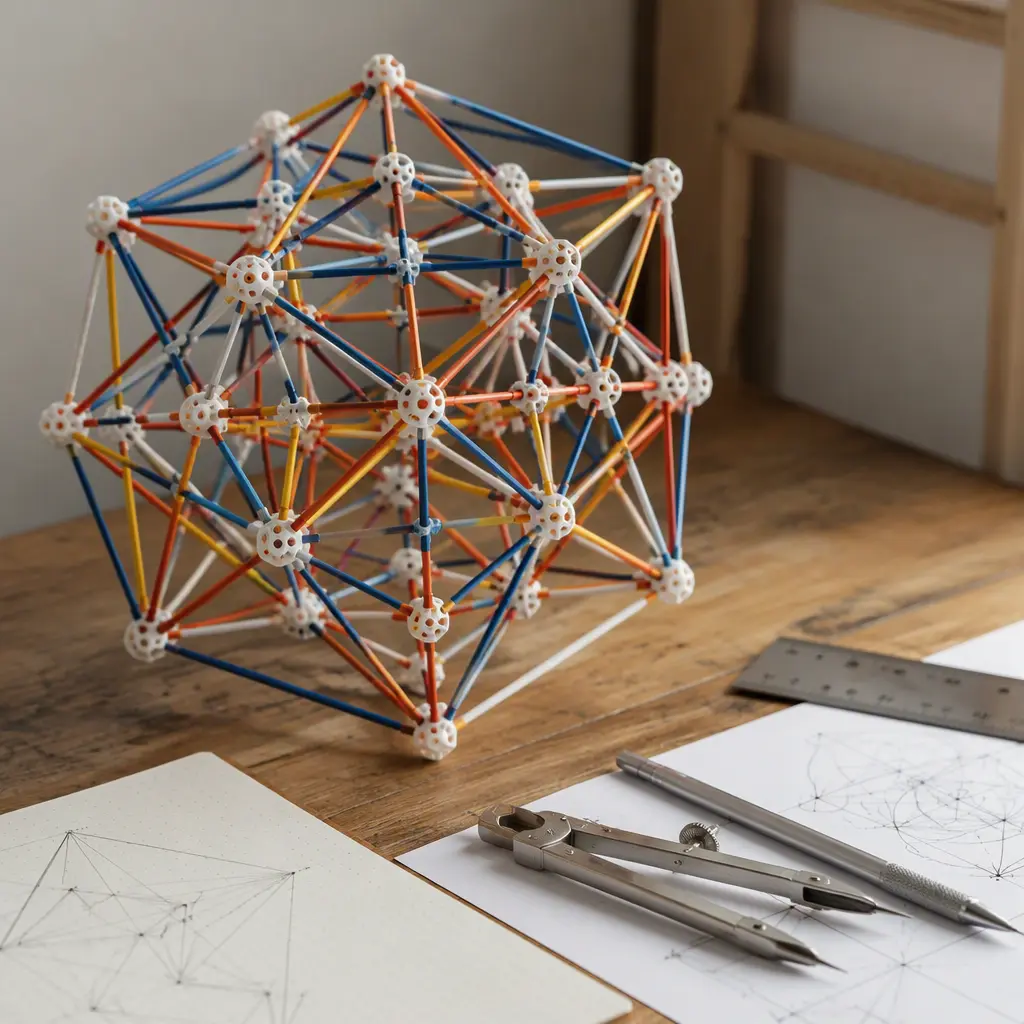
Modern Zometool sets range from introductory kits focused on basic geometry to large collections intended for classrooms and advanced builders. Some emphasize polyhedra and mathematical forms, while others lean into engineering concepts, molecular modeling, or artistic sculpture. Expansion packs are common because the system encourages bigger and more ambitious projects over time.
When shopping today, the main thing to consider is the intended style of play. Smaller sets can feel limiting for users who quickly move beyond simple shapes, while very large educational bundles may overwhelm beginners. Because the system relies on precise angles and tolerances, part quality matters more here than with many construction toys. Generic lookalikes may fit loosely or fail to maintain structural accuracy, reducing one of the system's biggest strengths.
- Starter geometry sets are best for younger or first-time builders
- Larger classroom-oriented kits support complex structures and group projects
- Some sets focus on artistic sculpture while others emphasize STEM concepts
- Storage trays or sorting containers become useful as collections grow
- Check compatibility if mixing older and newer sets or third-party parts
Frequently asked questions
Is Zometool more of a toy or a teaching tool?
It comfortably functions as both. Many schools and museums use it for geometry demonstrations, but plenty of owners simply enjoy building abstract sculptures and experimenting with shapes at home.
Do you need advanced math knowledge to use it?
No. Basic play is intuitive, especially for simple structures. More advanced concepts emerge naturally as builders explore symmetry, proportion, and spatial relationships over time.
How is it different from standard building bricks?
Traditional brick systems are usually based on stacking and surface construction. Zometool focuses on frameworks, angles, and open structures, making it especially useful for geometric and scientific modeling.
Why do educators and engineers like it?
The system provides a physical way to explore concepts that are often difficult to visualize on paper or screens alone. It can demonstrate symmetry, molecular forms, architectural frameworks, and mathematical relationships in a hands-on format.
Zometool never reached the household recognition of giant toy brands, but that niche status is part of its identity. It remains a favorite among people who enjoy discovery-driven play and tactile learning. In an era crowded with screens and heavily scripted toys, its enduring appeal comes from something simpler: the satisfaction of turning abstract ideas into real structures you can hold, study, and rebuild into something entirely new.