Best Simple Toys for Babies 0–6 Months
A parent-focused guide to simple, low-cost toys for babies 0–6 months. Learn what supports early senses without batteries or overload, plus safety tips and age guidance.
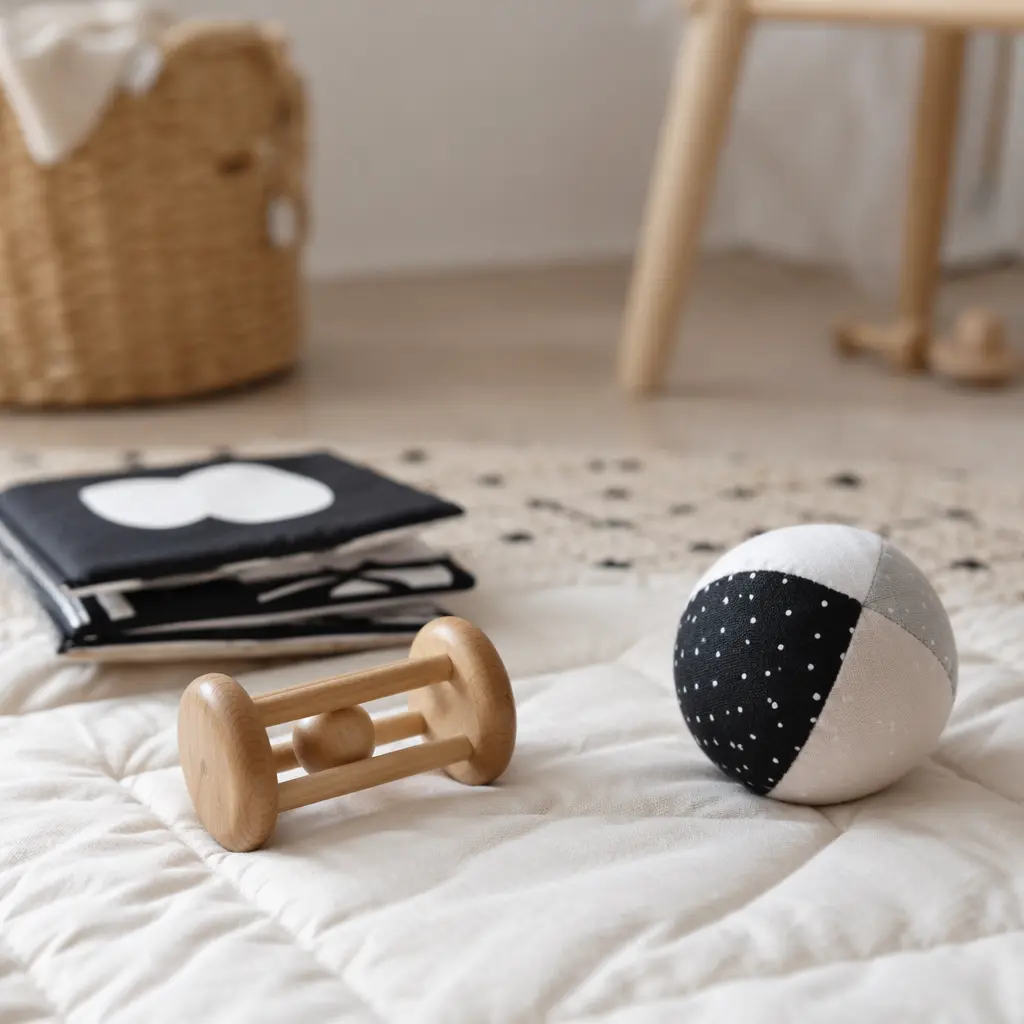
Compare prices and availability
Check current prices and availability for this guide on eBay.
As an eBay Partner, we may be compensated if you make a purchase.
For babies from birth to six months, play is about gentle discovery. At this stage, the brain is rapidly wiring itself through sight, sound, touch, and movement. Simple toys—often inexpensive and free of batteries—can support this development without overwhelming a baby’s still-growing senses. This guide focuses on classic, low-stimulation toys that encourage curiosity, comfort, and early skills while keeping things calm and manageable for parents.
What to look for
The best toys for babies 0–6 months share a few core qualities. They are designed to match how young infants see, hear, and move, rather than trying to entertain them with lights or noise. When evaluating simple toys, focus on how they support early sensory experiences and whether they are practical for everyday use.
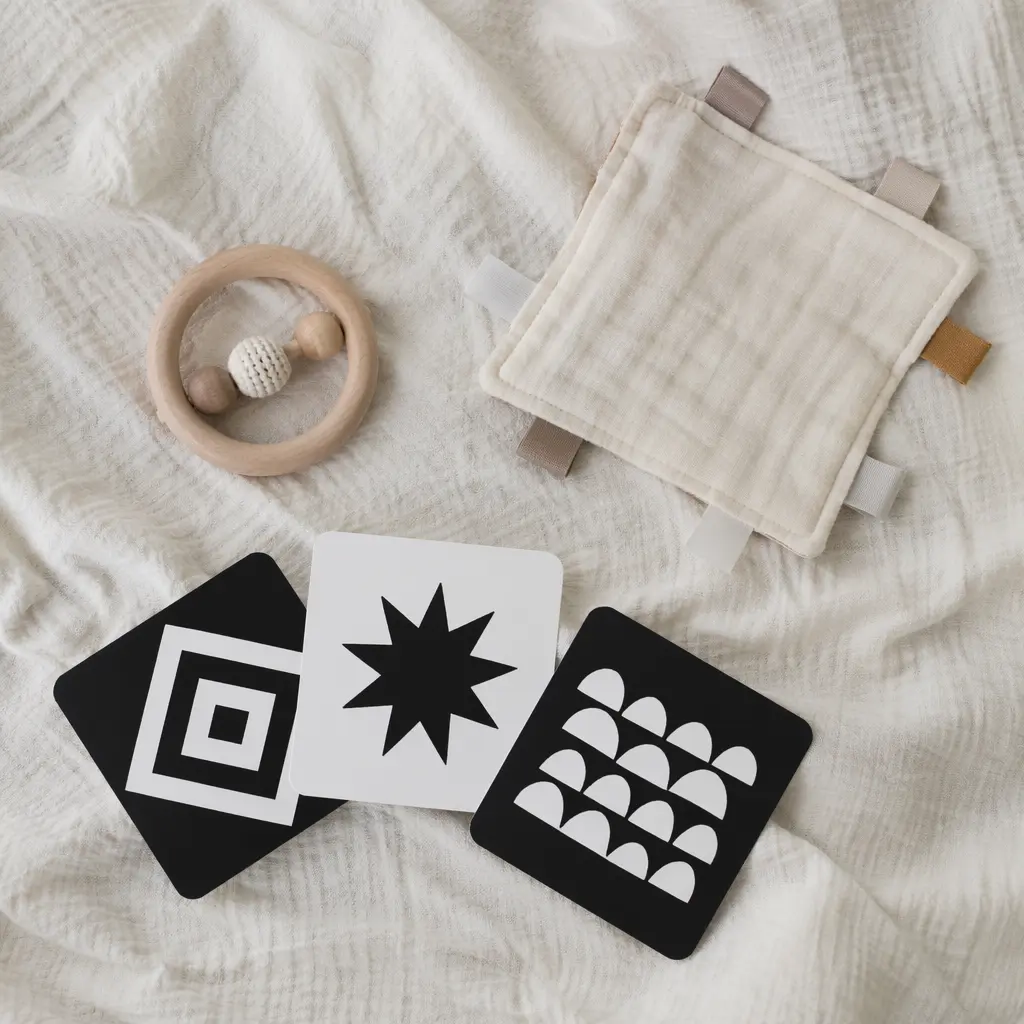
- High-contrast visuals: Newborns see best in black, white, and bold patterns, which are easier to focus on than pastel colors.
- Gentle sensory input: Soft sounds, subtle textures, and light movement help babies explore without overstimulation.
- Easy to grasp: Lightweight items with loops, rings, or soft edges work with a baby’s developing hand control.
- Safe materials: Look for non-toxic finishes, securely stitched fabric, and smooth edges with no small parts.
- Simple design: Fewer features often mean more room for imagination and longer-lasting interest.
Age suitability
Although this guide focuses on birth to six months, development within that window varies widely. In the first weeks, babies mostly observe—tracking high-contrast images, listening to familiar voices, and reacting to gentle sounds. By three to four months, many babies begin reaching, batting, and bringing objects to their mouths. Around five to six months, improved head control and curiosity make simple toys even more engaging. A good rule is to choose toys that work in more than one way, so they remain useful as skills grow.
Standout categories or types
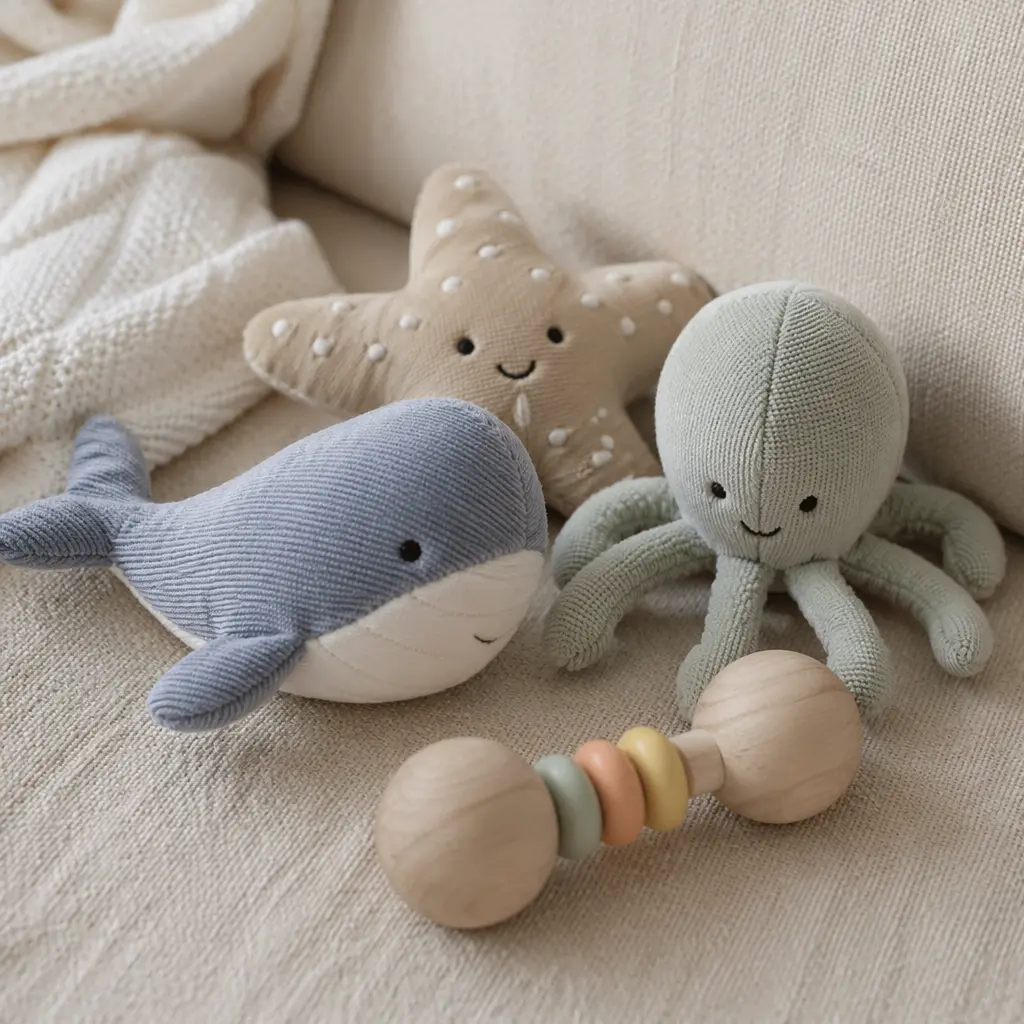
Simple toys often fall into a few classic categories that have been used for generations. These types remain popular because they align well with how babies naturally learn. Parents don’t need all of them at once; rotating a small selection can keep playtime fresh without clutter.
- High-contrast cards and books: Designed for early vision, these encourage visual tracking and focus during tummy time or quiet alert periods.
- Soft rattles and rings: Gentle sound-makers help babies connect movement with cause and effect while practicing grasping.
- Fabric toys with texture: Crinkle cloths, soft blocks, and textured squares support tactile exploration and mouthing.
- Unbreakable mirrors: Baby-safe mirrors promote visual attention and early self-awareness without overstimulation.
- Simple mobiles or hanging toys: Slow movement above a crib or play area can support visual tracking when used for short, supervised periods.
Frequently asked questions
Are battery-free toys really enough for babies?
Yes. For babies under six months, the world itself is stimulating. Simple toys provide just enough input for learning without competing for attention. Research and developmental guidance consistently emphasize that responsive interaction and sensory exploration matter more than electronic features.
How many toys does a young baby need?
A small rotation is usually sufficient. A few well-chosen items can be reused in different ways and at different ages. Too many toys at once can be distracting for both baby and parent.
What about toys labeled for older babies?
Some toys marketed for older age ranges can still be appropriate if used in a simple way and under supervision. Focus on whether the toy’s size, weight, and materials are safe for mouthing and early grasping.
Do simple toys help with bonding?
They can. Simple toys often encourage face-to-face interaction, shared attention, and conversation, which are key components of early bonding and language development.
Choosing toys for babies 0–6 months doesn’t have to be complicated or expensive. By focusing on simple, well-made items that support early senses, parents can create a calm play environment that grows with their baby. Often, the quiet classics are exactly what young babies need most.