Best Simple Sensory Toys for Newborns (No Batteries)
A calm, parent-friendly guide to simple sensory toys for newborns. Learn what to look for, age suitability, and safe toy types that support early touch, sight, and sound—without batteries.
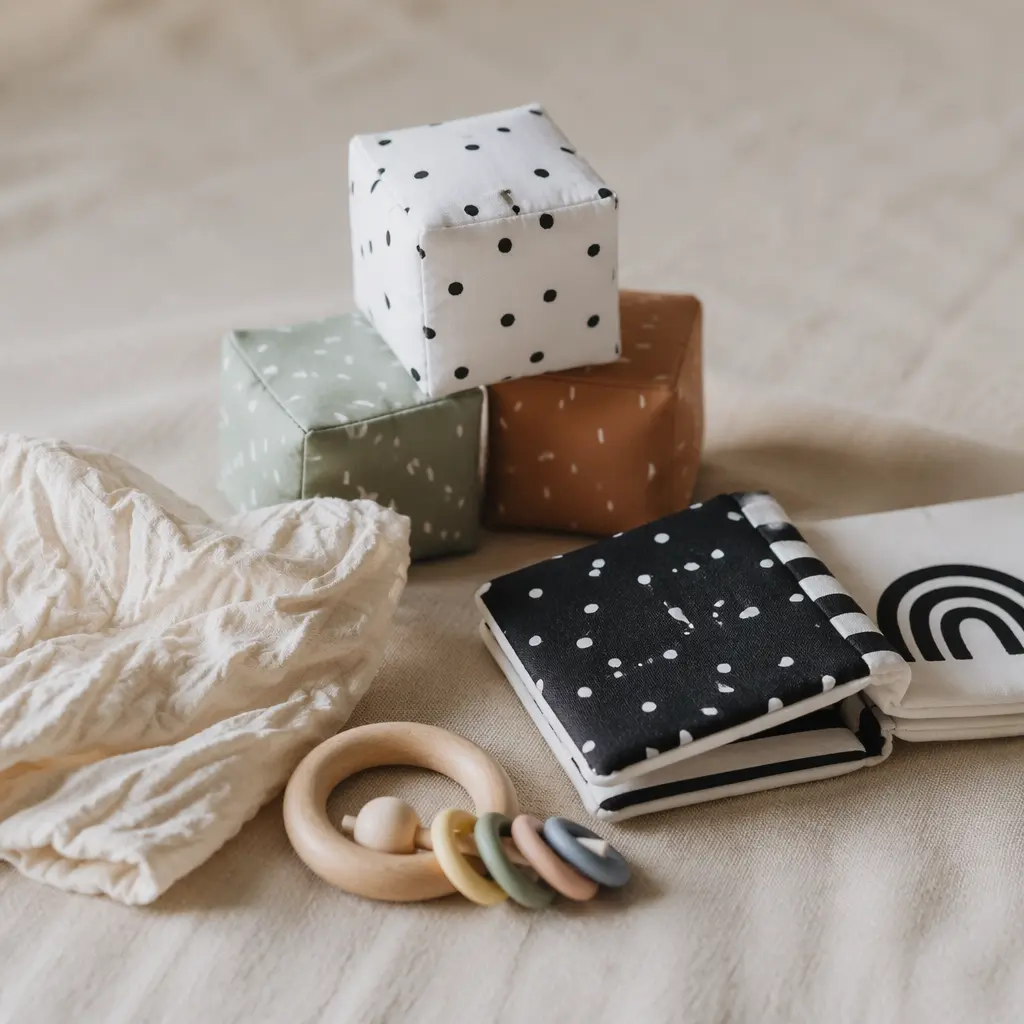
Compare prices and availability
Check current prices and availability for this guide on eBay.
As an eBay Partner, we may be compensated if you make a purchase.
Newborns learn about the world through their senses—touch, sight, sound, and movement. Simple sensory toys can support that learning without flashing lights, loud music, or batteries. For many families, quieter toys feel easier to live with and better suited to a baby’s early stage, when overstimulation can be an issue. This guide focuses on calm, tactile options that encourage gentle exploration during the first year.
What to look for
Not all toys labeled “sensory” are appropriate for newborns. At this age, simple is better. A few well-chosen features can support development while keeping play calm and safe.
- High-contrast colors: Newborns see bold contrasts more easily than pastels, especially black, white, and simple patterns.
- Interesting textures: Soft ridges, crinkle fabric, smooth wood, or gentle bumps give babies something to feel with hands and mouth.
- Lightweight and easy to grasp: Small hands need toys that don’t require strong grip or coordination.
- Gentle sound only when moved: Soft rattles or fabric crinkles let babies discover cause and effect without constant noise.
- Washable or easy to clean: Drool and spit-up are part of daily life, so simple care matters.
- Clear safety labeling: Look for age guidance and materials designed for infants.
Age suitability
From birth to about three months, babies mostly observe. Toys during this phase are often used during tummy time or short awake windows, with an adult nearby. As babies approach four to six months, they begin reaching, grasping, and bringing objects to their mouths. By the later part of the first year, the same simple toys may be used in more active ways, like banging, shaking, or passing from hand to hand. Choosing toys that can grow with these stages helps extend their usefulness.
Standout categories or types
Simple sensory toys come in a few broad categories, each supporting early development in a slightly different way. Mixing one or two from different categories can offer variety without overwhelming your baby.
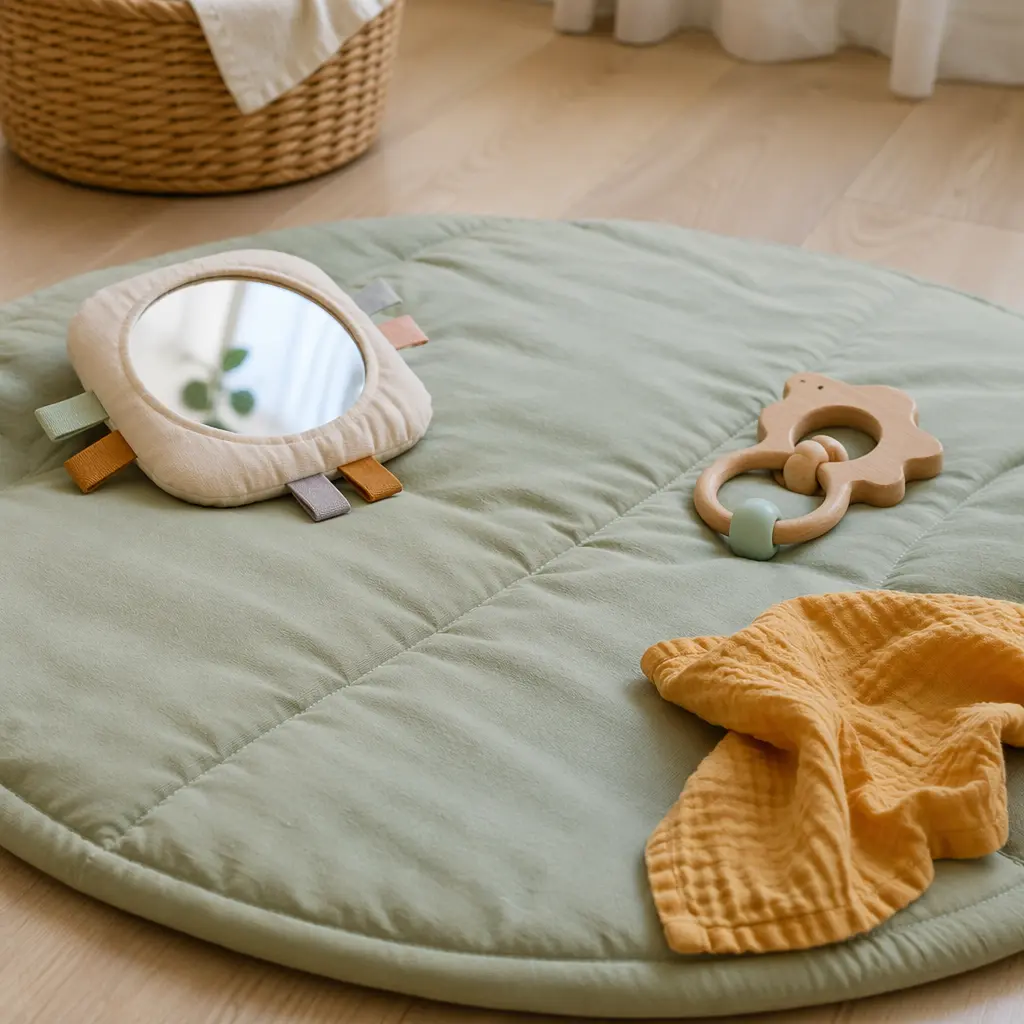
- Soft fabric toys: These often include tags, knots, or panels with different textures. They are lightweight and easy for newborns to explore safely.
- High-contrast visual toys: Cards, soft books, or cloth panels with bold patterns support early visual focus and tracking.
- Wooden or silicone teethers: Smooth, solid shapes provide tactile feedback and can later help with teething, as long as they are sized for infants.
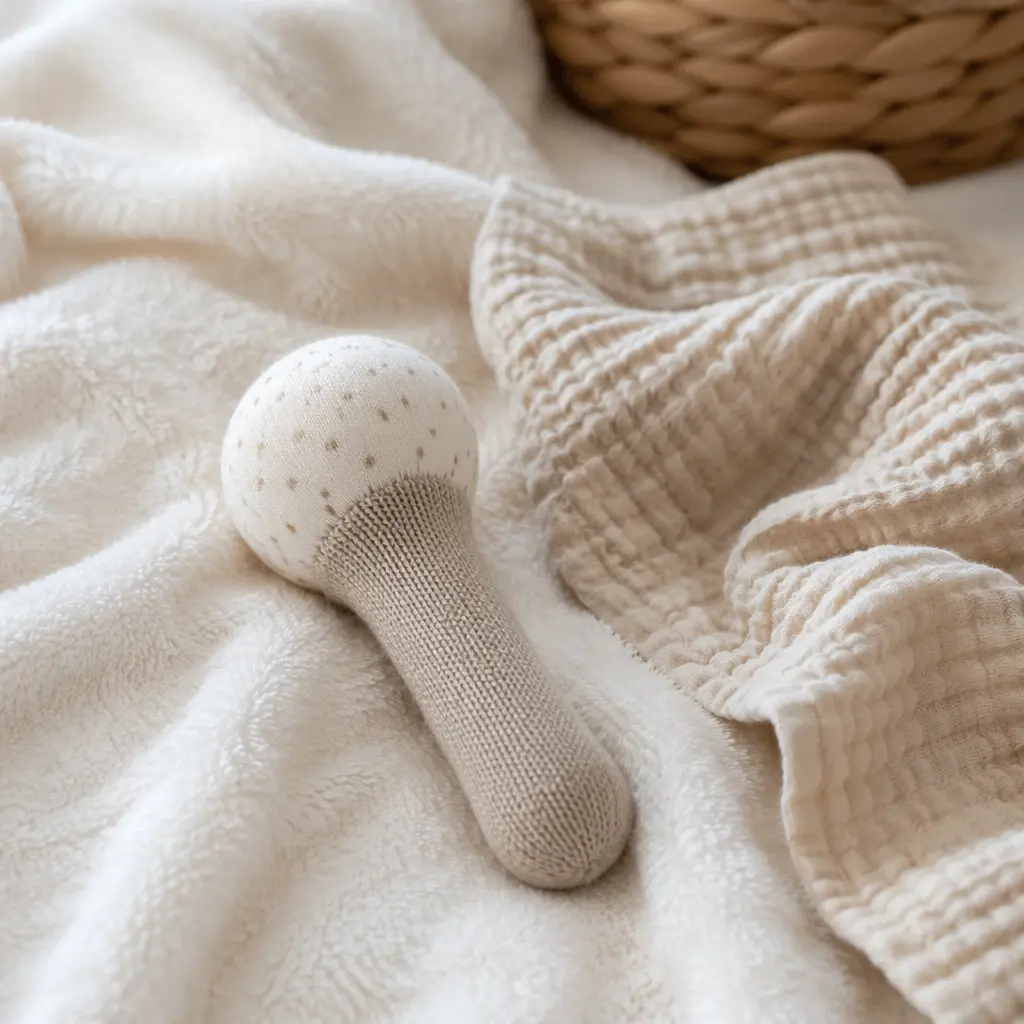
- Gentle rattles: A quiet rattle encourages babies to notice the connection between movement and sound without startling them.
- Unbreakable baby mirrors: Seeing a reflection supports early social awareness, even before babies recognize themselves.
Frequently asked questions
Are battery-free toys better for newborns?
Battery-free toys aren’t automatically better, but they are often simpler and quieter. Many parents find that calm toys fit better with newborn routines and reduce the risk of overstimulation during short awake periods.
How many sensory toys does a newborn need?
A small rotation is usually enough. Newborns don’t need many options at once; a few thoughtfully chosen toys can be more engaging than a crowded play area.
Can these toys help with development?
Yes, simple sensory toys can support early skills like grasping, visual tracking, and cause-and-effect learning. They work best as part of responsive play with an adult, rather than as standalone entertainment.
What materials are safest for newborns?
Look for toys made from materials intended for infant use, such as soft fabrics, food-grade silicone, or unfinished wood. Avoid items with strong smells, peeling finishes, or small detachable parts.
Simple sensory toys can play a quiet but meaningful role in a newborn’s first year. By focusing on texture, contrast, and gentle interaction—without batteries or flashing lights—you can create a calm play environment that supports early development and fits naturally into everyday routines.