Best No-Battery Baby Toys Pediatricians Recommend
A parent-friendly guide to classic, no-battery baby toys pediatricians still recommend for ages 0–12 months—what to look for, age fit, and safe, skill-building categories.
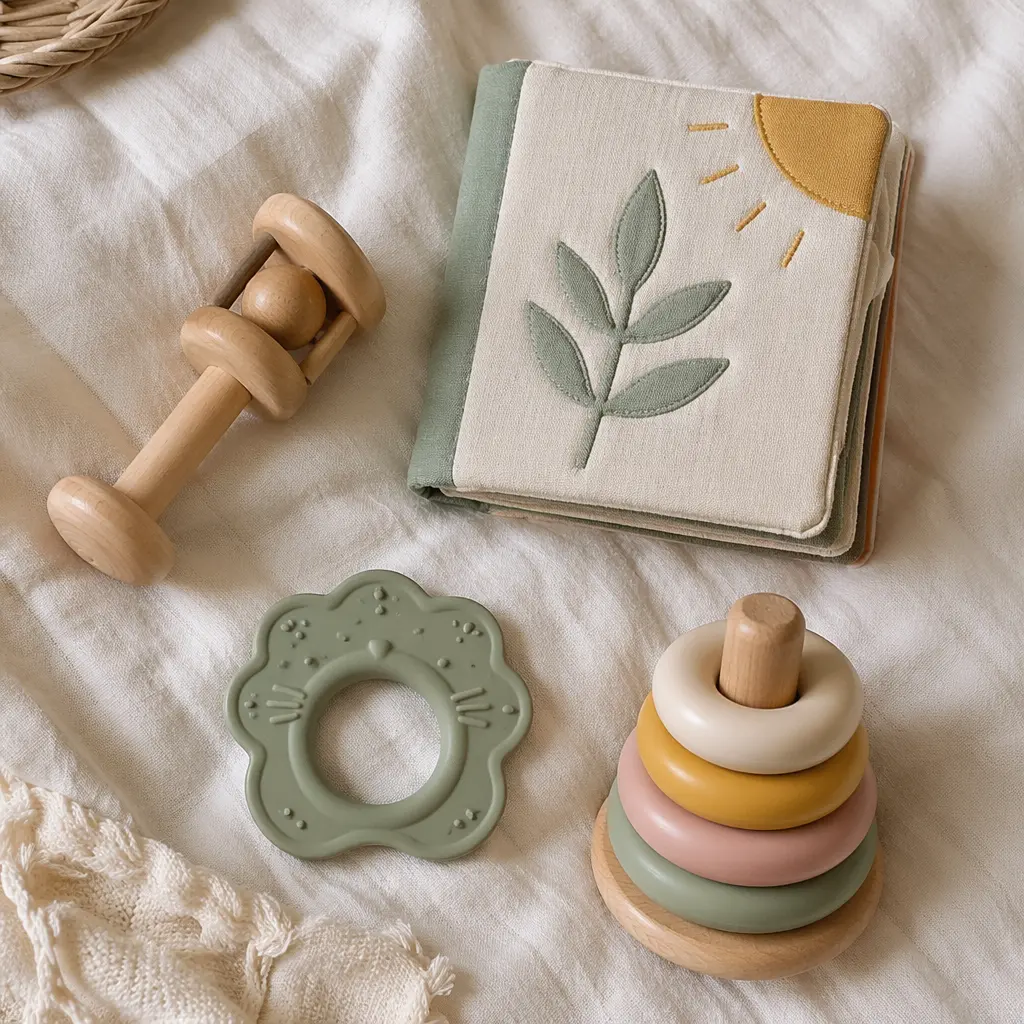
Compare prices and availability
Check current prices and availability for this guide on eBay.
As an eBay Partner, we may be compensated if you make a purchase.
With shelves full of flashing lights and sound chips, it can be surprising to hear pediatricians still point parents toward simple, no-battery toys—especially in the first year. These classics don’t compete for attention or pace play for a baby. Instead, they support early development by encouraging touch, movement, and caregiver interaction. For infants 0–12 months, that kind of play matters more than novelty.
What to look for
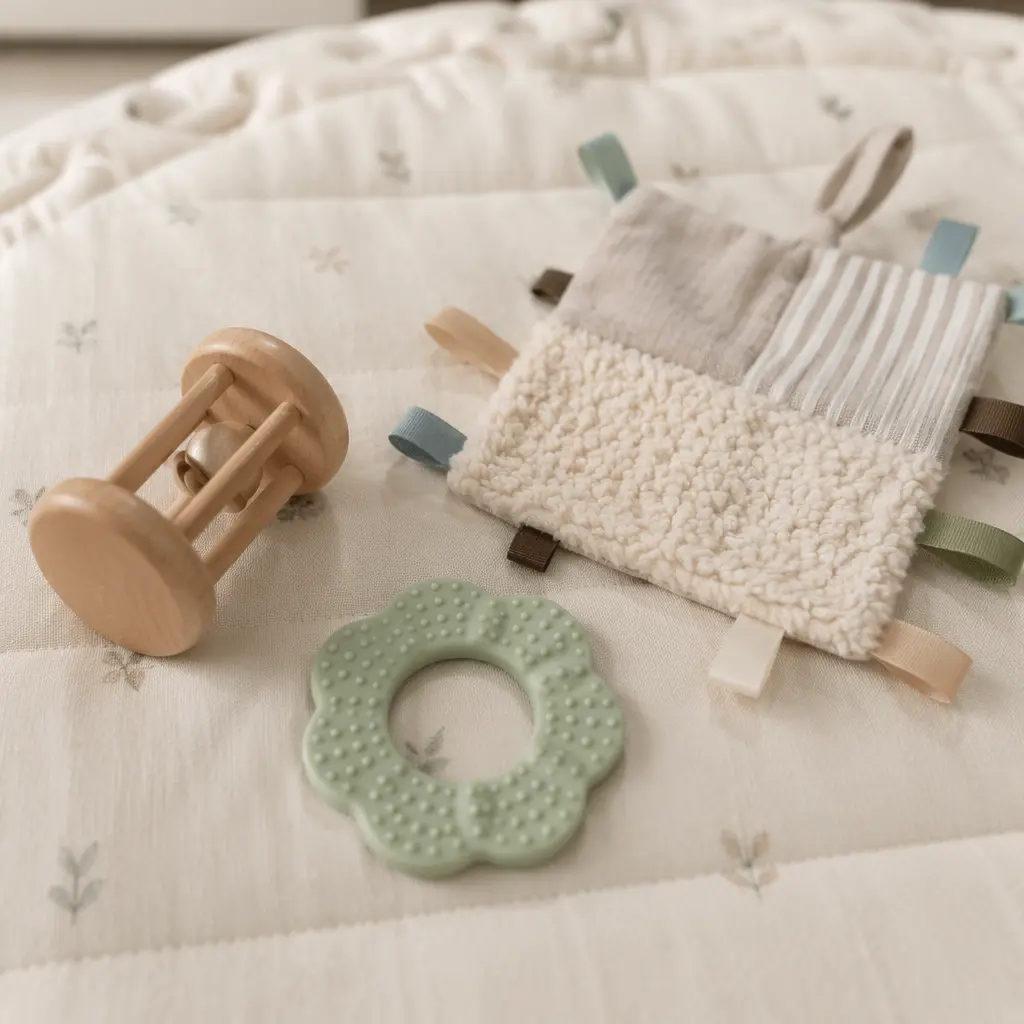
Pediatricians tend to focus less on a toy’s claims and more on how it fits a baby’s body and brain at a given stage. In the first year, toys should invite exploration without overwhelming a developing nervous system.
- Safe materials: Look for non-toxic finishes, food-grade silicone, natural rubber, or tightly woven fabrics that can handle mouthing.
- Simple cause and effect: A gentle sound when shaken or a mirror that reflects movement helps babies connect actions with outcomes.
- Easy to grasp: Lightweight items with loops, rings, or soft edges suit small hands and early grasping skills.
- Open-ended design: Toys without a single “right” use allow babies to explore at their own pace.
- Washable or easy to clean: Frequent cleaning is part of life with infants, especially during teething months.
Age suitability
From birth to around 12 months, development moves quickly, so the best no-battery toys tend to grow with a baby. Newborns benefit from high-contrast visuals, gentle sounds, and soft textures during short awake periods. By 4–6 months, babies are reaching, grasping, and bringing everything to their mouths, making teethers, rings, and soft blocks especially useful. Closer to 9–12 months, sturdier items that support sitting, banging, stacking, or early problem-solving become more engaging. A good rule is to choose toys that match your baby’s current abilities while leaving room for the next stage.
Standout categories or types
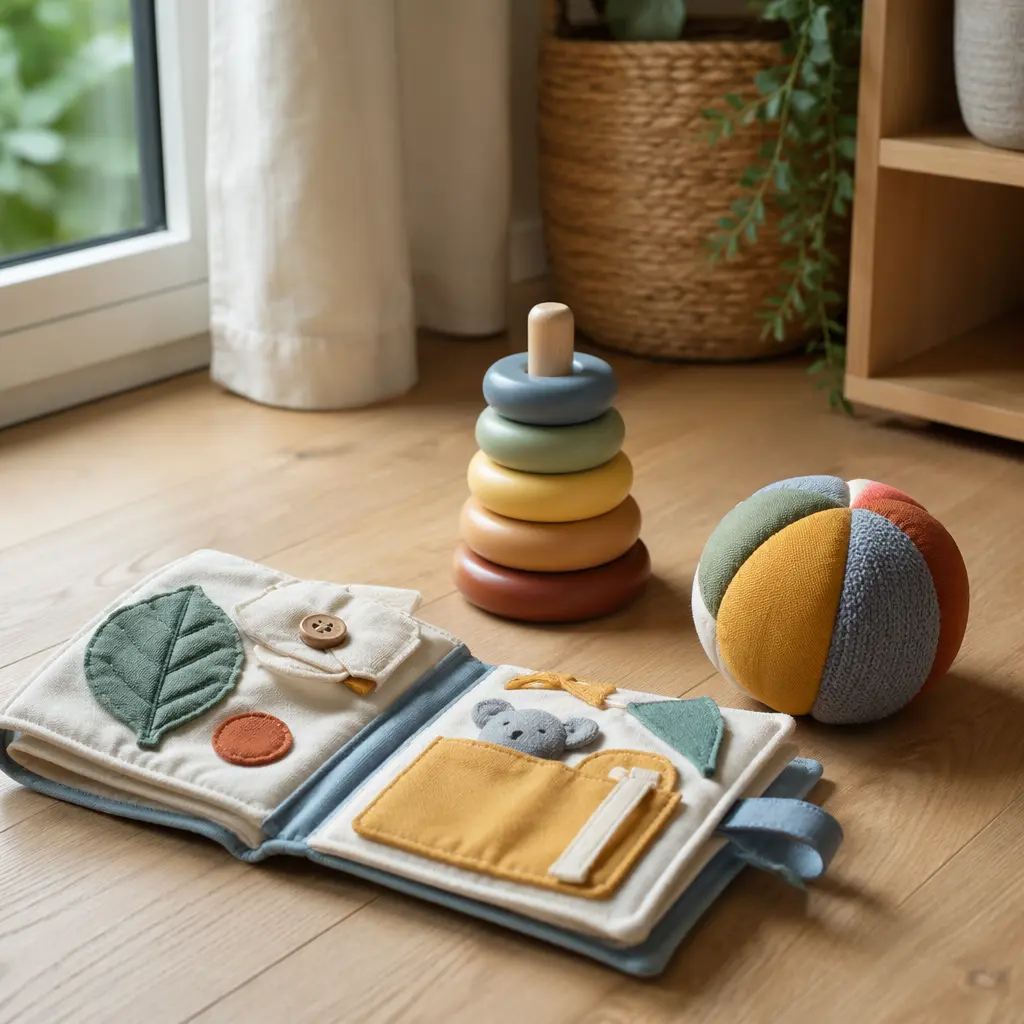
While individual toys vary, pediatricians often highlight a few categories that consistently support healthy development in the first year—without relying on screens, speakers, or batteries.
- Rattles and shakers: Simple sounds help babies learn about cause and effect and encourage arm movement.
- Teethers: Designed for sore gums, these also build hand-to-mouth coordination.
- Soft books and fabric toys: Crinkly pages, varied textures, and bold shapes support sensory exploration and early attention.
- Unbreakable mirrors: Seeing their own movements helps babies develop body awareness and social interest.
- Stacking and nesting toys: Rings, cups, or soft blocks introduce size, balance, and early problem-solving as babies grow.
What these categories share is simplicity. They leave room for caregivers to talk, sing, and respond—an interaction pediatricians consistently link to language and social development.
Frequently asked questions
Why do pediatricians recommend toys without batteries?
Because they don’t lead play. No-battery toys respond only when a baby moves, shakes, or explores, which supports motor skills and attention without overstimulation.
Are no-battery toys better for brain development?
They can be. Research and clinical guidance emphasize that simple, responsive play—especially with a caregiver—is more beneficial for infants than passive entertainment.
How many toys does a baby really need?
A small rotation is often enough. Pediatricians note that too many options can overwhelm babies and reduce focused play. Swapping toys every week or two can renew interest.
Can these toys replace electronic ones entirely?
For the first year, many families choose mostly non-electronic toys. If electronic toys are used, they’re best kept occasional and interactive, not background noise.
What should I avoid in toys for 0–12 months?
Avoid small detachable parts, sharp edges, loud or startling sounds, and materials that aren’t clearly labeled as safe for infants.
In a fast-moving tech world, it’s reassuring that many pediatricians still recommend the same kinds of toys parents have trusted for generations. No-battery baby toys keep play focused on exploration, connection, and growth—exactly what babies need most in their first year.